Whoop has spent a decade selling people on the idea that a wrist-worn strap can quantify their recovery, their sleep debt, and their readiness to push hard. This year, the Boston-based fitness wearable company decided that raw numbers were not enough. In May 2026, Whoop announced a cluster of new features that push its AI coaching layer further into members’ daily decisions while, notably, also adding a very human backstop: on-demand video consultations with licensed clinicians.
Whoop Builds an AI That Remembers
The centerpiece of the announcement is a feature called My Memory. It gives Whoop members a dashboard where they can see, edit, and add to the personal context that shapes the company’s AI coaching layer, generally referred to internally as Whoop Coach. Instead of the AI treating every user as a blank slate defined only by heart rate variability and sleep staging, My Memory lets someone tell the system that they just started marathon training, that they are recovering from a hip injury, or that they have a wedding to stand up in three weeks. The stated goal is to make the coaching advice reflect real life rather than a generic algorithmic average.
Paired with My Memory is Proactive Check-Ins, a feature that uses that stored context alongside a member’s travel, sleep, and training patterns to push timely, unprompted recommendations. Rather than waiting for a user to open the app and ask what to do, the system tries to intervene before a bad night’s sleep turns into a bad workout or a missed deadline.
From Coaching to Clinical Care
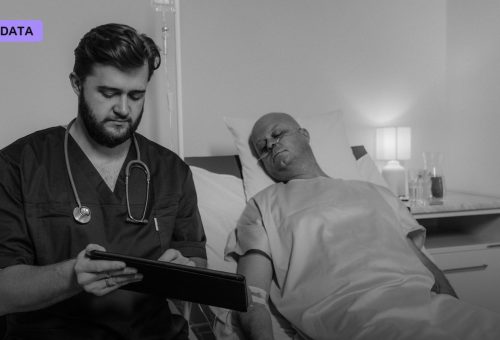
The more consequential shift, though, is Whoop’s move from advice into medicine. The company said it will offer in-app, on-demand video consultations with licensed clinicians to U.S. users, a service that carries a separate fee on top of a standard Whoop membership. When a member starts a consultation, the clinician can see the device’s biometric data stream alongside any blood work or medical history already on file, collapsing what used to be a scattered set of appointments and printouts into a single conversation.
Whoop paired that rollout with a partnership with health-records company HealthEx, letting members sync diagnoses, medications, and procedures from their electronic health records directly into the app. The company has also been steadily building out adjacent services, including scheduling Quest Diagnostics lab draws through the app and, through a partnership with telehealth provider SteadyMD, having a clinician review bloodwork against a member’s Whoop data.
Why Whoop Is Racing Toward Clinical Legitimacy
The push has an obvious competitive logic. Apple, Samsung, and Google have all poured resources into health features on general-purpose devices that already sit on hundreds of millions of wrists, and Google has reportedly built a low-cost AI health coach of its own. Whoop, which does not make a phone or a smartwatch with a screen, has to justify its subscription-only model by going deeper into health than a general wellness app can. Founder and chief executive Will Ahmed has repeatedly framed the company’s AI ambitions in blunt terms, saying at the 2023 launch of Whoop Coach that “there’s been a lot of hype about the promise of AI. Whoop Coach actually delivers on it.” The 2026 additions extend that argument from performance coaching into something closer to primary care.
Enthusiasm and Skepticism Collide
Industry observers are split on how much of this is genuine clinical value versus subscription-revenue engineering. Supporters point out that continuous physiological data, the kind Whoop collects every minute of every day, is something a doctor never has access to during a fifteen-minute office visit, and that surfacing it to a clinician in real time could catch problems earlier than an annual physical. The HealthEx integration in particular addresses a long-standing complaint that wearable data lives in a silo disconnected from a patient’s actual medical record.
Skeptics counter that stacking a paid clinician visit on top of an already-paid hardware subscription and monthly membership fee narrows the audience for whom this is genuinely useful, and that “on-demand” video clinicians reviewing a fitness tracker’s output are not a substitute for continuity of care with a primary physician who knows a patient’s full history. There is also a broader unease about a consumer wearable company accumulating a increasingly clinical-grade data set, HRV, sleep architecture, temperature trends, menstrual cycle tracking, and now synced EHR records, under a single roof that operates outside the stricter oversight applied to hospitals and insurers.
What Comes Next for Wearable-Driven Care
Whoop’s bet is that members who already trust the company with their sleep and recovery data will extend that trust to letting an AI shape lifestyle nudges and, increasingly, to letting a remote clinician weigh in on what the data means. If the clinician program gains traction through the rest of 2026, it will pressure competitors like Fitbit, Garmin, and ring makers to answer with their own clinical bridges rather than treating coaching and care as separate businesses. The harder test will be whether members actually change behavior because a proactive check-in nudged them, or because a doctor who has seen their six months of biometric history told them something they could not ignore. Whoop is wagering its next phase of growth on the latter mattering more than the former.
Photo: ThisIsEngineering / PEXELS via Pexels