Octopath AI, a spinout from University College London’s Department of Medical Physics and Biomedical Engineering, has raised £1.5 million in combined seed and grant funding to commercialize an AI system that reads routine cancer biopsy slides and turns them into quantitative, precision-medicine insights in under two minutes. The round, timed to National Pathology Week in early November, was led by TwinPath Ventures and includes a matched £500,000 Innovate UK Growth Catalyst grant, and it points to a quieter but no less consequential front in medical AI: not diagnosing disease from a scan, but helping pathologists measure how aggressively a tumor is growing from the tissue already sitting under their microscopes.
What Octopath AI’s Software Does
The company’s platform analyzes standard hematoxylin and eosin (H&E) stained tissue slides, the same slides pathology labs already produce for nearly every cancer diagnosis, without requiring new staining protocols or hardware. Its foundation model, called Kraken-1, was trained on 14.1 million labelled cells spanning 14 cancer types and is built to perform pan-cancer mitosis detection — counting how many tumor cells are actively dividing, a key signal of how aggressive a cancer is — alongside broader cell-type classification across a biopsy sample.
The Funding and the Team Behind It
Octopath AI was founded by Dr. Zhuoyan Shen, Dr. Charles-Antoine Collins-Fekete and Dr. Esther Bär, researchers from UCL’s medical physics and biomedical engineering department. The company says the new capital will go toward clinical evaluation studies, continued product development and the regulatory groundwork needed before the tool can be used in routine patient care rather than research settings. The pitch to pathology labs, pharmaceutical companies and clinical-trial teams is quantitative evidence: a number attached to how a tumor is behaving, rather than a pathologist’s manual count alone.
Why Mitosis Counting Is Ripe for AI
Counting mitotic figures under a microscope is one of oncology pathology’s oldest and most stubbornly manual tasks, feeding directly into tumor grading systems that help determine how aggressively a cancer should be treated. It is also notoriously inconsistent: published studies of mitotic counting have long documented significant disagreement between different pathologists looking at the same slide, and even the same pathologist scoring the same sample twice. Octopath AI’s pitch is that an algorithm trained on millions of labelled cells can deliver a faster, more reproducible count than a human eye working through a microscope one field of view at a time, freeing pathologists to spend their time on cases and judgment calls that genuinely need a trained specialist.
Part of a Broader Computational Pathology Boom
Octopath AI enters a computational pathology field that has already attracted substantial venture capital, including Memorial Sloan Kettering spinout Paige AI, which has raised tens of millions of dollars across multiple rounds, Ibex Medical Analytics, which closed a $38 million Series B for its AI cancer-diagnostic platform, and digital pathology platform Proscia. Pharmaceutical companies have increasingly looked to this category to build AI-based companion diagnostics that can help decide which patients are likely to respond to a given cancer therapy, a use case Octopath AI is explicitly targeting with its pitch to clinical-trial teams.
The Validation Gap Skeptics Point To
Octopath AI reports that Kraken-1 reaches 86% accuracy in pan-cancer mitosis detection and 71.1% accuracy in broader cell-type classification, but those figures come from the company’s own benchmarking rather than an independent, peer-reviewed clinical study, and Octopath AI has not yet sought regulatory clearance for diagnostic use. At £1.5 million, the round is also a fraction of the capital rivals like PathAI and Ibex have raised at later stages, reflecting how early-stage this specific company remains. Dealroom, which covered the raise, noted that clinical validation and integration into routine hospital pathology workflows remain the far harder test than publishing a strong benchmark number, a pattern that has stalled a number of promising computational pathology tools before they reached everyday clinical use.
What Comes Next
Octopath AI’s near-term plan is to run the clinical evaluation studies the new funding is earmarked for, building the evidence base it will eventually need to pursue regulatory clearance rather than remaining a research-only tool. Its founders are positioning Kraken-1 as a quantitative companion to the pathologist rather than a replacement — a way to standardize a measurement that has resisted standardization for decades. Whether it gets there will depend on whether independent studies can reproduce the company’s benchmark numbers on real hospital caseloads, the same test that computational pathology tools before it have struggled to clear on the way from a promising seed round to a clearance letter.
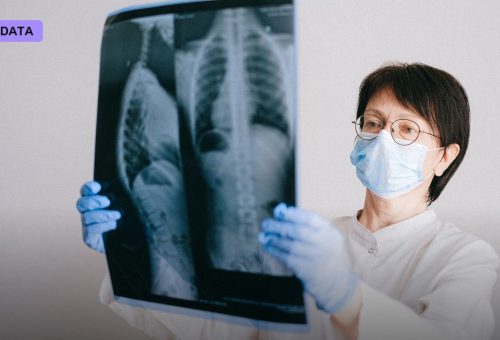
Photo: Kindel Media / PEXELS via Pexels