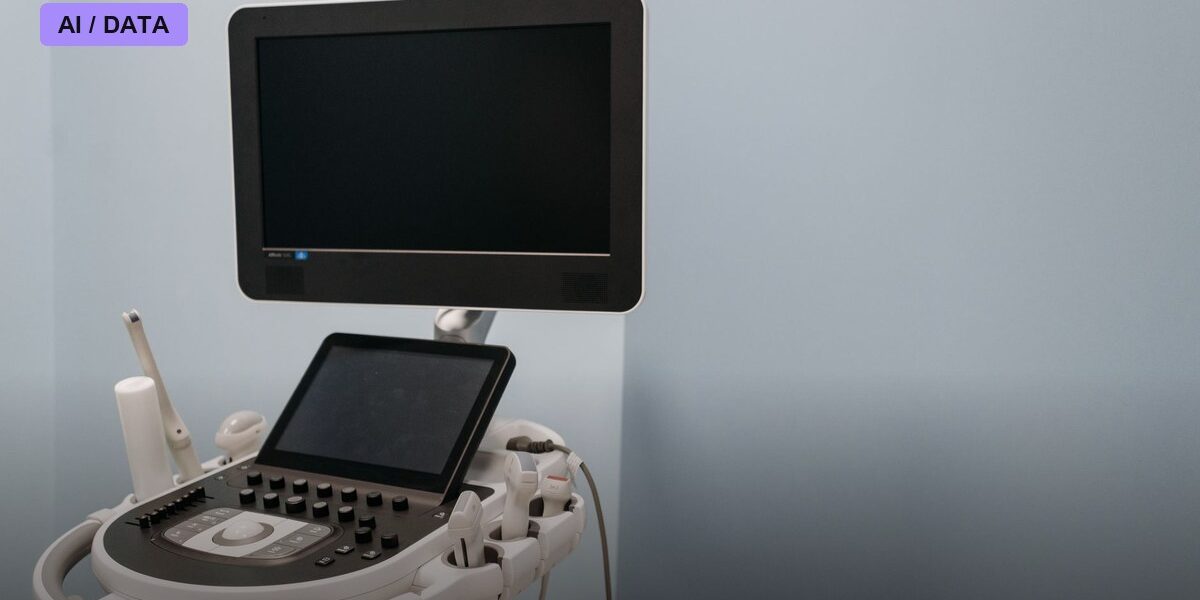
ThinkSono received FDA 510(k) clearance for its AI-powered ultrasound guidance software, which provides real-time guidance to healthcare professionals without formal ultrasound training as they acquire vascular images used to detect deep vein thrombosis, a potentially life-threatening blood clot condition.
Solving the Ultrasound Training Bottleneck
Diagnostic ultrasound has historically required years of specialized training to perform reliably, creating a bottleneck in emergency rooms, rural clinics and other settings where a trained sonographer may not always be immediately available to assess a patient presenting with symptoms of deep vein thrombosis, a condition that can be fatal if a clot breaks loose and travels to the lungs as a pulmonary embolism. ThinkSono’s software is designed to close this gap by providing step-by-step, AI-generated guidance that helps a non-specialist clinician position the ultrasound probe correctly and recognize when a diagnostic-quality image has been captured, rather than requiring the clinician to already possess that expertise themselves.
The Path to Clearance
ThinkSono’s software had previously received Breakthrough Device Designation from the FDA, a status reserved for technologies the agency believes could provide more effective treatment or diagnosis of life-threatening conditions, which typically allows for more interactive and expedited review during the clearance process. The subsequent 510(k) clearance — a regulatory pathway used for devices demonstrating substantial equivalence to an already-legally-marketed device — confirms that the FDA found sufficient evidence the AI guidance system performs safely and effectively for its intended diagnostic use.
Clinical Significance of Faster DVT Detection
Deep vein thrombosis is notoriously difficult to diagnose based on symptoms alone, since swelling and pain in a limb can have many other, less serious causes, making timely and accurate imaging essential to avoiding both missed diagnoses and unnecessary anticoagulant treatment for patients who do not actually have a clot. By enabling more clinicians in more settings to perform this imaging reliably, ThinkSono’s technology could reduce the time between a patient’s initial presentation and a confirmed diagnosis, particularly in settings like rural emergency departments or urgent care clinics that may lack dedicated vascular ultrasound specialists on staff around the clock.
Part of a Broader Wave of AI-Guided Imaging Tools
ThinkSono’s clearance adds to a growing category of FDA-cleared AI tools designed to extend specialist-level diagnostic capability to non-specialist clinicians, following a pattern established by earlier clearances including TytoCare’s AI-powered ENT examination suite and various AI-assisted cardiac and pulmonary imaging tools. This category reflects a broader shift in digital health regulation toward tools that augment frontline clinician capability rather than purely automating diagnosis without human involvement.
Remaining Questions About Real-World Performance
While FDA clearance confirms the software met the agency’s regulatory standards based on submitted clinical validation data, real-world performance across the full diversity of patient body types, clinical settings and operator skill levels typically takes longer to establish than the clearance process itself requires, meaning broader clinical adoption will likely generate additional real-world evidence that could either reinforce or complicate the device’s initial clearance-supporting data.
What’s Next
Watch for ThinkSono to announce specific hospital system or emergency department partnerships adopting the cleared software, as well as any published real-world outcome studies tracking diagnostic accuracy and time-to-diagnosis improvements following deployment. The clearance may also encourage additional AI ultrasound guidance developers to pursue similar regulatory pathways for other point-of-care diagnostic applications beyond deep vein thrombosis detection.
Photo: Pavel Danilyuk / PEXELS via Pexels