Subtle Medical has received FDA clearance for SubtleHD(CT), an AI-powered image enhancement tool that reduces noise and improves low-contrast detectability in CT scans, extending a technology the company had previously deployed only for MRI. The clearance, announced via PR Newswire, means hospitals can now apply the same class of AI post-processing that has already been used on millions of MRI scans to computed tomography, one of the most widely used imaging modalities in emergency medicine, cancer screening and trauma care.
What image enhancement AI actually does
Unlike diagnostic AI tools that flag suspected disease, SubtleHD(CT) does not interpret images at all. Instead, it works as a post-processing step that cleans up the raw scan data, reducing the visual noise and graininess that can obscure subtle findings, particularly in patients who are scanned with lower radiation doses or on older CT hardware. In practical terms, that means hospitals can potentially use less radiation per scan while preserving image quality good enough for a radiologist to confidently make a diagnosis — a tradeoff that matters given long-standing clinical concern about cumulative radiation exposure from repeated CT imaging, especially in younger patients who may need scans for chronic conditions over many years.
Why CT is a bigger and different challenge than MRI
CT scanners produce images through X-ray attenuation rather than the magnetic resonance techniques MRI uses, meaning noise patterns, artifacts and diagnostic priorities differ substantially between the two modalities. Subtle Medical’s expansion into CT required training and validating a distinct AI model rather than simply repurposing its MRI algorithms, according to the company’s FDA submission materials. CT scans are also performed far more frequently in acute care settings — more than 90 million CT scans are performed annually in the United States, according to figures cited by the American College of Radiology — making the potential dose-reduction and workflow benefits of a validated enhancement tool proportionally larger.
The dose-reduction argument, and its limits
Radiology researchers have published data over the past several years suggesting AI denoising tools can allow meaningful dose reductions — in some published studies, up to 30 to 50 percent lower radiation — while maintaining diagnostic image quality, though real-world dose-reduction figures vary significantly by scanner hardware, patient body type and the specific clinical question being asked. Radiologists caution that AI-enhanced images should not be treated as a substitute for appropriately calibrated scan protocols in the first place, and that enhancement software works best as a complement to, not a replacement for, sound imaging technique and dose-optimization practices already in use at well-run radiology departments.
A crowded field of AI image-quality vendors
Subtle Medical is not alone in this space. The FDA’s AI device database now lists more than 1,500 cleared AI algorithms, the large majority for radiology applications, spanning detection tools like Qure.ai’s chest X-ray software and Aidoc’s triage products, alongside image-enhancement competitors. Distinguishing between AI tools that improve image quality, tools that flag potential disease, and tools that draft reports has become increasingly important for hospital purchasing committees trying to build a coherent AI strategy rather than accumulating a patchwork of overlapping point solutions from different vendors.
Adoption hurdles beyond the FDA clearance
Clearance from the FDA is necessary but not sufficient for hospital adoption. Radiology departments must integrate new AI software with existing picture archiving and communication systems (PACS), validate performance on their own scanner hardware and patient population, and in many cases negotiate reimbursement or cost-justification internally, since payers do not always reimburse separately for AI-enhanced imaging the way they do for the underlying scan itself. Hospital IT and radiology leaders interviewed in trade press coverage of similar tools have described integration timelines of six months to more than a year even after a product clears regulatory review, a reminder that FDA clearance marks the beginning, not the end, of a long adoption curve.
What’s next
Subtle Medical has said it plans to pursue additional FDA clearances expanding SubtleHD’s applicability to other CT protocols and potentially other imaging modalities beyond MRI and CT. The company’s broader bet is that as hospitals face continued pressure to reduce costs and radiation exposure while managing rising imaging volumes, AI-based image enhancement will become a standard part of scanner software rather than an optional add-on — a shift that, if it happens, would likely unfold gradually as existing scanner fleets are replaced or upgraded over the coming several years rather than through a single wave of adoption.
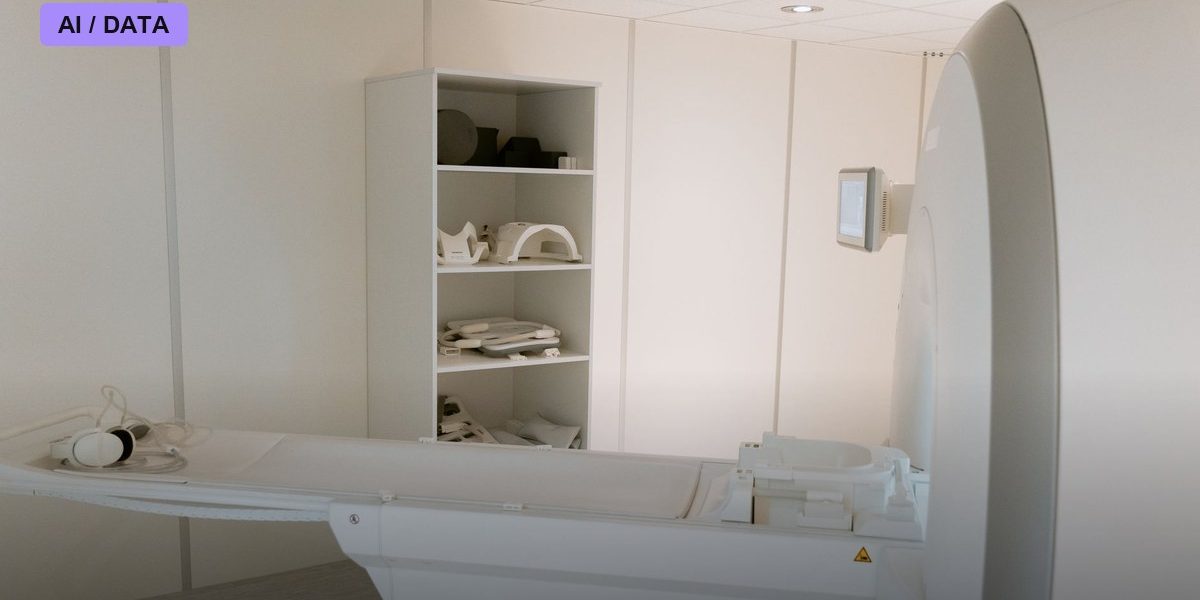
Photo: MART PRODUCTION / PEXELS via Pexels