The U.S. Food and Drug Administration has cleared TumorSight Risk, an artificial-intelligence tool built by Chicago-based SimBioSys that converts a single breast MRI into a personalized five- and ten-year forecast of cancer recurrence, the company announced this week. The 510(k) clearance covers women with hormone receptor-positive, HER2-negative Stage I through IIIA breast cancer, the most common subtype diagnosed in the United States, and marks what SimBioSys calls the first AI-powered, MRI-derived recurrence risk assessment to reach the market.
A Forecast Built From a Single Scan
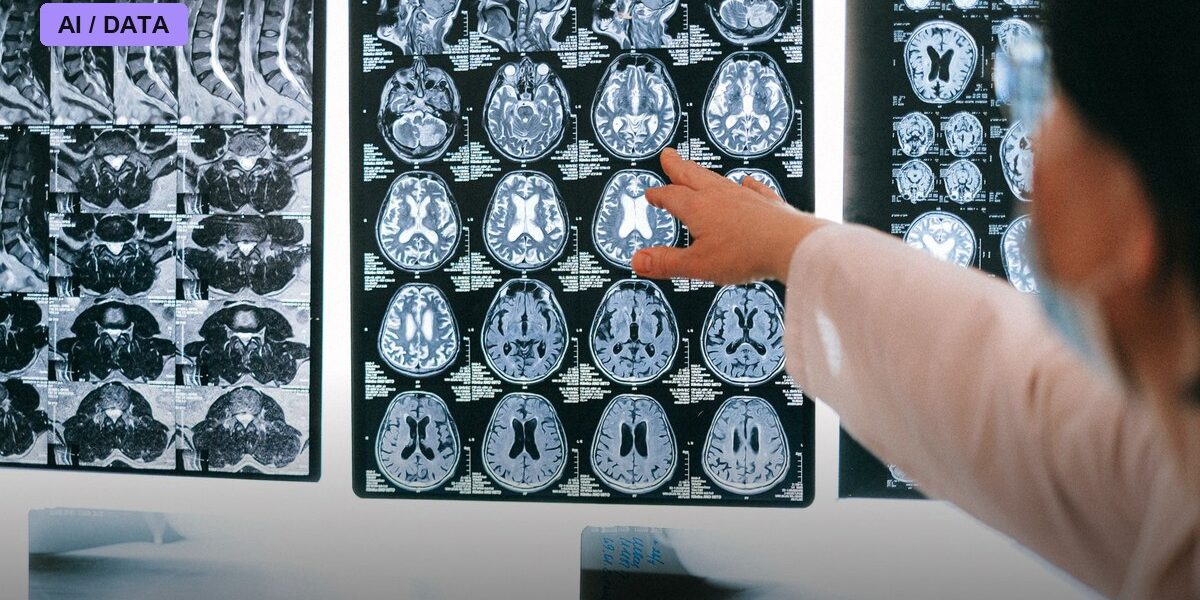
Rather than relying solely on tumor size, lymph node status and hormone-receptor levels — the standard inputs oncologists have used for decades — TumorSight Risk applies machine learning to the texture, shape and vascular patterns visible on a pre-treatment MRI. The software outputs an individualized probability of recurrence at five and ten years, intended to sit alongside existing tools like the Oncotype DX genomic test rather than replace a pathologist’s read of the tumor itself. SimBioSys says the clearance was supported by validation data showing the model’s risk stratification held up across diverse patient cohorts, though full peer-reviewed results have not yet been published in a journal.
Why Oncologists Want Another Data Point
Hormone receptor-positive, HER2-negative breast cancer accounts for roughly 70% of all breast cancer diagnoses in the U.S., according to American Cancer Society estimates, and treatment decisions for this group — whether to add chemotherapy to hormone therapy, how long to extend endocrine treatment, how aggressively to monitor a patient after surgery — hinge heavily on recurrence risk. Existing genomic assays require a tissue biopsy sample and can take one to two weeks to return results; an MRI-based tool, by contrast, can theoretically generate a risk score from imaging many patients already undergo as part of staging, without additional tissue extraction.
The Limits of Imaging-Based Prediction
Not every clinician is convinced imaging alone can match the precision of genomic profiling. Tumor biology — the specific mutations and gene-expression patterns driving a cancer’s behavior — doesn’t always correlate neatly with how a mass appears on MRI, and skeptics note that FDA clearance through the 510(k) pathway requires only a showing of “substantial equivalence” to a predicate device, a lower bar than the randomized trials used to validate genomic tests like Oncotype DX or MammaPrint. SimBioSys has positioned TumorSight Risk as complementary rather than competitive, suggesting it could be used earlier in the diagnostic process — before a biopsy sample is even sequenced — to help triage which patients need more urgent genomic testing.
Part of a Broader Wave of AI Imaging Clearances
TumorSight Risk arrives amid a dense stretch of FDA activity on AI-enabled diagnostics. In the same week, the agency cleared ThinkSono’s AI-guided ultrasound software for non-specialist detection of deep vein thrombosis, and radiology trade publications have tracked a steady monthly cadence of AI device clearances throughout 2026, covering everything from CT contrast reduction to cardiac MRI reconstruction. The FDA’s Center for Devices and Radiological Health has cleared more AI-enabled medical devices in the past two years than in the prior decade combined, reflecting both faster submission pipelines from device makers and an agency increasingly comfortable with software-as-a-medical-device applications in imaging.
What Adoption Will Actually Require
Clearance is only the first hurdle. For TumorSight Risk to reach patients, SimBioSys will need hospital radiology departments to integrate the software into existing MRI workflows, convince oncology tumor boards that the risk scores change treatment decisions in practice, and in many cases secure reimbursement codes from insurers — a process that can take years even for well-validated tools. The company has not disclosed pricing or said which health systems, if any, have committed to deploying it. Patient advocates have welcomed the prospect of a non-invasive risk tool but caution that any new prognostic score needs to be tested against real-world outcomes, not just retrospective imaging datasets, before it reshapes how doctors counsel patients on chemotherapy and long-term surveillance.
What It Means Going Forward
If TumorSight Risk performs as advertised in broader clinical use, it could give the roughly 180,000 women diagnosed with hormone receptor-positive, HER2-negative breast cancer each year in the U.S. a faster, less invasive way to understand their odds — potentially sparing lower-risk patients from unnecessary chemotherapy while flagging higher-risk patients for closer monitoring. The next test will come from independent validation studies and real-world registries tracking whether its predictions actually match what happens to patients over the next five to ten years, data that will take time to accumulate regardless of how fast the software itself reached market.
Photo: Anna Shvets / PEXELS via Pexels