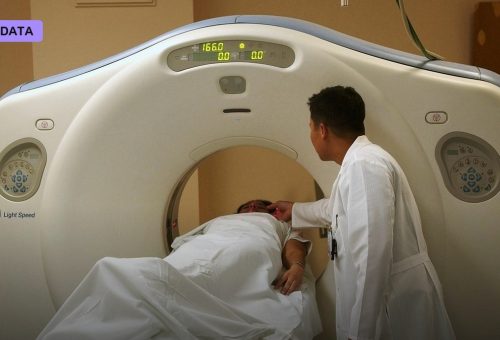
Allegheny Health Network, the 14-hospital Pittsburgh-based system, has scaled an AI-driven "touchless" prior authorization platform to handle more than 200,000 authorization requests annually with a 96% first-pass approval rate, according to Healthcare Finance News and the system’s technology partner, Humata Health. The deployment, which began in imaging and radiology before expanding to additional procedure codes, represents one of the most concrete examples yet of AI moving from pilot to true production scale inside a major U.S. health system’s back-office operations — even as new survey data shows most hospitals attempting the same thing still can’t demonstrate it’s paying off.
What "Touchless" Actually Means
Humata’s platform automates the full prior-authorization lifecycle: reading clinical documentation directly from the electronic health record, matching it against the specific payer’s current medical policy, assembling and submitting the authorization request in the payer’s required format, tracking its status, and monitoring for post-authorization issues — all without staff manually keying data into payer portals. Allegheny was the first health system to deploy Humata’s fully touchless version of the workflow, according to an April 2025 announcement from Businesswire and HIT Consultant, and has since broadened it beyond its original imaging focus; in one recent month, the system reported 70% of requests for a wider set of CPT procedure codes were approved through the automated pathway. Humata’s prior-authorization business was significant enough that R1 RCM, a major revenue-cycle outsourcing firm, agreed to acquire the company this year to bolster its own AI-powered authorization offering, according to Fierce Healthcare.
The Numbers Driving Adoption Industry-Wide
Allegheny isn’t an outlier in trying — it’s an outlier in succeeding at scale. Industry-wide, data cited by multiple healthcare finance outlets shows prior-authorization automation achieving first-pass approval rates above 95% and cutting turnaround times by as much as 80% at leading health systems, with one documented case saving 2,841 staff hours and $644,000 in a single year. R1 RCM, separately, reported that its own prior-authorization product clears 68% of orders within one hour and nearly 97% within a day, with an authorization-related denial rate under 1%. The pressure to automate is structural: physicians and their office staff spend roughly 13 hours a week completing an average of 39 prior authorizations per physician, according to data compiled by industry trackers, a burden widely cited as a top driver of both staff burnout and delayed patient care.
The Adoption Numbers Hide a Bigger ROI Problem
Despite stories like Allegheny’s, the broader rollout of AI in hospital revenue cycles looks far less settled. Oliver Wyman’s 2026 Healthcare RCM Survey found that 63% of healthcare organizations have now integrated AI-powered automation somewhere into their revenue cycle workflows — but only 15% of those organizations report a positive return on investment. Separately, an HFMA poll of 95 healthcare finance professionals found just 27% of organizations are deploying AI at scale across multiple revenue-cycle functions, while 53% remain stuck running pilots in a handful of select areas. Oliver Wyman’s researchers attribute much of the ROI gap to sequencing: many systems bought AI tools before establishing the benchmarks needed to measure whether the technology was actually working, making it difficult after the fact to prove the investment paid off.
A Growing Divide Between Large and Small Systems
The gap between broad adoption and deep, enterprise-wide implementation tracks closely with hospital size. Academic medical centers and large regional systems, with dedicated IT and data infrastructure teams, are far better positioned to move AI tools from pilot to full production than local and rural hospitals, according to the Oliver Wyman research — and only 20% to 40% of organizations overall report enterprise-wide deployment across their complete revenue-cycle value chain. Respondents cited lack of budget (44%), integration challenges with legacy systems (43%), difficulty demonstrating ROI (42%) and vendor reliability concerns (42%) as the top obstacles blocking smaller systems from following Allegheny’s path.
The Skeptic’s Case
Critics of the rapid AI revenue-cycle buildout argue the industry is repeating a familiar health IT pattern: vendors sell transformative promises, health systems buy in before building measurement infrastructure, and only years later does it become clear which deployments generated real savings versus which simply shifted administrative burden around without reducing total cost. The fact that 63% of systems have adopted some form of AI automation but just 15% can show ROI, skeptics say, suggests many of the efficiency claims circulating in vendor marketing — and in press releases touting rates like Allegheny’s 96% first-pass approval — may not generalize to systems without comparable scale, patient volume, or payer mix.
What’s Next
With R1 RCM’s acquisition of Humata signaling consolidation among prior-authorization AI vendors, and large systems like Allegheny and Texas Health Resources (another Humata client) demonstrating what full-scale deployment can look like, the next two years are likely to sharpen the divide between health systems that can afford to build the measurement and integration infrastructure AI requires and those that can’t. Expect more hospitals to follow Allegheny’s phased approach — starting with a narrow, high-volume use case like imaging before expanding — as a way to generate the kind of internal proof-of-ROI data that Oliver Wyman’s survey suggests most organizations currently lack.
Photo: Grove Brands / PEXELS via Pexels