On August 11, 2026, twelve of the largest health systems in the United States announced they were banding together with imaging-AI company Aidoc to answer a question that has quietly nagged at American medicine for years: does all this diagnostic AI actually make care better, or does it just look good in a sales deck?
The new Diagnostic AI Consortium brings together Advocate Health, Cedars-Sinai Health System, Hartford HealthCare, Houston Methodist, Mercy, Mount Sinai Health System, Northwell Health, Northwestern Medicine, Sutter Health, University of Florida Health, University Hospitals of Cleveland, and WellSpan Health. Together, those twelve systems treat nearly 20 million patients a year, giving the group unusual scale to test AI tools under real hospital conditions rather than in isolated pilot programs.
From scattered pilots to a shared playbook
For the past several years, diagnostic imaging AI has spread through American hospitals in a patchwork way: one radiology department buys a stroke-detection algorithm, another trials a fracture-flagging tool, and nobody compares notes. The Aidoc consortium is explicitly designed to replace that patchwork with a shared approach. Member systems will co-design AI-enabled diagnostic workflows together, measure their effect on safety, quality, and speed to diagnosis across sites, and build common governance practices for how algorithms get vetted, monitored, and retired. Aidoc is supplying the technical backbone through its Clinical AI Reasoning Engine, a foundation model the company calls CARE, running on an enterprise platform it calls aiOS. The consortium says it will publish its outcomes, training methods, and governance playbook so that hospitals outside the group can copy what works, with initial results expected sometime in 2027.
Why imaging AI needed a crisis response
The urgency behind the consortium traces back to a capacity problem that has been building for years: too many scans, not enough radiologists to read them fast enough, and emergency departments where a delayed read on a CT scan can mean a delayed stroke treatment. The FDA has cleared more than 1,500 AI-enabled imaging algorithms as of early 2026, up from just 221 in 2023, according to industry tracking of 510(k) clearances — an explosion that has left individual hospitals struggling to evaluate which tools are worth deploying and how to integrate them into already-strained radiology workflows. Aidoc itself has ridden that wave, receiving FDA clearance in January 2026 for a foundation model covering 14 CT conditions and raising a $150 million Series E round in April 2026.
The uncomfortable number hanging over the industry
That rapid clearance pace is exactly what worries critics. A study by researchers including Rawan Abulibdeh of the University of Toronto and colleagues affiliated with MIT Critical Data, published in PLOS Digital Health using data through December 2025, found that of 1,357 AI devices the FDA had cleared for patient care, only three had been tested on whether patients actually lived longer or fared better as a result. Of the handful of clinical trials that did exist, 94 percent were run by the device manufacturers themselves, and nearly three-quarters enrolled fewer than 500 participants. Study co-author Sebastián Andrés Cajas Ordóñez put the core problem bluntly: FDA clearance, he said, “means the device resembles one already on the market. It does not mean it helps anyone.” The researchers have proposed a three-stage testing framework modeled on pharmaceutical approval, requiring evidence of patient benefit before and after a device reaches the market.
What a consortium can do that a single hospital can’t
That is the gap the new consortium is implicitly trying to close, though without regulatory power. Even strong proponents of imaging AI within radiology have acknowledged the field has moved faster on deployment than on proof: radiologists surveyed in recent studies have voiced concern that algorithms with claimed accuracy rates in the high 90s often behave unpredictably once deployed outside the hospital where they were trained, a brittleness problem that single-site pilots rarely catch. By pooling data and workflow experience across twelve systems with different patient populations, imaging volumes, and IT infrastructure, the consortium is betting it can surface those failure modes faster than any one hospital could alone — and build shared evidence of real-world performance that regulators, insurers, and skeptical clinicians can actually scrutinize.
What’s next
The consortium’s first public test will be whether it delivers more than a joint press release. Promised deliverables include shared implementation and governance standards and a public accounting of how the tools performed on safety, quality, and diagnostic speed — the very outcomes the PLOS Digital Health researchers said are largely missing from the AI device record. With results not expected until 2027, radiologists, hospital administrators, and regulators will be watching to see whether a dozen major health systems working together can finally produce the kind of rigorous, independent evidence that individual FDA clearances have so far failed to require.
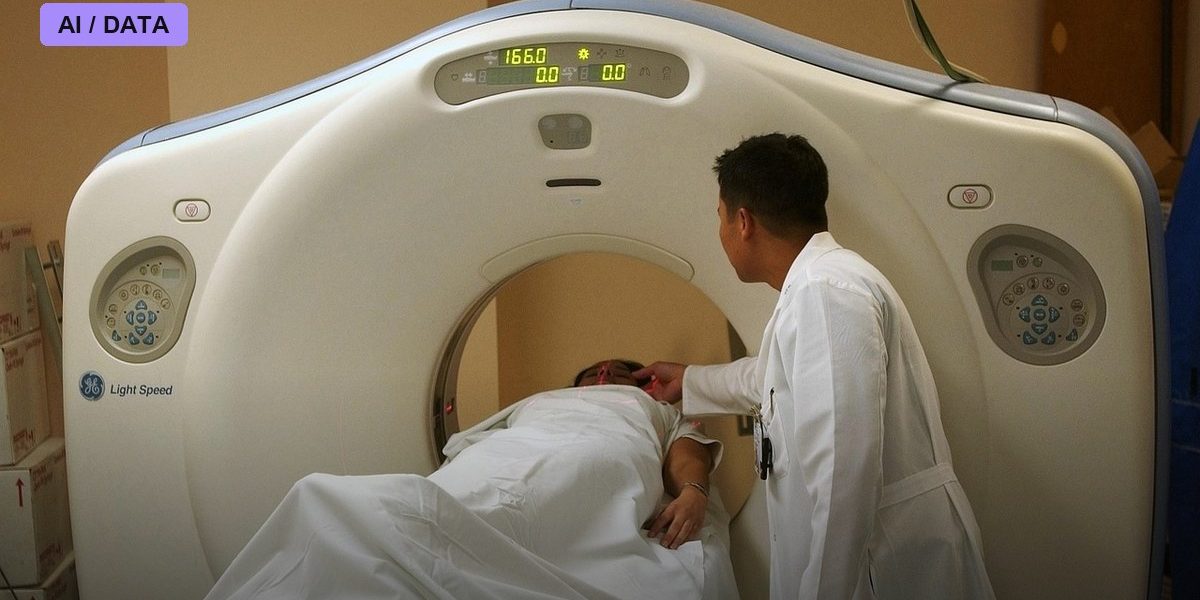
Photo: 12019 / PIXABAY via Pixabay