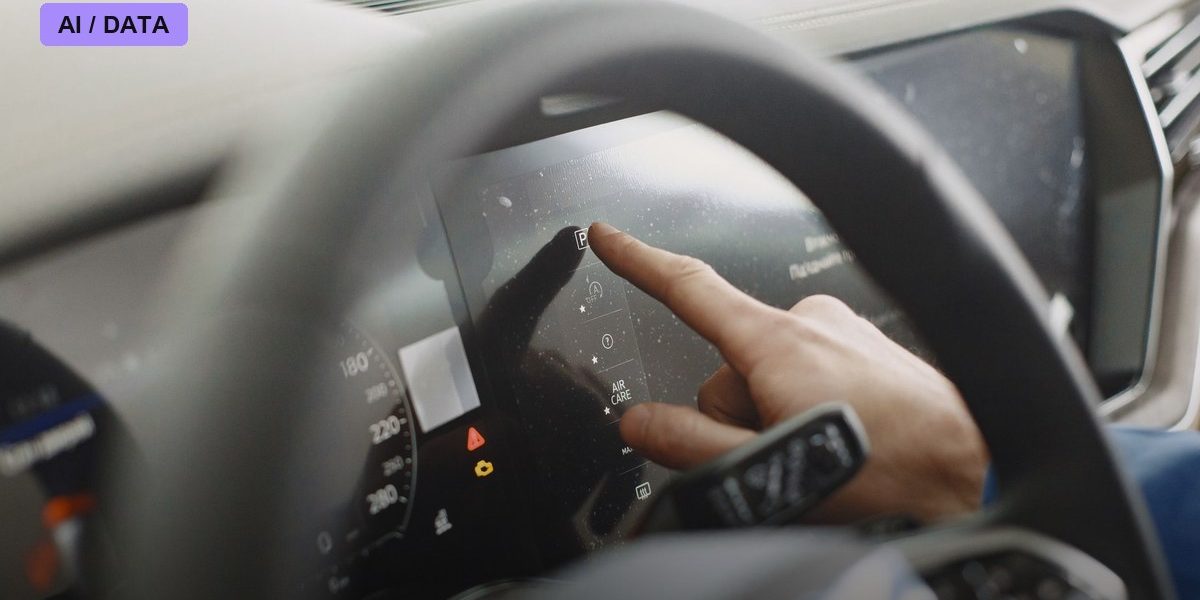
At CES 2026 in Las Vegas, BMW and Amazon unveiled the first production vehicle to run Amazon’s generative-AI assistant Alexa+: the all-electric 2026 BMW iX3, the debut model of BMW’s new Neue Klasse platform. Stephan Durach, BMW Group’s senior vice president for development of digital services, infotainment and connected company, said the upgraded BMW Intelligent Personal Assistant is designed to let drivers speak to the car the way they would to another person, stringing together multiple requests in a single sentence instead of issuing rigid, pre-programmed commands. The announcement caps a three-year development partnership between BMW and Amazon that began with a 2022 deal to build BMW’s next-generation voice assistant on Alexa Custom Assistant technology.
What The Car Can Actually Do
The core pitch is conversational flexibility. A driver can ask the iX3 to lower the cabin temperature, pull up nearby restaurants, check the battery’s remaining range, and get a weather update, all in one spoken sentence, with Alexa+ parsing the compound request and routing each piece to the right vehicle system or outside service. Amazon says Alexa+ is already running across more than 600 million devices worldwide, and BMW is tapping Amazon Bedrock to customize the large language model with its own vehicle data so the assistant can reason about real BMW telemetry rather than generic web answers. Passengers can also start a conversation with Alexa+ on an Echo speaker at home and pick it up again once they get in the car, part of what Amazon frames as its push to put one assistant across every device a customer owns, from kitchen counters to dashboards.
The Rollout Timeline
BMW says the upgraded assistant will reach the iX3 in Germany and the United States by the second half of 2026 at the latest, with software updates for existing iX3 owners beginning in May 2026 and wider deployment across roughly 40 BMW models and model updates following as vehicles move to the new BMW Operating System X and Operating System 9. The iX3 itself runs on BMW’s new Panoramic iDrive interface, which also brings a ConnectedDrive app store carrying YouTube Music and Zoom, letting occupants take video calls on the center display while parked and continue the audio once the car starts moving.
How BMW Got Here
BMW has been iterating on in-car voice control since 2018, when TechCrunch and other outlets praised its first Alexa integration for keeping the feature genuinely useful rather than gimmicky. That early version simply let Alexa skills run inside the car. The 2026 version is a different proposition entirely: a generative model that can hold context across a conversation and take multi-step actions, reflecting the industry-wide shift from scripted voice commands to large-language-model assistants that began accelerating once consumer chatbots proved people would talk to software in full sentences. BMW is not alone in making this bet — General Motors will launch its own proprietary AI assistant by the end of 2026 to compete with Google’s Gemini, Rivian has begun rolling out its in-house Rivian Assistant, and Volkswagen is deploying voice assistants built on Chinese LLMs from Tencent, Alibaba and Baidu for its China-market vehicles. BMW’s choice to lean entirely on Amazon’s infrastructure, rather than build a proprietary model like GM, makes it an outlier among automakers racing to define the in-car AI experience.
The Privacy Trade-Off Nobody Can Ignore
The partnership also raises the same data questions that have followed Alexa since it left the kitchen counter. Once Alexa+ is active in the iX3, queries are processed on Amazon’s servers, and the ambient data that comes with voice assistant usage — what a driver asks, when, and how often — becomes part of Amazon’s broader data picture of that customer, according to reporting on the integration. Critics have described it as an intimate class of data collection, since a car’s voice assistant captures location and daily-movement patterns, not just shopping lists or smart-home commands. BMW has pushed back on the idea it is simply handing data to Amazon: the company says voice queries route through BMW’s own servers first, before reaching Amazon, specifically so BMW retains control, and drivers can choose BMW’s native assistant, Alexa+, or both side by side rather than being forced into one system. That compromise is the central tension in the rollout: it preserves some automaker control, but does not eliminate the broader concern that car dashboards are becoming another front door into Amazon’s ecosystem.
Why Automakers Are Racing For This Now
The scramble reflects a widening view across the auto industry that the dashboard is the next major battleground for AI platforms, following phones, speakers and laptops. Analysts covering CES 2026 described the show as marking an inflection point where automakers shifted from showcasing autonomous-driving demos to shipping production-ready generative AI features, with suppliers like Qualcomm and chipmakers pushing onboard compute capable of running LLMs locally. For companies like Amazon, Google and Qualcomm, winning space in a car’s infotainment stack means another daily touchpoint and another stream of usage data; for automakers, the calculus is whether partnering with a tech giant gets a better assistant to market faster than building one in-house, at the cost of ceding some control over the customer relationship and the data that comes with it.
What’s Next
The real test for BMW’s bet comes once the iX3 ships to ordinary buyers in Germany and the U.S. later this year and reviewers and regulators get a chance to probe how cleanly the BMW-first-then-Amazon data routing actually works in practice, and whether drivers notice or care about the distinction. With GM’s proprietary assistant also due by the end of 2026, and Rivian and Volkswagen already shipping their own AI assistants, 2026 is shaping up as the year the industry’s voice-assistant strategies diverge into two camps: automakers building their own models to keep data in-house, and those like BMW betting that partnering with an AI incumbent is the faster, better path to a dashboard that actually understands what a driver is asking for.
Photo: Gustavo Fring / PEXELS via Pexels