At the Chinese University of Hong Kong’s Sleep Assessment Unit, inside the Department of Psychiatry, researchers are running an experiment on a deceptively small design question with potentially large consequences: does bolting an AI chatbot onto an app-based insomnia program actually make young people use it, and sleep better as a result? The trial, registered on ClinicalTrials.gov as NCT06593262, began on July 26, 2024, was last updated on March 18, 2026, and is currently listed as active but not recruiting, with an estimated completion date of August 2026.
An Old Therapy Meets a New Delivery Problem
Cognitive behavioral therapy for insomnia, or CBT-I, is not new, and it is not experimental — clinicians have treated it as the first-line therapy for chronic insomnia for years, ahead of sleeping pills. The persistent problem has never really been whether CBT-I works; it’s getting people to actually complete a multi-week program of sleep restriction, stimulus control, and cognitive restructuring exercises without a therapist checking in. That adherence gap is exactly what the CUHK trial is designed to probe, using an AI chatbot as the intervention meant to close it.
The Trial Design
The study has enrolled 168 participants, randomized into two groups: both get the same four-week app-based CBT-I program, but one group’s app includes a chatbot described in the trial materials as a “two-way interactive, intelligent, and patient-centered conversational agent,” while the other gets a static, one-directional version of the same content. Researchers are assessing participants at baseline, at a two-week interim point, immediately after the intervention, and again at three and six months — a long enough follow-up window to catch whether any benefit from the chatbot actually lasts.
Who Qualifies, and Why That Matters
Eligibility is narrow by design. Participants must be between 18 and 25 years old, score 15 or higher on the Insomnia Severity Index — placing them in the moderate-to-severe range — and have a smartphone with reliable internet access. The exclusion criteria are notable: the trial screens out people with other sleep disorders, certain neuropsychiatric conditions, serious suicidality, anyone currently in structured psychotherapy or on sleep medication, and shift workers or recent long-haul travelers whose sleep patterns are disrupted for other reasons. Explicitly excluding people with serious suicidality reflects a caution that’s become common across AI mental-health research: keep the tool away from the population where a chatbot’s mistimed or wrong response carries the highest stakes. Depression and anxiety are tracked as secondary outcomes, meaning researchers are also watching whether fixing sleep has ripple effects on broader mental health.
The Evidence Already Backing Digital CBT-I
The CUHK trial isn’t starting from zero. Sleepio, a UK digital CBT-I program that uses an algorithm to personalize a six-week course, was reviewed by the National Institute for Health and Care Excellence, which found it reduced NHS costs over a year of use — largely through fewer GP visits and fewer prescriptions for sedatives like zolpidem and zopiclone. That track record gives algorithmically personalized CBT-I a credibility baseline that most consumer AI mental-health products don’t have, even before a conversational chatbot is added into the mix.
Why a Chatbot Might Help, or Might Not
The case for the chatbot is straightforward: if the biggest failure point in digital CBT-I is people dropping off rather than the therapy itself not working, an interactive layer that checks in, answers questions, and nudges people back to their exercises could plausibly improve the one thing static apps struggle with — adherence over several weeks. The case against assuming that is just as straightforward: there’s no public result yet, and the entire point of an assessor-blind randomized trial is to test the claim rather than take a vendor’s word for it. That rigor stands in sharp contrast to a crowded field of 2026 consumer sleep apps — with names like SleepArchitect, Lunara, SleepCBT, and DreamSync — nearly all of which market AI chat features and CBT-I content with little to no published efficacy data behind them, and some with only a handful of app store reviews to their name.
What’s Next
With an estimated completion date of August 2026, results from the CUHK trial are not far off, though none have been published yet. If the chatbot arm shows meaningfully better adherence or sleep outcomes than the app-only arm, it could become a template other digital CBT-I developers point to as validation. If it doesn’t, it will stand as a pointed counterexample for the dozen-plus consumer apps currently selling AI chat as a premium upgrade with nothing resembling a clinical trial behind the claim.
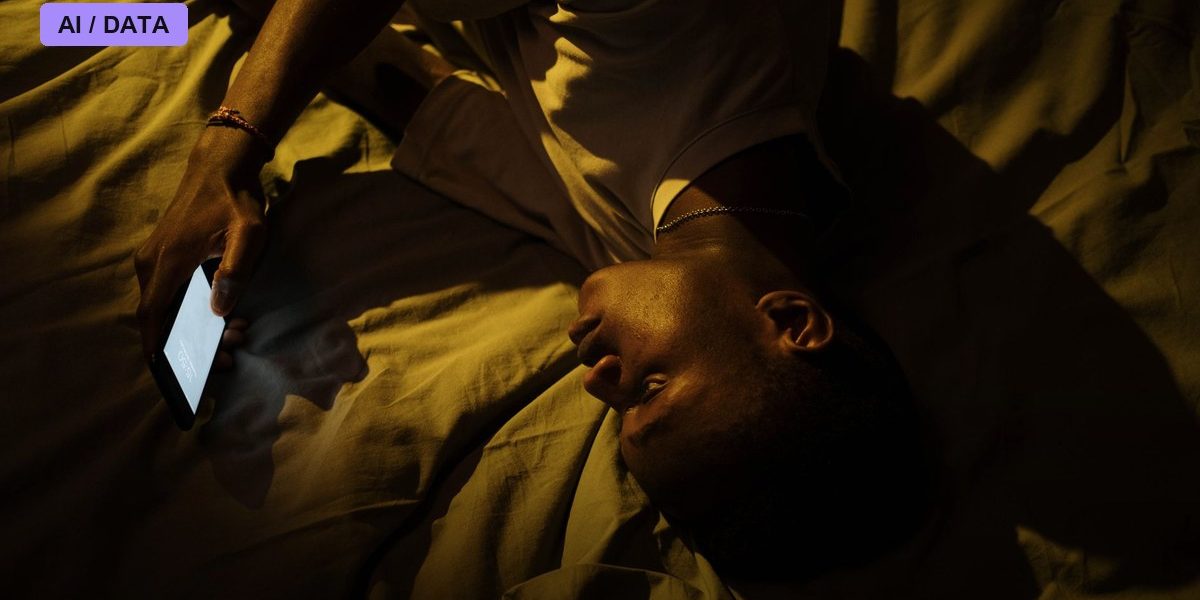
Photo: cottonbro studio / PEXELS via Pexels