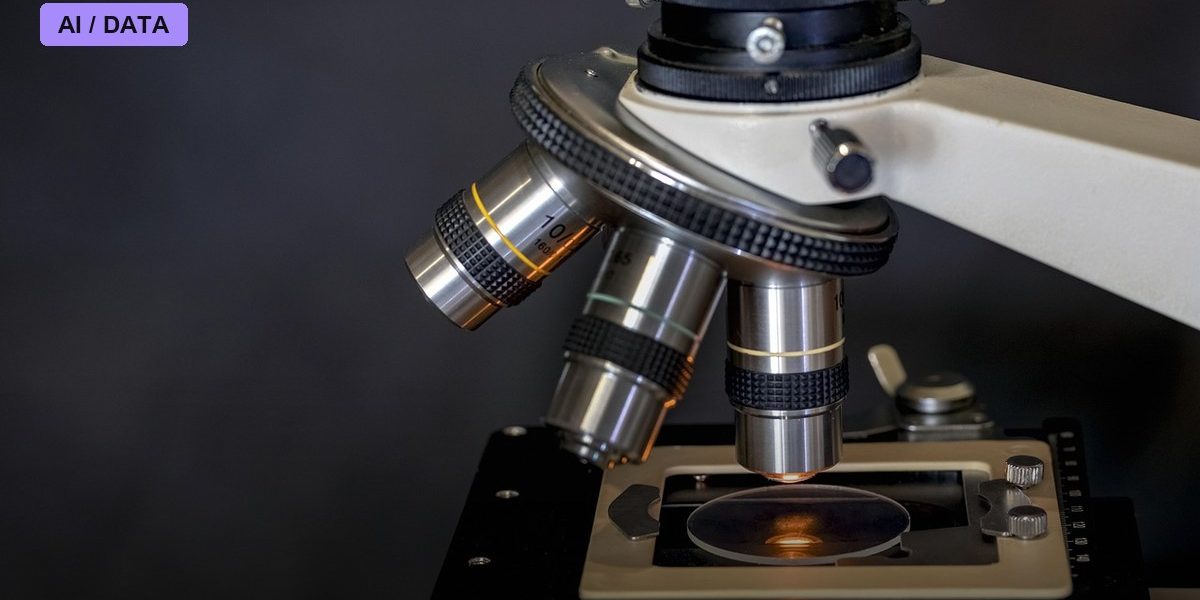
Cancer diagnosis still depends heavily on a pathologist peering through a microscope at stained tissue slides, a skill that takes years to master and varies in accuracy from one hospital to the next. A team at the Hong Kong University of Science and Technology has built an AI system, described in the journal Nature Cancer, that aims to close that gap. Called PRET, it can recognize 18 different cancer types using only a handful of slides per case, and it is designed to work across different hospitals’ scanners and staining methods without being retrained each time.
The Bottleneck in Cancer Pathology
Every cancer diagnosis that leads to a treatment plan passes through a pathology lab, where a specialist examines thin slices of tissue to determine whether a tumor is malignant, how aggressive it looks, and what type of cancer it is. That process is slow, requires scarce specialist expertise, and produces results that can differ between labs depending on staining chemistry, scanner hardware, and the individual pathologist’s experience. In regions with few trained pathologists, that bottleneck can delay treatment for weeks.
How PRET Learns to Generalize
Most AI pathology tools are trained on large datasets from a single hospital system and struggle when deployed elsewhere, because slide preparation and imaging equipment differ so much from site to site. The HKUST team built PRET specifically to generalize, training it to recognize cancer patterns that hold up across different slide-preparation techniques and scanner types rather than memorizing the quirks of one lab’s data. According to the researchers’ published results, the system can identify 18 cancer types without additional site-specific training, a feature aimed squarely at hospitals that cannot afford to build and label their own massive training datasets.
Why Generalizability Matters More Than Raw Accuracy
In AI diagnostics, a tool that performs brilliantly in the lab where it was built but falls apart in a different hospital is effectively useless for broad deployment. That has been a persistent criticism of medical AI research: systems trained and tested on the same narrow data source report impressive accuracy figures that don’t hold up once exposed to the messier reality of community hospitals and smaller clinics. By building and testing PRET across varied slide sources, the HKUST team is directly targeting that credibility gap, though independent, multi-institution validation beyond the original publication will be necessary before health systems adopt it widely.
What Pathologists Say About AI in Their Field
Pathology groups have generally welcomed AI tools as assistants rather than replacements, emphasizing that a human specialist still needs to confirm any AI-flagged diagnosis before it affects patient care. The concern is less about whether AI can spot patterns in tissue, something computer vision has proven capable of for years, and more about accountability: when an algorithm and a pathologist disagree, hospitals need clear protocols for who has the final say, and insurers and regulators still need frameworks for how AI-assisted pathology reports should be documented and billed.
The Road From a Published Paper to Routine Care
Publication in a leading journal is a milestone, not a finish line. Before a tool like PRET reaches a community hospital, it typically needs regulatory clearance, integration with the hospital’s existing laboratory information systems, and a track record across far more cases and institutions than any single academic paper can provide. The HKUST team’s emphasis on cross-site generalizability suggests they are explicitly designing for that next phase, rather than optimizing purely for a strong number in a research paper.
Looking Ahead for Patients and Labs
If tools like PRET prove reliable at scale, the biggest beneficiaries may be hospitals and clinics in regions with few pathologists, where a second, AI-generated opinion could speed up diagnosis and catch cases that might otherwise wait weeks for specialist review. For patients, the practical hope is faster answers and more consistent diagnoses regardless of which hospital processes their biopsy. The harder work now is the unglamorous part: multi-site clinical trials, regulatory review, and building the trust among pathologists and hospital administrators that any diagnostic tool needs before it moves from a research finding to something that actually changes how cancer is diagnosed. That trust-building process typically takes years rather than months, since hospital laboratory directors must weigh liability questions alongside accuracy data, and insurers need to be convinced that paying for an AI-assisted pathology read produces better outcomes than the status quo before reimbursement codes catch up with the technology. In the meantime, the HKUST team’s decision to publish detailed cross-site performance data, rather than a single headline accuracy number, gives outside researchers a concrete basis to attempt independent replication, which is ultimately the step that separates a promising academic tool from one hospitals are willing to stake diagnoses on.
Photo: Panals / PIXABAY via Pixabay