Qure.ai, the Mumbai- and Los Angeles-based radiology AI company, announced on February 26, 2026 that the U.S. Food and Drug Administration had cleared six new indications for its chest X-ray software, qXR-Detect, bringing the tool’s total cleared findings to more than a dozen and making it, by the company’s count, the most broadly cleared AI chest X-ray product on the market. The expanded clearance covers findings across the lung, pleura, hila, heart, bones and mediastinum, areas that account for the vast majority of abnormalities radiologists and emergency physicians look for on a standard chest film.
What the Software Actually Does
qXR-Detect is a computer-assisted detection, or CADe, system that runs in the background as a chest X-ray is captured, flagging and localizing suspicious findings — a possible nodule, an enlarged heart silhouette, a rib fracture, fluid in the pleural space — before a radiologist or emergency room physician even opens the image. Qure.ai says the goal is not to replace the reader but to make sure nothing gets missed in a busy ER or an overnight shift with a thin radiology staff, and to shorten the time between the X-ray being taken and a finding being acted upon.
A Clinical Study, Not Just a Paper Filing
To win the clearances, Qure.ai ran both a standalone performance test and a multi-reader, multi-case (MRMC) clinical study, the gold-standard design for proving an AI tool improves — rather than merely matches — human reading performance. In an MRMC study, the same set of images is read by multiple radiologists with and without the AI’s assistance, letting researchers isolate the AI’s actual contribution to accuracy rather than relying on a single comparison.
The Detail That Sets It Apart: A Living Algorithm
Perhaps the more consequential part of the clearance is procedural: qXR-Detect is the only chest X-ray CADe device cleared by the FDA with a Predetermined Change Control Plan, or PCCP. Under a PCCP, a manufacturer pre-specifies to the FDA how its algorithm is allowed to be updated and retrained over time — on what kind of data, within what performance bounds — so that future model refreshes don’t require a brand-new 510(k) submission each time. For hospital IT and radiology departments, that means qXR-Detect can improve incrementally as more data comes in, rather than being frozen at the version first approved.
Radiology Already Leads the AI Device Race
The clearance lands in a crowded field. More than 1,400 AI-enabled medical devices now hold FDA marketing authorization, and radiology accounts for roughly 76 percent of that total, according to FDA’s own AI-Enabled Medical Device List. Chest X-ray specifically has become one of the most contested sub-categories, with rivals racing to add clearances for pneumothorax, tuberculosis and rib fracture detection on top of the basic nodule-finding tools that first came to market several years ago.
The Case For — and the Skeptic’s Case
Proponents argue tools like qXR-Detect matter most in settings that never had ready access to a subspecialty radiologist: rural emergency departments, urgent care clinics, and health systems in lower-resource countries where Qure.ai already has a large installed base. A missed pneumothorax or overlooked nodule on an overnight film is exactly the kind of error an always-on second reader can catch. Critics, however, note that CADe clearances rest on substantial-equivalence and performance-testing pathways rather than the kind of large, prospective, outcomes-focused trials regulators require for new drugs, and that hospitals still lack standardized ways to monitor these tools for performance drift once they are live in a department, PCCP notwithstanding. Radiologist groups have also cautioned that adding six new indications at once increases the surface area for false positives, and that alert fatigue — clinicians learning to click through AI flags rather than scrutinize them — remains a live risk.
What Comes Next
Qure.ai says it plans to pursue additional indications through the same PCCP framework rather than filing fresh 510(k)s for every increment, a template other AI radiology vendors are expected to copy now that the FDA has shown it will grant such plans for CADe software. For hospital administrators, the near-term decision is less about whether to adopt chest X-ray AI — most large health systems already have some version running — and more about which vendor’s clearance breadth, update cadence and false-positive rate best fits their patient population. As FDA’s AI device list continues to grow past 1,400 entries, chest X-ray is shaping up to be the proving ground for how regulators handle AI tools that are designed to keep changing after they reach the market.
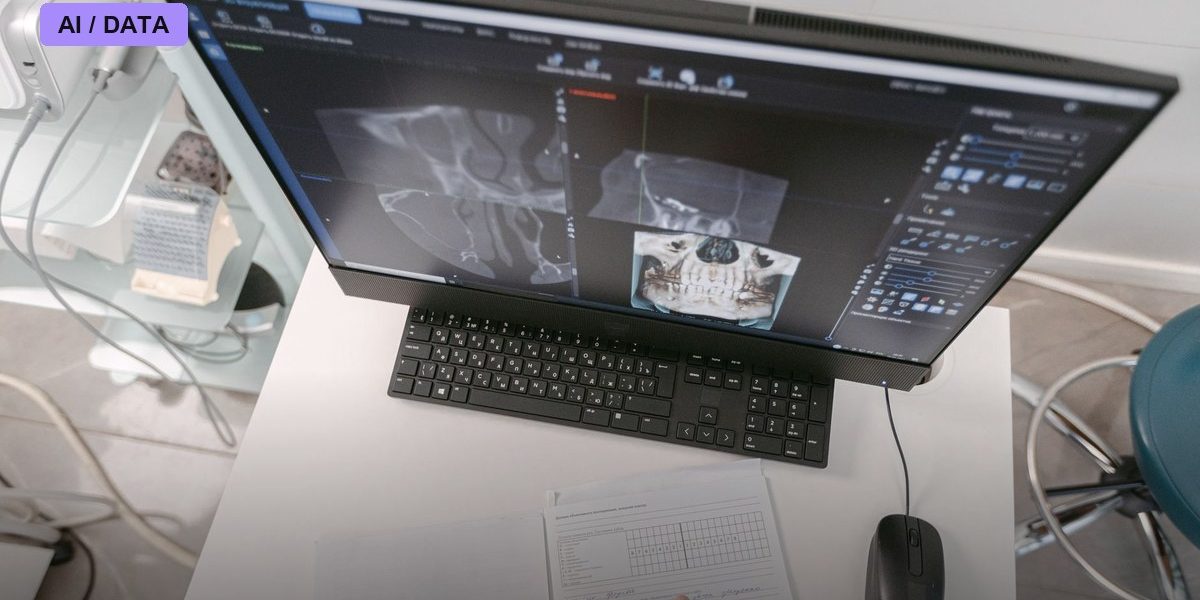
Photo: SHVETS production / PEXELS via Pexels