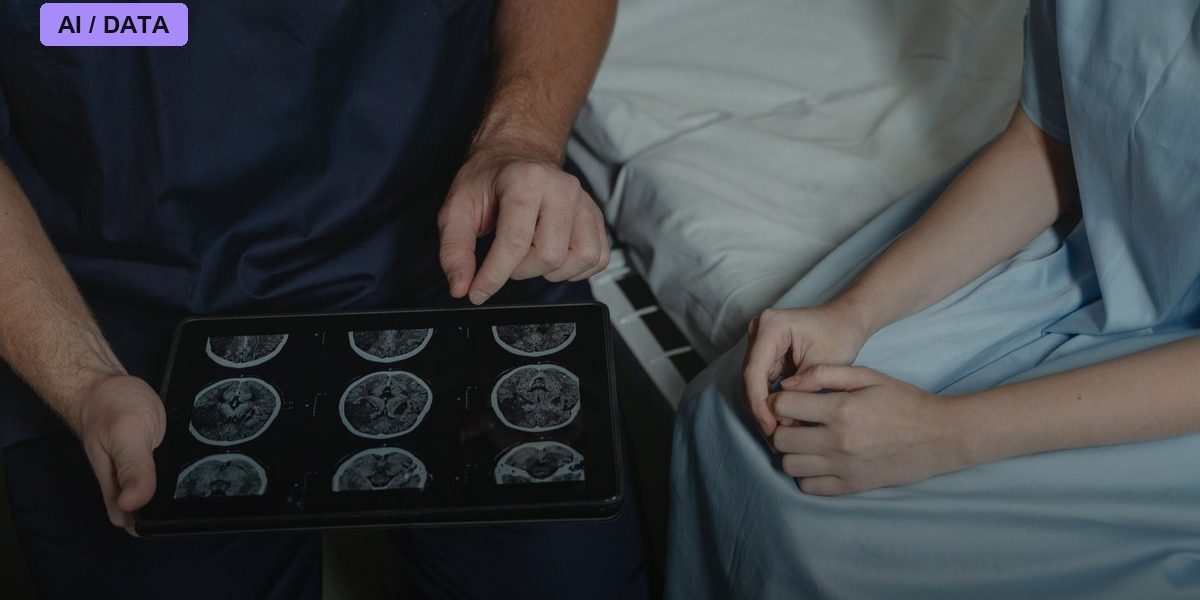
Illinois-based OSF HealthCare announced on September 7 that it is rolling out AI-assisted stroke imaging analysis to every hospital in its system, including rural facilities where a specialist reading a brain scan used to mean waiting for a transfer or a phone call to a neurologist hours away. The expansion reaches OSF St. Joseph Medical Center in Bloomington and OSF’s rural hospitals, adding to sites like OSF St. Anthony in Rockford that already had the technology, and St. Francis Medical Center in Peoria, which has used it since 2018.
What the AI actually does
The system, built on the Rapid AI suite of tools, analyzes brain scans for hemorrhages and early signs of stroke and flags results with greater than 95 percent accuracy, according to OSF. Critically, it pushes those flagged images directly to neurologists’ phones, letting a specialist review a scan from a rural outpost in Peoria or Bloomington the same way they’d review one sitting in a hub hospital. Rapid AI’s parent technology already reads roughly 800,000 stroke brain scans a year across the U.S. and holds an estimated 70 percent share of the American comprehensive stroke center market, with FDA clearance dating back to 2014 — meaning OSF is expanding a mature, widely deployed tool rather than piloting something unproven. That maturity is precisely why OSF felt comfortable pushing the software into rural sites now: a decade of use at flagship hospitals like St. Francis had already built internal confidence in how the tool performs before it was handed to smaller, lower-volume facilities with less specialist backup on-site.
Why the minutes matter this much
Dr. Arun Talkad, OSF’s director of stroke care, put the stakes in blunt biological terms: “Every minute of stroke costs 1.9 million brain cells.” That statistic is the entire logic behind pushing AI reads to rural sites. OSF’s system treated roughly 2,000 strokes last year system-wide, with St. Francis Medical Center alone treating more than 1,000 of those cases. In a large stroke, restoring blood flow minutes sooner through clot-busting drugs or a transfer for mechanical clot removal can be the difference between a patient walking out of the hospital and permanent disability — and rural patients have historically waited longest for that specialist read. Before this expansion, a patient having a stroke at a small rural OSF facility might have needed a scan sent electronically to a regional hub and a callback from an on-call neurologist, a process that can eat into the narrow window doctors have to intervene before brain damage becomes irreversible.
The tradeoff nobody is hiding
OSF is candid that the expansion isn’t free. Extending AI stroke reads to rural hospitals essentially doubles the number of scans its neurologists must review, since those facilities previously either transferred patients before imaging was fully assessed locally or waited on slower manual consults. That’s a real workload increase for a specialist pool that isn’t growing at the same pace as scan volume — the AI doesn’t replace the neurologist’s judgment, it just surfaces more cases, faster, for the same group of doctors to evaluate. OSF has not disclosed whether it is hiring additional stroke neurologists or telestroke consultants alongside the software expansion, leaving open the question of whether the system’s existing specialists can sustainably absorb a doubled review load without burnout eroding the very speed gains the AI is meant to deliver.
The case for caution
Independent researchers have been careful to note that AI stroke-imaging tools are decision-support aids, not autonomous diagnosticians — a Lancet Digital Health study of AI imaging decision support for acute stroke treatment in England found benefits in workflow speed but emphasized that clinical judgment, not the algorithm alone, still drives treatment decisions. A separate multinational validation study, testing whether AI could detect large-vessel occlusions using only standard non-contrast CT scans, likewise framed its results as evidence the technology works well as a triage layer rather than a replacement for angiography and specialist review. The consistent message across the research: AI accelerates who gets looked at first, it doesn’t replace the neurologist looking.
What’s next for rural stroke care
OSF’s expansion mirrors a broader pattern playing out nationally — networks like Brainomix’s 360 Stroke platform now operate across more than 350 hospitals worldwide, and hub-and-spoke telestroke programs have generally shown reduced inter-facility transfer times and shorter hospital stays where they’ve been deployed. The open question for OSF and systems like it is staffing: whether hospital networks invest in growing their stroke-neurology teams to match the doubled scan volume AI expansion creates, or whether the technology ends up spread thinner across the same clinicians rather than the faster, better-resourced rural stroke response it’s designed to enable. For now, OSF’s own numbers — more than 1.9 million brain cells lost per minute, roughly 2,000 strokes treated system-wide last year, and a rural population that had previously waited longest for a specialist read — make the case for why the health system decided doubling its neurologists’ workload was worth the tradeoff.
Photo: Tima Miroshnichenko / PEXELS via Pexels