An emergency department nurse has, on average, a few minutes to look at a new arrival, weigh a jumble of vital signs and complaints, and assign a number from one to five that determines how urgently that patient gets seen. Get it wrong in one direction and a stroke patient waits behind a sprained ankle; get it wrong in the other and hospital resources get burned on low-acuity cases. UMass Memorial Health has spent the past three years trying to make that split-second judgment call more consistent by handing nurses an AI second opinion called KATE, and the health system has now expanded the tool to seven emergency departments across central Massachusetts.
From a Two-Site Pilot to a Systemwide Standard
KATE, built by health-tech company Mednition, was first piloted in February 2023 at UMass Memorial Medical Center’s University and Memorial campuses. After several years of use at the flagship sites, the health system expanded the platform to five additional emergency departments: HealthAlliance–Clinton Hospital’s Clinton and Leominster campuses, Harrington Hospital’s Southbridge and Webster campuses, and Marlborough Hospital. That brings the total footprint to seven emergency departments within a system that employs more than 20,000 caregivers and 2,400 physicians. KATE works by analyzing intake form data alongside a patient’s medical history and other contextual information pulled from the electronic health record, then generating a suggested Emergency Severity Index score, the standard five-level scale U.S. emergency departments use to prioritize care. If the AI’s assessment diverges from what the nurse initially assigned, it flags the discrepancy in real time, prompting a second look rather than silently overriding the human judgment. The system is also tuned to catch subtler clinical patterns, including early indicators of sepsis, that might not jump out during a rushed initial assessment.
The Numbers Behind the Expansion Decision
UMass Memorial’s flagship emergency department handles roughly 138,200 visits a year, and the health system has published concrete before-and-after figures to justify scaling the tool. Since KATE’s integration with the Epic electronic health record, annual Safety Intelligence reports, internal write-ups of care or safety concerns, fell from 50 to 28, a 44% reduction, while the time required to file each report dropped 67%, from a range of 10 to 15 minutes down to 2 to 5 minutes. The hospital also reports that the tool helped avoid at least one medical malpractice claim and contributed to a steep drop in the rate of patients who leave without being seen, a metric hospitals watch closely because it signals both patient dissatisfaction and missed care.
Why Emergency Departments Are Turning to AI Now
The push toward AI-assisted triage did not emerge from nowhere. Emergency departments nationally have faced worsening headwinds in recent years: overcrowding, nursing shortages, and rising patient volumes that leave less time for the careful judgment triage decisions require. Ken Shanahan, MSN, RN, Senior Director of Emergency Medicine and Behavioral Health at UMass Memorial Medical Center, has described the shift in blunt terms, saying the platform functions “like having a second set of eyes. And in emergency care, that can be life-saving.” Mednition CEO Steven Reilly framed the systemwide rollout as validation of the underlying approach, calling the expansion “a significant milestone in our shared journey to transform healthcare delivery.”
Believers See Consistency Where Human Judgment Varies
Supporters of AI-assisted triage argue that its greatest value is not replacing nurse judgment but reducing the variability that comes from different nurses, different shifts, and different fatigue levels producing different acuity scores for similar patients. A tool that flags a mismatch in real time, the argument goes, catches the outlier cases, an under-triaged patient with subtle sepsis signs, or an over-triaged case eating up resources, before they become a documented safety event. The efficiency gains UMass Memorial reports, less time on paperwork, fewer missed high-acuity patients, translate directly into more nurse bandwidth for actual bedside care.
Skeptics Ask Whether Nurses Are Deferring Too Much
Critics of AI triage tools raise a different concern: that as these systems become embedded in daily workflow and integrated directly into the EHR, there is a risk that nurses begin deferring to the algorithm’s suggested score by default rather than treating it as one input among several, particularly during high-volume shifts when time pressure is greatest. There are also open questions about how well these models generalize across different patient populations and hospital settings beyond the specific health system where they were trained and validated, and whether outcomes reported by a single system, especially one working closely with the vendor on case studies, will hold up under independent, peer-reviewed scrutiny.
What the Expansion Signals for Emergency Medicine
UMass Memorial’s decision to scale KATE from a two-site pilot to a seven-hospital systemwide platform, rather than keeping it confined to its flagship academic center, suggests hospital administrators increasingly view AI triage support as core emergency department infrastructure rather than an experimental add-on. If the safety and efficiency gains hold up as more community and regional hospitals adopt the tool, expect other multi-site health systems to follow a similar trajectory: pilot at a flagship site, then expand once the internal data makes the business and clinical case. The next milestone to watch will be whether independent researchers, rather than vendor-published case studies, confirm that AI-assisted triage measurably improves patient outcomes at scale, not just internal safety-reporting metrics.
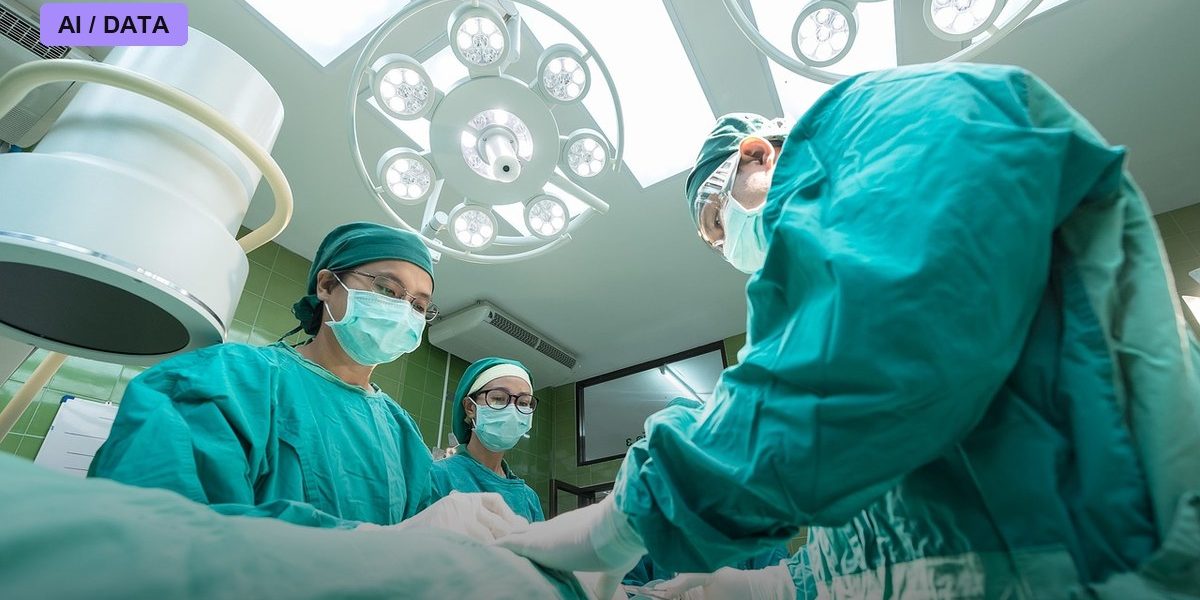
Photo: sasint / PIXABAY via Pixabay