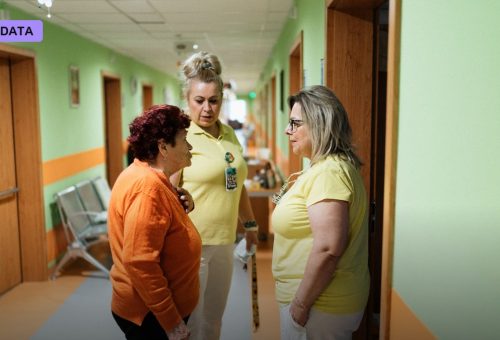
The American Nurses Association Enterprise has named a vice president of AI and Digital Health Programs to lead a new three-year, $5 million national initiative aimed at preparing nurses for a healthcare system increasingly shaped by artificial intelligence tools, according to the organization’s November 2026 announcement. The funding combines a $2.5 million grant from the Johnson & Johnson Foundation with $2.5 million from Google.org.
Why nursing leadership sees this as urgent
Nurses occupy a unique position in the healthcare system: they spend more direct time with patients than almost any other clinical role, and increasingly they are the ones expected to operate AI-powered documentation tools, monitoring systems and decision-support software on the front lines of care. Despite that central role, nursing education and continuing training have historically lagged behind physician-focused AI literacy programs, leaving many nurses to learn new AI tools informally on the job rather than through structured training.
What the initiative aims to build
The three-year program is expected to develop training curricula, professional development resources and policy guidance to help nurses understand both the capabilities and the limitations of AI tools they increasingly encounter in clinical settings — from AI-assisted charting systems to predictive algorithms flagging patients at risk of complications like sepsis or falls. The involvement of both a healthcare-sector funder in Johnson & Johnson and a technology-sector funder in Google.org reflects an attempt to bridge clinical expertise with technical AI literacy in a single coordinated effort.
The adoption gap this addresses
Health systems have accelerated AI product rollouts throughout 2026, but adoption among frontline staff has often outpaced formal training, with many nurses reporting they learned to use new AI-powered tools through brief vendor demonstrations rather than structured education. That gap matters because AI tools deployed without adequate end-user understanding can be misused, under-used, or trusted inappropriately — all outcomes that training initiatives like this one are explicitly designed to prevent.
Industry context: a profession under strain
The initiative arrives as nursing continues to face significant workforce shortages and burnout concerns across much of the United States, pressures that have made both health systems and nursing advocacy groups more receptive to AI tools that promise to reduce administrative burden — provided nurses have the training and trust to use them effectively. Proponents of AI-assisted nursing argue that tools handling routine documentation and monitoring can free up nurses for the hands-on patient care work that most directly requires human judgment and empathy.
Skepticism about funder influence
Some nursing advocacy voices have raised questions about technology companies funding nurse training programs focused on AI adoption, noting the inherent incentive for a company like Google to see its own and partner AI products favorably positioned within clinical training curricula. Supporters of the partnership counter that corporate funding for nursing education is common across many specialties and that the American Nurses Association, as an independent professional body, retains control over the actual curriculum content regardless of funding source.
What’s next
Over the coming three years, the program is expected to roll out training resources to nursing programs and health systems nationally, with success likely measured by how broadly nurses report increased confidence and competence working alongside AI tools in their daily clinical practice. Given nursing’s scale as the largest healthcare profession in the United States, the initiative’s reach — if it achieves broad adoption — could meaningfully shape how AI gets integrated into frontline patient care over the coming years.
Photo: Cedric Fauntleroy / PEXELS via Pexels