Northwell Health, the largest health system in New York state and the Northeast’s biggest nonprofit provider, announced on October 14, 2025 that it will roll out Abridge’s ambient artificial intelligence platform system-wide across all 28 of its hospitals. The deployment will reach roughly 20,000 physicians and 22,000 nurses who together serve more than 3 million patients a year across Northwell’s hospitals and 1,000 outpatient facilities in New York and Connecticut, making it one of the largest single commitments to AI medical scribing technology announced by a U.S. health system to date.
What Abridge Actually Does
Abridge, a Pittsburgh-based health AI company, listens to the conversation between a clinician and a patient during a visit and automatically converts that audio into a structured, billable clinical note inside the electronic health record. The platform supports more than 55 medical specialties and 28 languages, and Northwell said it will embed the technology across outpatient clinics, inpatient units and emergency departments rather than limiting it to a single care setting. Kristin Myers, Northwell’s executive vice president and chief digital officer, and Jill Kalman, the system’s executive vice president, chief medical officer and deputy physician-in-chief, both said the rollout is designed to give clinicians back time currently lost to typing and clicking through chart fields during and after visits. Notably, the companies say Abridge already supports roughly 50 million medical conversations a year across its customer base, and Northwell’s rollout is timed to coincide with one of the largest Epic Systems electronic health record implementations under way anywhere in the country, meaning ambient documentation will be built into the new EHR workflow from the start rather than bolted on afterward.
How Documentation Became a Burnout Crisis
The push toward ambient scribes did not emerge in a vacuum. Since the federal government’s 2009 push for EHR adoption under the HITECH Act, physicians have absorbed a documentation workload that studies have repeatedly linked to burnout, with research over the past decade showing doctors spending one to two hours on charting and other EHR tasks for every hour of direct patient contact, much of it done after hours on personal time that clinicians have come to call "pajama time." Surveys from the American Medical Association and other physician groups have consistently ranked clerical and administrative burden, driven heavily by note-taking, among the top drivers of physician attrition and early retirement. Ambient AI scribes emerged over the past three to four years, building on earlier generations of human and offshore medical transcription services, as a response to that specific pain point: automating the note itself so physicians can look at the patient instead of a screen.
The Numbers Health Systems Are Citing
Northwell cited a study published in the Journal of the American Medical Informatics Association indicating that ambient documentation technology can reduce documentation-related burnout by as much as 67%, and the broader rollout data emerging from other health systems using similar tools has been striking. A JAMA-affiliated study across five academic medical centers found ambient scribes cut total EHR time by 13.4 minutes and documentation time by 16 minutes per encounter, while letting clinicians fit in nearly half an additional patient visit per week. Other large deployments have produced similarly concrete figures: Ardent Health reported a 57% drop in after-hours charting and a 3x return on investment after adopting a competing ambient platform from Ambience Healthcare, while St. Luke’s Health System reported a 38.8% drop in documentation time, a 25% reduction in burnout and roughly $13,049 in additional revenue captured per clinician annually. Those figures help explain why hospital executives are moving from pilot programs to enterprise-wide commitments like Northwell’s.
The Skeptic’s Case: Accuracy, Oversight and Cost
Not everyone is convinced the technology is ready for unsupervised use. Peer-reviewed research examining AI-generated draft notes from simulated clinical encounters found that roughly 70% contained at least one error, averaging 2.9 errors per note, and one comparative study found AI-generated notes contained hallucinations at a higher rate, 31%, than physician-authored notes, which showed hallucinations in 20% of cases. Researchers have documented AI scribes fabricating physical exam findings, inventing symptoms that were never mentioned, misattributing medication recommendations and, in acute or fast-moving clinical scenarios, producing notes whose accuracy can drop to around 65%, meaning up to a third of the content may need correction before it is clinically safe to sign off on. Patient advocates and some clinician groups have also raised consent and privacy questions about continuously recording sensitive conversations, even when audio is deleted after a note is generated, and health system finance officers note that licensing an ambient AI platform across tens of thousands of clinicians is a significant and recurring cost that only pays for itself if adoption and time savings hold up at scale rather than fading after the novelty wears off.
What’s Next for Ambient AI in Hospitals
Northwell’s leadership has signaled that documentation is only the first phase: the system has said it plans to extend Abridge’s underlying technology into coding, risk adjustment, prior authorization and nursing workflows once the core scribing rollout is underway, following a pattern already visible at other large adopters, including Abridge’s recent expansion of clinical decision-support features to more than 300 partner health systems representing over 250 million patients since April 2026. Nationally, nearly two-thirds of Epic-affiliated hospitals have now adopted some form of ambient AI documentation, and competitors including Microsoft’s Dragon Copilot, which counts more than 100,000 active clinician users, and Ambience Healthcare, which has posted encounter-level utilization rates of 80% at some health systems, are racing for the same enterprise contracts. For an industry still reckoning with chronic physician shortages and burnout, the real test now shifts from whether ambient scribes save time, a question the data increasingly answers in the affirmative, to whether health systems can build oversight processes rigorous enough to catch the errors researchers keep finding, before an AI-generated hallucination ends up shaping a patient’s treatment plan.
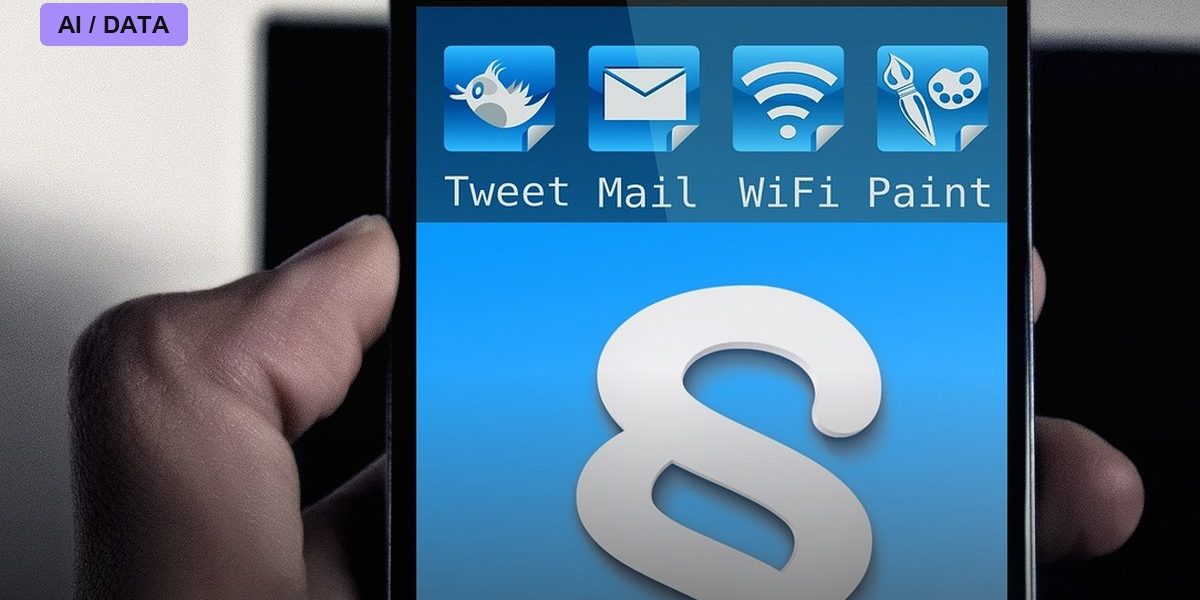
Photo: geralt / PIXABAY via Pixabay