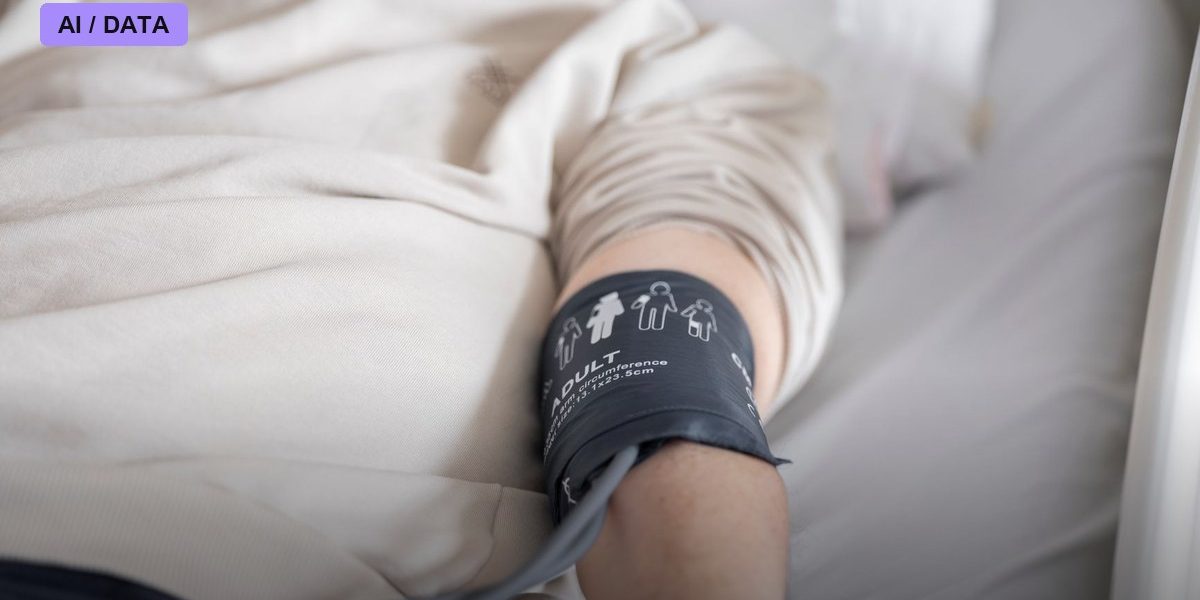
For more than a century, checking blood pressure has meant the same uncomfortable ritual: a cuff, an inflating squeeze around the arm, a beep. This year that changed for U.S. consumers. Swiss medtech company Aktiia, whose optical blood-pressure wearable is sold under the brand Hilo, went nationwide in the United States on July 21, 2026, following an FDA clearance the company received in July 2025 — the first time the agency has cleared a cuffless blood pressure monitor for over-the-counter use.
Twelve Years to Get the Algorithm Right
The Hilo Band’s core idea is simple to describe and extraordinarily hard to execute: an optical sensor on the wrist reads the pulse wave in blood vessels the same way a fitness tracker reads heart rate, and machine-learning models translate the shape and timing of that wave into a blood pressure estimate. Aktiia co-founder and CTO Josep Solà began the underlying research in Switzerland in 2004, while working at a public research institute exploring optical sensors embedded in watches, and spent roughly twelve years developing the approach before Aktiia was spun out as a company. “The amount of confounding information that is coded into the signals we capture is so big that the only way to be able to analyze one of those signals … is to have tons of readings available,” Solà said, describing why the system needs continuous data and periodic recalibration against a traditional cuff to stay accurate for a given wearer, rather than working as a one-time measurement out of the box.
What’s Actually Shipping
The retail product, Hilo Core, is priced at $89.99 for the hardware plus a $149.99 annual subscription — $239.98 in year one — and is eligible for HSA and FSA spending accounts. It is sold directly through Hilo.com and Amazon rather than through a doctor’s office, which is precisely what the FDA clearance required Aktiia to prove: that an ordinary person could set up and rely on the device after reading only the included instructions, without a clinician walking them through it. The company says more than 130,000 users already wear its bands globally, largely from years of sales in Europe under a CE mark obtained in 2021, where it has also picked up regulatory approval in Canada, Australia and Saudi Arabia.
Why Cuffless Blood Pressure Is a Hard Sell to Clinicians
Blood pressure measurement has historically resisted the kind of consumer wearable disruption that reshaped heart rate and sleep tracking, precisely because clinical decisions — diagnosing hypertension, adjusting medication — depend on numbers doctors trust to be accurate within a few points, not just directionally right. Solà has acknowledged that European physicians were initially unsure what to do with Hilo’s continuous data streams when the product first launched there, since blood pressure guidelines were built around periodic cuff readings, not an ongoing stream of estimates. Some European clinics have since begun incorporating the trend data into hypertension management, but Aktiia is careful to describe the device as a tool for spotting patterns and prompting a conversation with a doctor or lifestyle changes — not as a standalone diagnostic instrument on which to base treatment decisions.
The Skeptics’ Case
Cardiologists who study wearable blood pressure technology have raised concerns that apply broadly to optical, cuffless approaches: skin tone, wrist circumference, arterial stiffness and motion artifacts can all distort the pulse-wave signal, and because the device is calibrated against a cuff reading rather than measuring pressure directly, its accuracy can drift over weeks without a fresh calibration. There is also a subtler risk that a comfortable, cuff-free wearable could make people check their blood pressure more casually and less rigorously than a proper clinical measurement demands — generating a false sense of precision from a device explicitly marketed as non-diagnostic. High blood pressure remains the leading modifiable risk factor for heart disease and stroke worldwide, and public health researchers are watching closely to see whether continuous, imperfect data beats today’s status quo of infrequent but more precise cuff readings, or simply adds noise.
What Comes Next
Aktiia’s near-term test is adoption: whether U.S. consumers, many of whom have never regularly checked their blood pressure at home at all, will pay nearly $240 in the first year for a device whose main promise is pattern-spotting rather than diagnosis. Longer term, the company and outside researchers will be watching whether real-world U.S. usage — across a population far more diverse in body type than Aktiia’s largely European user base — holds up to the accuracy standards the FDA clearance implied. If it does, cuffless monitoring could follow the path continuous glucose monitors took from clinical tool to mainstream wellness gadget; if the algorithm falters outside controlled conditions, it risks becoming a cautionary tale about how far pulse-wave inference can really be pushed.
Photo: Engin Akyurt / PEXELS via Pexels