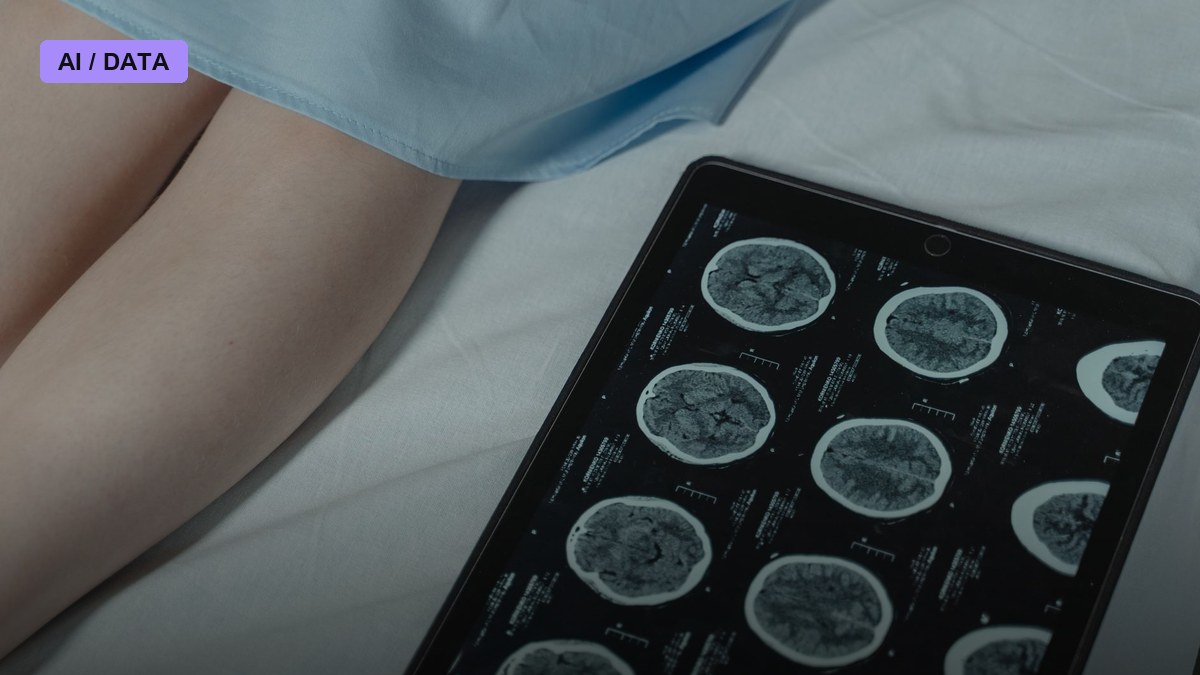
OSF HealthCare, the Peoria, Illinois-based health system that runs 15 hospitals across Illinois and Michigan, has begun rolling out artificial intelligence software to every one of its emergency departments to speed up how quickly stroke patients get diagnosed and treated. The expansion, confirmed by OSF officials in early September 2026, extends a tool already used at its flagship stroke centers to smaller community hospitals that previously had to wait longer for a specialist to read a scan.
What the software actually does
The tool, made by RapidAI, analyzes CT scans of the brain the moment they are captured and automatically flags signs of large vessel occlusion, the type of clot that causes the most severe strokes. It also generates CT perfusion maps showing which parts of the brain are already dead versus which tissue might still be saved, information that used to require a specially trained neuroradiologist to calculate by hand. According to OSF officials speaking to public radio stations WGLT, WCBU, WSIU, and NPR Illinois on September 7, 2026, the software cuts imaging turnaround by an average of 24 minutes at hospitals that adopt it, and pushes the results directly to the phones of on-call neurologists and interventional radiologists, even when they are off-site.
Why minutes matter so much in stroke care
Stroke physicians commonly cite the estimate that an untreated stroke destroys roughly 1.9 million neurons every minute. That arithmetic is why OSF is prioritizing its smaller, rural-adjacent hospitals in this rollout: those sites often lack a neurologist on-site around the clock and have historically had to transfer patients to a hub hospital, such as OSF Saint Francis Medical Center in Peoria, before a clot-busting or clot-retrieval decision could be made. By pushing the AI read straight to a specialist’s phone, OSF says a community hospital in Bloomington, home to OSF St. Joseph Medical Center, can get a treatment recommendation without waiting for a transfer or an in-person consult.
The broader evidence base
OSF’s expansion arrives alongside new peer-reviewed data reinforcing the case for AI-assisted stroke imaging. A multinational validation study led by Dr. Chi Kyung Kim of Korea University Guro Hospital, published in the Journal of NeuroInterventional Surgery and covered by Medical Xpress in September 2026, found that an AI model could reliably detect large vessel occlusions using only standard, non-contrast brain CT scans — the fastest and most widely available imaging option in most emergency rooms, as opposed to the contrast-enhanced or perfusion scans that are not always immediately available. That distinction matters because many rural and community hospitals do not have contrast-imaging protocols ready at all hours, so a model that works off a plain CT scan could extend accurate triage to far more locations than currently have access to it.
Caveats physicians are still raising
Not every expert treats this as a settled win. Health IT researchers who study AI adoption in stroke care, including authors cited in a companion AuntMinnie analysis of hospital resourcing, note that the benefits of stroke AI are uneven: hospitals with strong existing stroke protocols and dedicated neuro-interventional teams tend to see the biggest gains, while under-resourced hospitals that adopt the software without also investing in staffing and transfer logistics see smaller improvements. In other words, the AI can flag a clot in seconds, but if there is no interventionalist available to act on the flag, the time saved on the scan doesn’t translate into a faster thrombectomy. OSF has not disclosed how it is staffing its smaller sites to make sure the AI alerts convert into actual treatment.
What’s next
OSF says the software will be live across its full hospital network by the end of 2026, and the health system plans to track whether the faster imaging reads translate into more patients receiving clot-retrieval procedures within the critical window, rather than just faster scan readings on paper. Nationally, the Korea University-led validation study is expected to feed into revised international guidelines on which AI stroke-imaging tools can be relied upon without contrast dye, a change that could make similar rollouts more feasible for hospitals that don’t have OSF’s resources. For patients, the practical difference is likely to show up quietly: a stroke that once required a transfer and a wait for a specialist may now get a treatment plan before the ambulance crew has finished handing off the patient.
Photo: Tima Miroshnichenko / PEXELS via Pexels