The Food and Drug Administration has granted 510(k) clearance to the first continuous AI-powered early warning system for sepsis, a milestone that formally brings machine-learning surveillance into the regulatory mainstream for one of the deadliest and most time-sensitive conditions in American hospitals. The system, called the Targeted Real-Time Early Warning System (TREWS), was developed by researchers at Johns Hopkins University and is now commercialized by Bayesian Health, the company founded and led by Suchi Saria, director of Hopkins’ AI & Healthcare Lab. The clearance, announced May 12, 2026, follows a prospective, multi-site study published in Nature Medicine that tracked 764,707 patient encounters, including 17,538 confirmed sepsis cases, across five hospitals spanning academic and community settings with more than 2,000 participating clinicians.
Why Minutes Matter in Sepsis
Sepsis, the body’s often-fatal overreaction to infection, kills more than 350,000 hospitalized adults and over 1,800 children in the United States every year, according to figures cited alongside the FDA clearance, out of roughly 1.7 million adults and 18,000 children who develop the condition annually. The clinical math behind the urgency is stark: each hour that antibiotic treatment is delayed reduces a patient’s odds of survival by about 8%. Because early sepsis symptoms mimic routine post-surgical or infectious complaints, clinicians frequently do not suspect it until organ damage has already begun. Saria has described the core problem bluntly: “Pre-suspicion screening is what creates lead time, and lead time is what changes outcomes in sepsis. Once a clinician already suspects sepsis, the clock has been running — often for hours or even days.”
How TREWS Works
TREWS continuously pulls vital signs, lab values and other electronic health record data to flag patients up to 48 hours before a clinician would otherwise suspect sepsis, rather than reacting only after symptoms or a blood culture order prompt concern. In the Nature Medicine study, the system identified sepsis cases with 82% sensitivity and gave clinicians a median lead time of roughly 5.7 hours. Patients whose care teams acted on TREWS alerts within an hour saw an 18.2% relative reduction in mortality, alongside shorter hospital stays and a roughly 10% drop in ICU utilization. Dr. Neri Cohen, Bayesian Health’s head of clinical enterprise, framed the technical challenge this way: “Catching sepsis before a clinician suspects it is a needle-in-a-haystack problem,” underscoring how narrow the margin is between catching a true case early and flooding clinicians with noise.
A Decade of False Starts Set the Stage
TREWS did not arrive in a vacuum. Duke Health’s Sepsis Watch, the first deep-learning model deployed in routine U.S. clinical care, has run continuously since November 2018 and was shown in a 2018-2019 clinical trial to predict sepsis a median of five hours before clinical presentation, with researchers estimating it could save roughly eight lives a month at Duke alone. A more recent external validation at Summa Health’s emergency departments, covering 205,005 patient encounters, found the model’s accuracy (AUROC of 0.906 to 0.960) held up outside its home institution. But the field’s most cautionary tale is Epic Systems’ widely deployed proprietary Epic Sepsis Model, built into EHR software used nationwide. A University of Michigan evaluation led by Dr. Karandeep Singh found the model missed 67% of actual sepsis cases in real-world use and that its accuracy fell to just 53% when limited to data available before a blood culture was even ordered — evidence, researchers suspected, that the model was partly just detecting clinicians’ existing suspicions rather than predicting ahead of them.
Alert Fatigue and the Trust Problem
That history has made clinician trust, not just statistical accuracy, central to how hospitals now evaluate these tools. At MemorialCare, one of the health systems now using TREWS alongside Cleveland Clinic, Johns Hopkins Health System and University of Rochester Medicine, chief medical officer Dr. James Leo has credited the system with cutting the volume of electronic alerts clinicians must triage, which he says has helped rebuild provider confidence after years of alarm fatigue from earlier-generation tools. MemorialCare has reported a 3.6 percentage point absolute mortality reduction when providers engage with TREWS alerts, time-to-antibiotics cut roughly in half with first-hour engagement, and emergency department adoption near 90%. Even so, skeptics note that sensitivity of 82% still means roughly one in five true sepsis cases can be missed, and that any EHR-embedded alert system carries risk of desensitizing staff if false positives climb as it scales beyond controlled study sites, a dynamic that undid earlier confidence in the Epic model.
Reimbursement Opens the Door to Wider Rollout
The FDA clearance is paired with a new Medicare reimbursement pathway, making TREWS the first continuously operating sepsis-monitoring technology with both regulatory clearance and a dedicated payment mechanism; eligible hospital discharges can draw an add-on payment of up to $61.84 per case. Cleveland Clinic, a 23-hospital system, has backed Bayesian Health financially since its early development, a sign that large health systems increasingly see continuous AI monitoring as infrastructure worth investing in directly rather than simply licensing.
What Comes Next
With FDA clearance and Medicare payment now in place, the main constraint on adoption shifts from regulatory uncertainty to implementation: training clinicians to trust and act on alerts, tuning the system to local patient populations, and tracking whether mortality gains seen in flagship health systems like Johns Hopkins and Cleveland Clinic generalize to smaller, resource-constrained hospitals where sepsis mortality is often highest. Researchers and hospital administrators will also be watching whether rival vendors, chastened by the Epic Sepsis Model’s stumbles, move to validate their own tools prospectively rather than relying on retrospective accuracy claims. For now, TREWS stands as the clearest evidence yet that AI early-warning systems, if built and deployed carefully, can measurably save lives from a condition where minutes routinely determine outcomes.
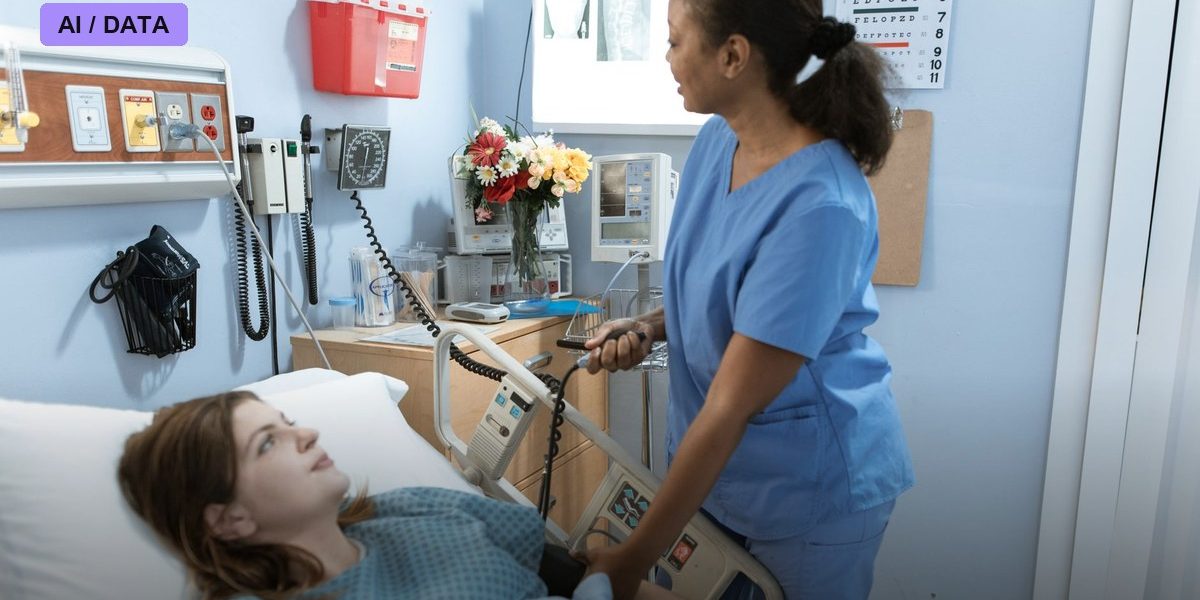
Photo: RDNE Stock project / PEXELS via Pexels