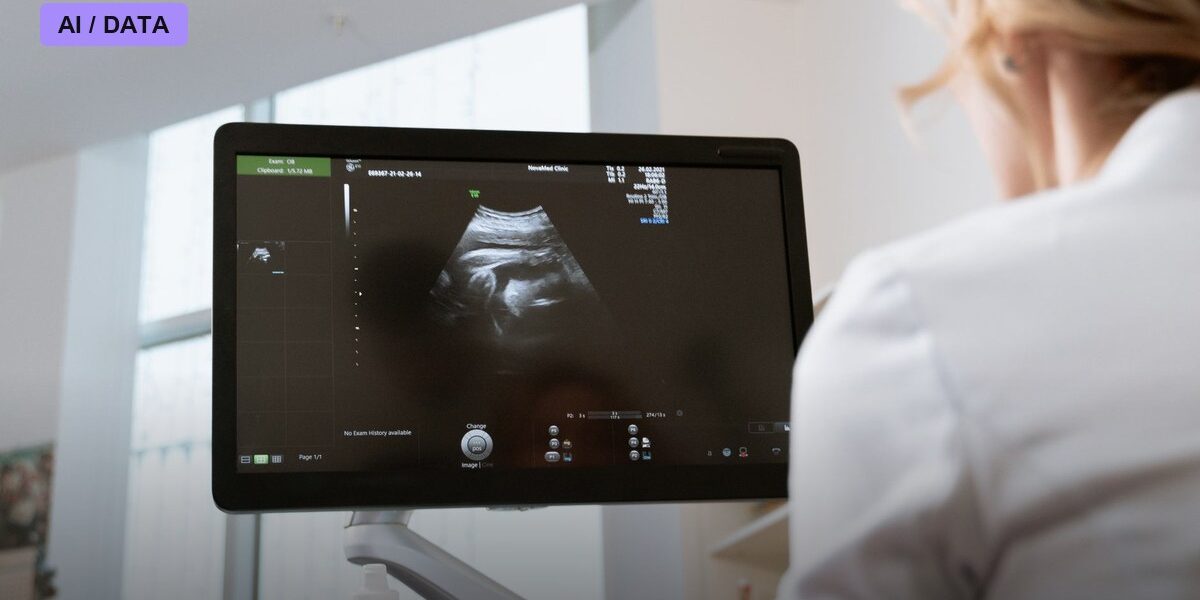
The FDA has cleared an AI-powered ultrasound guidance tool designed to help clinicians detect suspected deep vein thrombosis, a potentially life-threatening blood clot condition, building on a Breakthrough Device Designation the technology received from the agency in February. The clearance adds to a steady stream of imaging-AI approvals this year as the FDA works through a backlog of devices seeking authorization for narrowly defined, high-value diagnostic tasks.
Why DVT detection benefits from AI guidance
Deep vein thrombosis can be difficult to diagnose reliably with ultrasound, particularly for less-experienced operators, because identifying the specific vein-compression patterns that indicate a clot requires skill that varies significantly across clinicians and care settings, from specialist vascular labs to busy emergency departments where ultrasounds are often performed by generalists under time pressure. An AI guidance system that helps standardize image acquisition and flags likely clot patterns in real time could reduce the skill-dependency of an exam where a missed or delayed diagnosis can lead to a life-threatening pulmonary embolism if the clot travels to the lungs.
Part of a broader imaging-AI expansion
The DVT tool’s clearance follows a pattern set by companies including Aidoc, whose First Read chest X-ray report-drafting tool received its own FDA Breakthrough Device Designation in June, and Viz.ai, which has continued expanding its AI suite for detecting pulmonary embolism, stroke and lung nodules. Collectively, these tools reflect a maturing imaging-AI sector that has moved from early stroke-detection use cases into a much broader range of time-sensitive diagnostic scenarios across emergency and specialty care.
Two views on point-of-care AI diagnostics
Emergency medicine physicians who have piloted similar AI-guided ultrasound tools say they meaningfully reduce the time to accurate diagnosis in settings where a vascular ultrasound specialist isn’t immediately available, potentially saving lives in time-sensitive cases. Some radiology and vascular medicine specialists caution that AI guidance tools, however well validated, should not be used as a substitute for specialist confirmation in ambiguous cases, warning that overreliance on an AI-flagged result could lead generalist clinicians to skip confirmatory steps they would otherwise take.
The regulatory pathway it followed
The tool’s path from Breakthrough Device Designation in February to full clearance illustrates how that FDA program, intended to speed review of technologies addressing serious or life-threatening conditions, has become a common route for AI-enabled diagnostic devices specifically, even as the agency separately works through a broader, more complex framework for generative AI tools that operate less predictably than fixed diagnostic algorithms like this one.
The broader DVT diagnostic challenge
Deep vein thrombosis affects an estimated several hundred thousand Americans annually, with missed or delayed diagnoses contributing to a meaningful share of preventable pulmonary embolism deaths, making point-of-care diagnostic accuracy a significant public-health concern beyond any single hospital’s quality metrics. Emergency medicine researchers have noted that rural and community hospitals, which often lack access to around-the-clock vascular ultrasound specialists, stand to benefit disproportionately from AI-guided tools that can help a general emergency physician or trained technician achieve diagnostic accuracy closer to what a specialist would provide, potentially narrowing a long-standing urban-rural gap in vascular diagnostic quality. Insurance coverage for AI-guided ultrasound exams remains inconsistent across payers, according to health-policy researchers tracking reimbursement for newly cleared diagnostic AI tools, a factor that could slow adoption even where the clinical case for the technology is well established, since hospitals are often reluctant to deploy tools that generate costs not reliably covered by Medicare or private insurers.
What’s next
The manufacturer has not disclosed a commercial rollout timeline or which health systems will be first to deploy the cleared tool. Broader adoption will likely depend on how quickly point-of-care ultrasound programs, which have expanded significantly in emergency departments over the past decade, integrate AI guidance as a standard feature rather than an optional add-on to existing equipment. Vascular surgery societies have said they plan to issue their own practice guidelines on when AI-guided point-of-care ultrasound is appropriate versus when specialist referral remains necessary. Device manufacturers competing in the same diagnostic category have said they expect to seek similar Breakthrough Device Designations for their own AI-guided vascular imaging tools within the next year. People close to the matter say additional details are expected to emerge gradually rather than through any single comprehensive disclosure, consistent with how similar developments elsewhere in health AI have typically unfolded over time.
Photo: MART PRODUCTION / PEXELS via Pexels