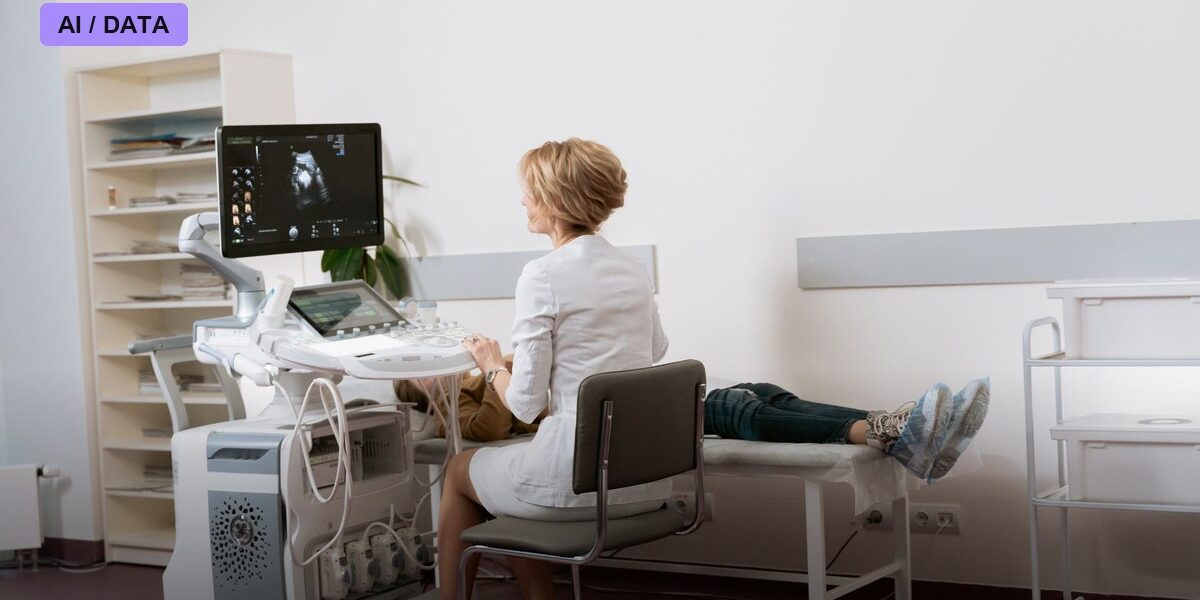
The FDA has granted 510(k) clearance to ThinkSono, a London-based medical technology company, for AI software that walks healthcare workers without formal ultrasound training through compression ultrasound exams used to detect deep vein thrombosis (DVT) in the lower extremities. The clearance, announced this week, targets a persistent bottleneck in emergency and primary care: the shortage of sonographers and radiologists trained to perform and interpret the vascular scans needed to catch dangerous blood clots before they travel to the lungs.
A Common, Often-Missed Emergency
Deep vein thrombosis affects an estimated 900,000 Americans annually, according to figures cited by the CDC, and when a clot breaks loose and lodges in the lungs as a pulmonary embolism, it contributes to as many as 100,000 U.S. deaths a year. The condition is treatable with blood thinners if caught early, but diagnosis traditionally requires a compression ultrasound performed by a trained sonographer — a resource that’s often unavailable overnight, in rural emergency departments, or in urgent-care clinics, forcing patients to wait hours or be transferred to a larger facility for a scan that takes only minutes once a qualified operator is available.
How the AI Guidance Works
ThinkSono’s software uses real-time image analysis to guide a nurse, physician assistant or emergency physician through the specific probe placements and compression techniques needed to image the femoral and popliteal veins, the two sites where clots most commonly form. The system gives on-screen feedback to help the operator capture diagnostically adequate images, then flags areas that appear non-compressible — the classic ultrasound sign of a clot — for review. ThinkSono has pitched the tool specifically at settings where a trained sonographer isn’t on-site, rather than as a replacement for specialist-read vascular ultrasound in hospitals that already have that staffing.
Part of a Fast-Growing Category
The clearance lands alongside a cluster of other AI-enabled device approvals this month, including SimBioSys’s MRI-based breast cancer recurrence tool and an expanded clearance for AIRS Medical’s SwiftMR software. Diagnostic imaging has become one of the most active categories for AI device submissions precisely because ultrasound and MRI interpretation require specialized skills that are unevenly distributed across the healthcare system — concentrated in large hospitals and underrepresented in rural and community settings where patients often wait longest for a diagnosis.
The Case for Caution
Vascular medicine specialists have generally welcomed AI-guided ultrasound tools but note that compression ultrasound for DVT has a learning curve tied not just to probe placement but to interpreting borderline or technically difficult scans — obese patients, swollen limbs or prior clots can all complicate the picture even for experienced sonographers. Critics of rapid 510(k) clearances for AI diagnostic software have also pointed out that “substantial equivalence” clearance doesn’t require the same level of randomized controlled trial evidence that a new drug would need, meaning real-world accuracy in non-specialist hands will only become clear after broader deployment. ThinkSono has said its software is intended to assist, not replace, physician judgment, and that a radiologist or vascular specialist should still review ambiguous findings.
Where It Could Be Deployed First
Emergency medicine groups in the U.S. have expressed interest in tools like this for overnight and weekend coverage gaps, when on-call sonographers may not be immediately available and patients with leg swelling or pain are often sent home with a “rule out DVT” instruction to return if symptoms worsen — a practice that can delay treatment by days. Rural hospitals, which the National Rural Health Association says have closed at a rate of roughly 20 per year over the past decade, are seen as another likely early adopter, since many lack dedicated vascular ultrasound staff at all hours.
What Comes Next
ThinkSono has not disclosed U.S. pricing, launch timeline or which health systems will pilot the software first. The broader question for regulators and hospital administrators will be whether AI-guided scans performed by non-specialists match the diagnostic accuracy of sonographer-performed exams closely enough to justify wider rollout — a question that postmarket surveillance data, rather than the clearance itself, will ultimately have to answer. For now, the clearance adds one more tool to a rapidly expanding list of FDA-cleared AI systems aimed at extending specialist-level diagnostic capability into settings that have historically gone without it.
Photo: MART PRODUCTION / PEXELS via Pexels