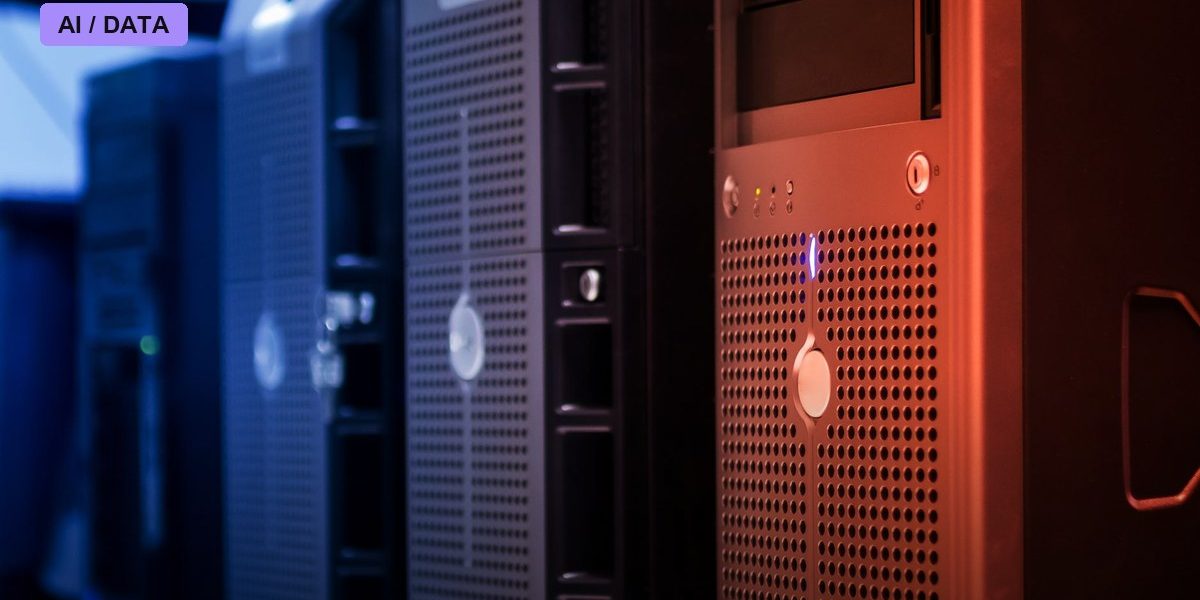
Drug discovery has always been a numbers game measured in years and billions of dollars per approved medicine. Eli Lilly is betting that raw computing power can bend that curve, and this month it switched on what it calls the pharmaceutical industry’s most powerful AI supercomputer, nicknamed LillyPod.
The Headline Numbers
LillyPod is built as the world’s first NVIDIA DGX B300 SuperPOD, packing 1,016 NVIDIA Blackwell Ultra GPUs and delivering more than 9,000 petaflops of AI computing performance. The system was assembled in roughly four months after being unveiled at NVIDIA’s GTC event in Washington, D.C., in November 2025. Lilly says the machine gives its genomics team the ability to work with 700 terabytes of data using more than 290 terabytes of high-bandwidth GPU memory — a scale of infrastructure previously associated with frontier AI labs like OpenAI or Anthropic, not pharmaceutical R&D departments.
Why It Happened
Modern drug discovery increasingly depends on training large biomedical foundation models: protein diffusion models that predict how molecules fold and interact, small-molecule graph neural networks that screen candidate compounds, and genomics foundation models that mine patient data for disease targets. These models require the same kind of massive parallel compute that trains large language models, and pharma companies have historically leased or shared that infrastructure rather than owning it outright. Lilly’s decision to build a dedicated, in-house supercomputer reflects a bet that owning frontier-scale compute is now a competitive necessity in a race where Isomorphic Labs, Chai Discovery, and other AI-native biotech rivals have already attracted the majority of the roughly $2.64 billion in disclosed AI drug-discovery funding through July 2026.
The Counter-Argument
Skeptics of the AI-drug-discovery boom note that having more computing power does not guarantee more approved drugs. The industry’s history is littered with promising computational approaches — from combinatorial chemistry to earlier waves of machine learning — that improved candidate screening without meaningfully shortening the roughly decade-long, multi-billion-dollar path from target identification to FDA approval. Analysts have said the most consequential test of the entire AI-drug-discovery thesis will be upcoming Phase III clinical trial results, since a model can generate elegant molecular predictions that still fail in human trials for reasons no algorithm currently captures, like unpredictable toxicity or metabolism.
What It Means Going Forward
Lilly says LillyPod will also be available internally for employees to build chatbots, agentic workflows, and research-lab AI agents, suggesting the company sees the infrastructure as a general-purpose asset beyond any single drug program. The FDA’s draft AI guidance, expected to be finalized sometime in 2026, will require sponsors to develop credibility assessment plans for high-risk AI applications in drug development — meaning Lilly and its rivals will eventually need to show regulators, not just investors, that their AI-derived molecules deserve the same confidence as those found through traditional discovery.
Photo: panumas nikhomkhai / PEXELS via Pexels