Earendil Labs, a Delaware-based AI biologics startup backed by Sanofi, has raised $787 million to scale its AI-driven drug development capabilities and advance an extensive pipeline of more than 40 biologic drug candidates. The financing, closed in March 2026, ranks among the largest single rounds in the AI drug discovery sector this year.
Biologics as a Harder AI Design Challenge
Unlike small-molecule drugs, biologics are large, complex molecules such as antibodies and proteins that are more difficult to design computationally due to their structural complexity and the challenges of predicting how they will behave once administered to patients. Earendil’s focus on applying AI specifically to biologics design positions it in a more technically demanding niche than many AI drug discovery competitors focused primarily on small molecules.
Sanofi’s Strategic Backing
Sanofi’s role as a key investor and partner gives Earendil both capital and potential access to the pharmaceutical giant’s clinical development infrastructure and therapeutic area expertise, a common structure in which large pharma companies back promising AI biotech startups to secure early access to resulting drug candidates. The arrangement reflects a broader pattern of big pharma using strategic investment, not just partnership deals, to gain exposure to AI drug discovery innovation.
The Significance of a 40-Candidate Pipeline
A pipeline exceeding 40 biologic candidates is unusually large for a company at Earendil’s stage, suggesting the company’s AI platform is generating candidate molecules at a pace that significantly exceeds traditional biologics discovery timelines, though the number of candidates alone does not indicate how many will ultimately prove clinically viable. Industry observers note that AI-accelerated candidate generation shifts the bottleneck in drug development from initial discovery toward the capacity to run preclinical validation and clinical trials for that much larger universe of candidates.
Context Within the Broader AI Drug Discovery Funding Surge
Earendil’s $787 million raise adds to a 2026 funding environment that has seen AI drug discovery investment reach $11.4 billion in 2025 alone, roughly double 2024’s total, with comparably large rounds also closing for Isomorphic Labs at $2.1 billion and sizable partnership deals struck between Lilly and Insilico Medicine. The scale of capital flowing into the sector reflects investor confidence that AI-driven drug discovery represents a durable, not cyclical, shift in pharmaceutical R&D.
Questions About Translating Pipeline Breadth Into Approvals
Skeptics note that no AI-discovered drug of any kind, biologic or small molecule, has yet achieved full FDA marketing approval, meaning Earendil’s large pipeline represents potential rather than proven value until candidates begin clearing clinical trial hurdles. The company has not disclosed which of its 40-plus candidates are furthest along in preclinical development or projected timelines for first human trials.
What’s Next
Watch for Earendil to disclose which biologic candidates advance into preclinical or clinical testing first, offering the clearest early signal of which disease areas the company is prioritizing. The company’s progress will also serve as an important test case for whether AI-driven biologics design, a technically harder problem than small-molecule discovery, can match the pace of progress seen in AI-driven small molecule drug discovery programs.
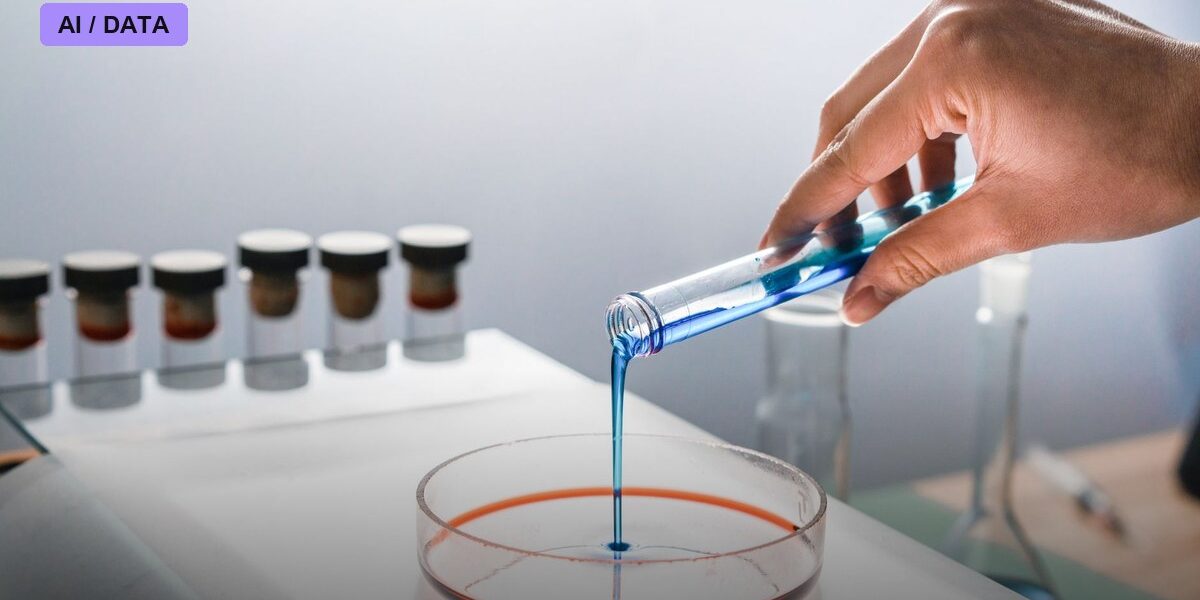
Photo: Ivan S / PEXELS via Pexels