Doximity, the physician-focused professional network, published research on November 2 showing its purpose-built dose-verification AI tool outperformed general-purpose AI models on medication dosing accuracy, a high-stakes clinical task where even small errors can cause serious patient harm. The finding adds to a growing body of evidence that narrow, purpose-built clinical AI systems trained specifically on pharmacology data can outperform broader general-purpose chatbots on tasks requiring precise numerical and protocol accuracy.
Why dose verification is a hard problem for general AI
Medication dosing depends on a web of patient-specific variables, including weight, kidney function, drug interactions and age-adjusted thresholds that vary by condition and institution-specific protocol, a level of contextual precision that general-purpose language models, trained broadly across internet text rather than curated clinical pharmacology databases, have historically struggled to apply consistently. Doximity’s tool, by contrast, was reportedly trained specifically on dosing guidelines and verified against pharmacist-reviewed reference material, allowing it to flag unusual or potentially dangerous dosing combinations with greater precision than a general-purpose assistant answering the same prompt.
Part of a specialization trend in clinical AI
Doximity’s results mirror a broader pattern across healthcare AI, where companies including Aidoc, which focuses narrowly on radiology image triage, and Viz.ai, which specializes in detecting specific conditions like pulmonary embolism and stroke, have built sustainable businesses by out-performing general-purpose models on narrow, well-defined clinical tasks rather than competing head-on with broad AI assistants on general medical knowledge.
Two views on narrow versus general clinical AI
Supporters of the specialized approach argue that medicine’s highest-stakes tasks, including dosing, triage and image interpretation, require the kind of rigorously validated, narrowly scoped accuracy that general-purpose models are not designed to guarantee, making purpose-built tools the more responsible choice for direct integration into clinical workflows. Skeptics, including some AI researchers at large labs, counter that general-purpose frontier models continue improving rapidly on medical benchmarks and may eventually match or exceed narrow tools’ performance while offering far greater flexibility across the full range of clinical questions a physician might ask in a single encounter.
The stakes for patient safety
Medication errors remain one of the most common and preventable sources of patient harm in hospital settings, and tools that can flag dosing anomalies in real time before a prescription is finalized have the potential to meaningfully reduce adverse events, provided health systems integrate them directly into electronic prescribing workflows rather than treating them as a separate, optional check.
How hospitals are evaluating the claims
Hospital pharmacy and informatics committees evaluating Doximity’s tool, along with competing dose-verification products, have reportedly asked for head-to-head error-rate data broken down by drug class and patient population rather than aggregate accuracy figures, since dosing risk varies enormously between, for example, pediatric chemotherapy and routine adult antibiotic prescriptions. Some large hospital systems have said they plan to run their own internal validation studies before full deployment regardless of vendor-published research, a standard practice for high-stakes clinical software that adds months to adoption timelines even for tools with promising published results. Pharmacist leadership groups have also raised questions about liability and workflow integration, noting that a tool flagging a potential dosing error is only useful if it fits naturally into the moment a prescriber or pharmacist is actively reviewing an order, rather than generating a separate alert stream that busy clinical staff may learn to dismiss without careful review, a failure pattern known in patient-safety research as alert fatigue.
What’s next
Doximity has not disclosed which health systems, if any, have adopted the dose-verification tool at scale following the published research, nor has it released details on the specific error rates compared between its tool and the general-purpose models it was benchmarked against. Independent validation of the company’s findings by outside researchers, rather than company-sponsored research alone, will likely be necessary before hospital pharmacy committees treat the results as sufficient grounds for broad clinical adoption. Doximity has said it plans to publish peer-reviewed results in a clinical pharmacy journal to address exactly this kind of independent-scrutiny request from hospital committees. Some large group purchasing organizations that negotiate technology contracts on behalf of hospital networks have also asked Doximity to provide multi-year pricing commitments before recommending system-wide adoption to member hospitals. Industry observers say the coming months will be the clearest test yet of whether the current trajectory holds or shifts in response to the mounting regulatory and competitive pressure already building across the sector.
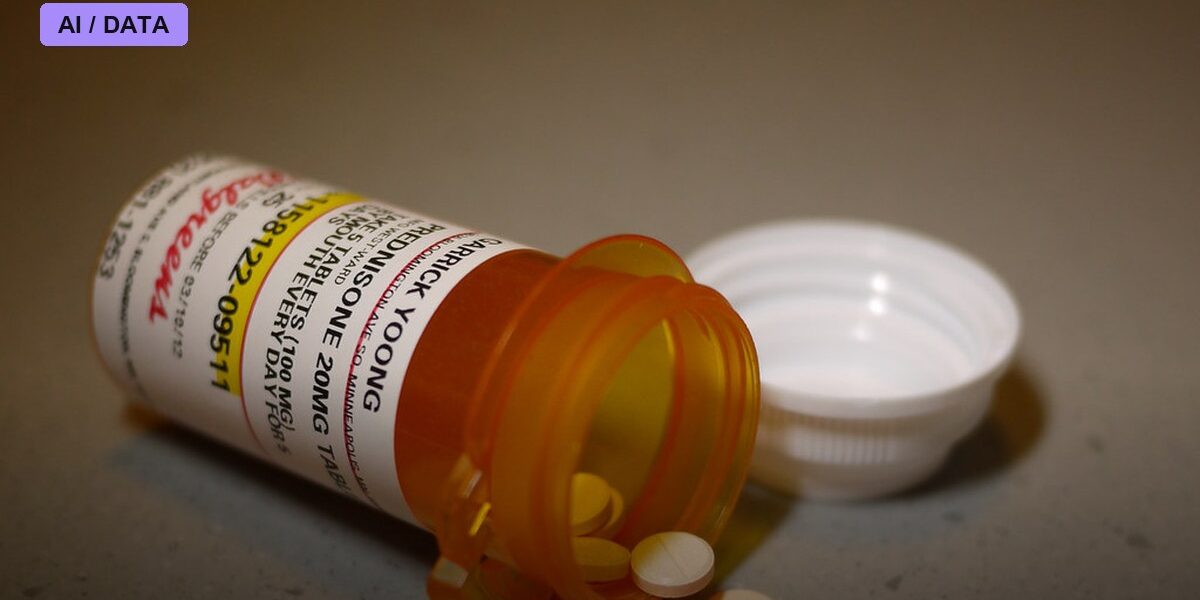
Photo: Thirteen Of Clubs / BY-SA via flickr