AI Is Quietly Taking Over Your Shopping Cart
From conversational assistants to agents that compare and buy for you, AI now shapes how most people shop — and retailers are pouring money in as it drives real revenue.

GitHub Copilot now has ~20 million users and writes about 46% of code for those who use it, with developers finishing tasks 55% faster — though trust gaps and bad suggestions remain.
AI fraud detection has become near-universal in banking — used by roughly 90% of institutions, intercepting 92% of fraud before approval and cutting false alarms by up to 60%.
AI weather forecasting now outperforms traditional models on 90% of metrics, with startups like WindBorne beating Europe's gold-standard system — though extreme events remain a weak spot.
AI-generated phishing, deepfake fraud and autonomous attack agents are outpacing enterprise defenses in 2026 — with 94% of organizations calling AI the biggest force shaping cybersecurity.
A June flurry of releases reshaped the AI leaderboard: Anthropic's Claude Opus 4.8 tops the benchmarks, with Google's Gemini, OpenAI's GPT-5.5 and xAI's Grok close behind.
Enterprises are deploying autonomous AI agents that act, not just answer — with NVIDIA, ServiceNow and SAP shipping governed agents and 40% of business apps set to feature them by year's end.
AI has swept through education — adopted by most schools and nearly all students — with tutors like Khanmigo posting measurable learning gains as regulators race to set guardrails.
Over half of 2026's layoffs cite AI, and young workers are hit hardest — but new research finds firms are cutting jobs regardless of whether the technology actually delivers returns.
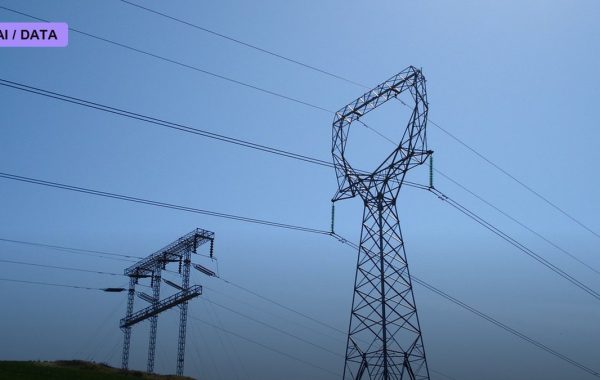
Data centers could consume 1,050 TWh in 2026 — enough to rank as the world's fifth-largest 'country' for power. The limit on AI's growth is now the grid, not the silicon.