AstraZeneca has struck a drug discovery deal with insitro worth up to $1.46 billion in milestone payments, announced October 15, under which the AI biotech company will use its “Virtual Human” platform — combining lab-grown cell models with machine learning — to identify the causal biology behind MASH, a severe form of fatty liver disease, and certain cardiomyopathies.
How the Deal Is Structured
AstraZeneca will pay insitro $40 million upfront, with the bulk of the deal’s value tied to milestone payments contingent on insitro’s platform successfully identifying viable drug targets and AstraZeneca advancing those targets through its own funded clinical development process. This structure is now standard in AI-pharma partnerships: the AI company bears limited financial risk for the expensive, failure-prone clinical trial phase, while the pharmaceutical partner retains control over — and funds — actually testing any resulting drug candidates in patients.
What insitro’s Platform Actually Does
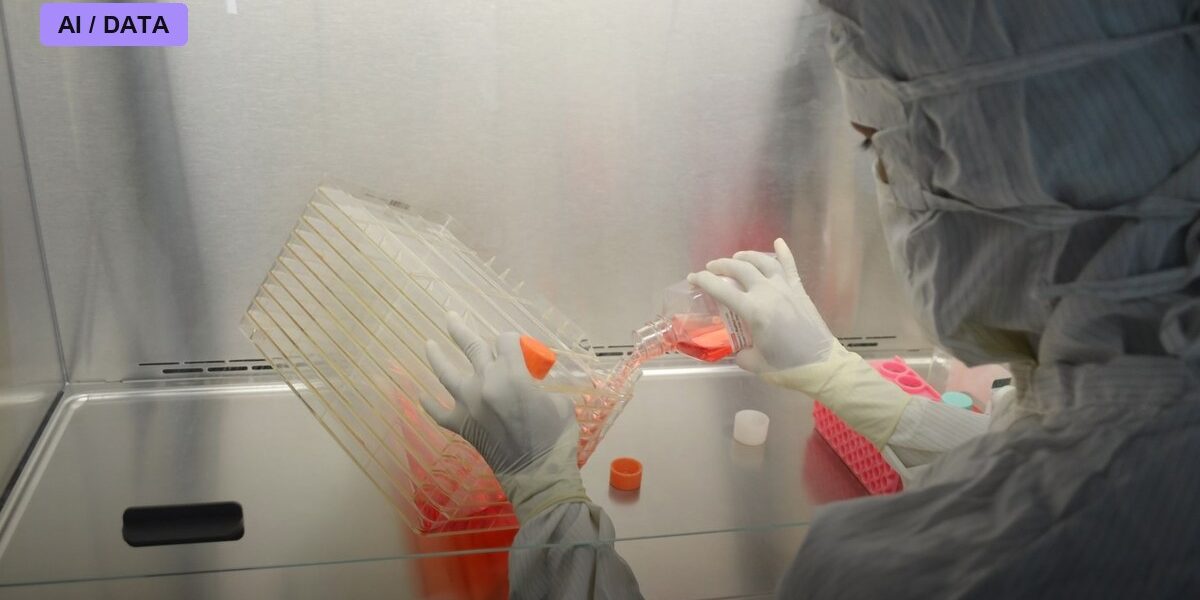
Unlike AI drug discovery approaches that rely primarily on mining existing biological and chemical databases, insitro’s Virtual Human platform generates its own experimental data by growing human cells in the lab and using machine learning to model how genetic and molecular variations drive disease — an approach the company argues produces more reliable causal insights than purely computational methods working from existing, sometimes noisy, published datasets.
Why MASH Specifically
MASH, formerly known as NASH, has become one of the pharmaceutical industry’s most closely watched disease areas, driven by its connection to the broader obesity and metabolic disease epidemic and the commercial success of recent metabolic drugs. Despite that interest, MASH’s underlying disease biology remains only partially understood, making it a plausible target for AI-driven causal discovery approaches that aim to identify disease mechanisms traditional research hasn’t fully clarified.
A Deal at the Earliest Stage
It’s worth emphasizing how early-stage this collaboration is: no drug candidate, efficacy data, or safety data accompanies the announcement, and the partnership sits purely at the discovery phase. Industry observers note that AI drug discovery deals of this type carry a wide range of ultimate outcomes — many such partnerships quietly wind down or fail to produce viable candidates, even when announced with large headline milestone figures, since those figures represent maximum potential payouts rather than money AstraZeneca has committed to pay regardless of results.
Part of a Broader AI-Biotech Investment Wave
The AstraZeneca-insitro deal follows a steady stream of large pharma-AI biotech partnerships throughout 2026, alongside developments like Stanford researchers’ academic “Virtual Biotech” research platform aimed at compressing discovery timelines, and reports of AI-driven cancer biotech Iambic pursuing a $150 million IPO. Together, these signal continued, if increasingly selective, investor and pharma confidence in AI’s ability to accelerate at least the earliest stages of drug discovery.
What’s Next
AstraZeneca and insitro have not disclosed a timeline for when target identification work might yield a candidate ready for AstraZeneca to advance into its own development pipeline. Given the deal’s early stage, meaningful evidence of success is likely years away, with the partnership’s real test coming only once — or if — a resulting drug candidate reaches human clinical trials.
Photo: Satheesh Sankaran / PEXELS via Pexels