The Advanced Research Projects Agency for Health announced on September 9 that it is funding a four-year, $62.7 million program called ADVOCATE to build what the agency describes as the first FDA-authorized, patient-facing agentic AI system for cardiovascular care. The program commits up to $33.7 million in its first year alone, split across multiple teams racing to put an autonomous AI agent between office visits for heart failure patients, one of the costliest and most frequently hospitalized chronic conditions in American medicine.
An AI That Works Between Visits
ARPA-H’s pitch for ADVOCATE is blunt about the gap it is trying to close: heart failure patients typically see a cardiologist every few months, but their condition can deteriorate in days. The agency wants an AI agent that operates around the clock as what it calls a digital member of the care team, checking in with patients, interpreting symptoms and vitals, and escalating to a human clinician only when something looks wrong. Unlike most clinical AI tools in use today, which flag images or draft notes for a doctor to review, ADVOCATE’s agents would be authorized to interact with patients directly and take a defined set of actions on their own.
Three Teams, Three Approaches
ARPA-H named several performer teams. Tempus AI is extending its existing Olivia patient health app, adding continuous monitoring that triggers deeper clinical analysis when it detects meaningful changes in a patient’s condition. Updoc is building a system that keeps conversational AI and clinical decision-making in separate layers, so that a clinician-built rules engine checks every proposed action against approved protocols before it executes; the company has named Microsoft, OpenAI and NVIDIA as technology partners. A third team, Atman Health, is developing a voice-based large language model agent that adapts its follow-up questions to each patient’s specific history and symptoms.
Built-In Guardrails
Because the program is explicitly trying to reach the bar for FDA authorization of an autonomous clinical agent, ARPA-H built a safety layer into the structure itself rather than leaving it to each team. Researchers at Stanford are developing a supervisory AI whose sole job is to watch the patient-facing agents in real time for unsafe recommendations or behavior that falls outside the system’s tested range, a problem AI safety researchers call out-of-distribution behavior. Johns Hopkins Applied Physics Laboratory will serve as an independent evaluator, assessing both technical performance and clinical outcomes separately from the teams building the agents.
Testing at Health-System Scale
ADVOCATE is not a small pilot. Duke University’s team will test its agent across five health systems, including rural sites where cardiology access is limited. Kaiser Permanente, one of the country’s largest integrated health systems, plans to deploy its team’s agent across 21 medical centers and more than 260 clinics, a scale that would expose the technology to a wide range of patient populations and clinical workflows well before any commercial rollout.
A Hard Regulatory Deadline
The program’s defining feature may be its timeline. ARPA-H is requiring the first team to submit a full authorization package to the FDA within two years, a compressed schedule for a technology category the agency itself says has never been authorized before: an AI system empowered to interact with patients and take action without a clinician approving each step. That requirement effectively turns ADVOCATE into a real-time test of whether the FDA’s existing device-review framework can accommodate autonomous, adaptive software, rather than the more static, already-cleared algorithms that make up most of its roughly 1,450 AI device clearances to date.
Believers and Skeptics
Supporters argue that heart failure is exactly the kind of condition where continuous, AI-driven monitoring could catch deterioration early enough to prevent a hospitalization, and that government funding is appropriate because no single company has an incentive to absorb the regulatory risk of being first. Critics, including some clinicians who have watched earlier generations of remote-monitoring technology fail to reduce readmissions, caution that an AI agent empowered to act on a patient’s behalf raises liability questions that the FDA has not resolved, and that the two-year timeline to seek authorization may be more a political signal of urgency than a realistic clinical-validation schedule. Patient advocates have also flagged that voice-based and app-based agents need to work for older, lower-income, and less digitally fluent patients, who make up a large share of the heart failure population.
What Comes Next
Over the next year, the clearest signal of progress will be whether Duke, Kaiser, and Johns Hopkins APL publish interim data on how the agents perform against real patients rather than simulated cases. If the first authorization package reaches the FDA on schedule, ADVOCATE could become the template other disease areas use to pursue autonomous AI agents of their own; if it stalls, it will likely reinforce arguments that clinical AI should stay firmly in an assistive, human-supervised role for the foreseeable future.
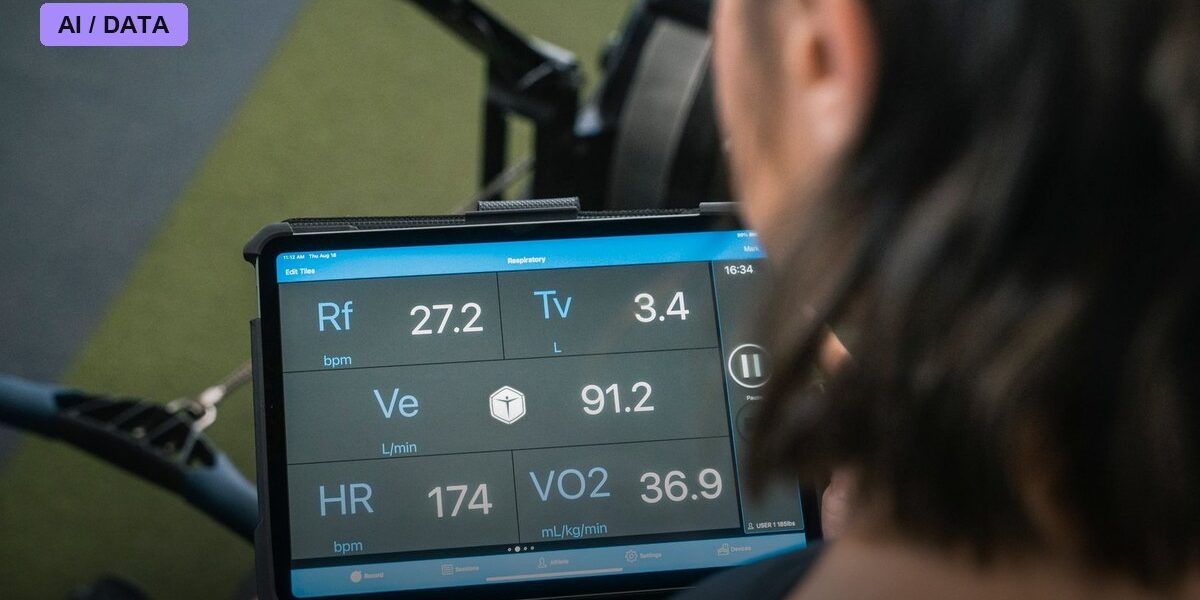
Photo: VO2 Master / PEXELS via Pexels