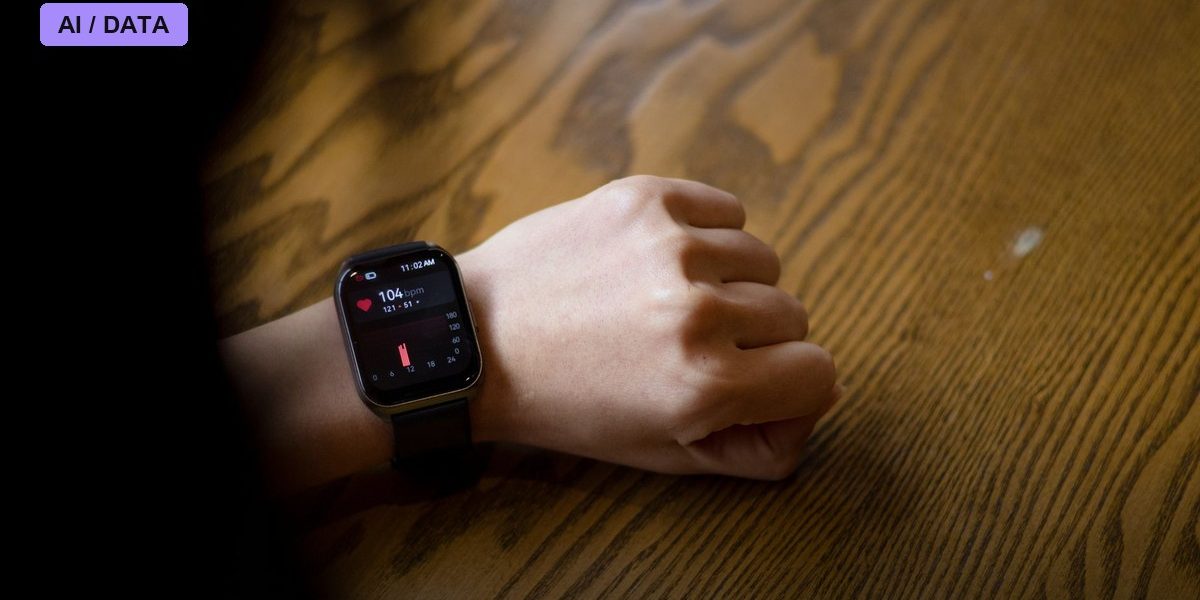
Apple introduced the Apple Watch Series 12 and Apple Watch Ultra 4 on September 9, 2026, built around what the company calls an all-new Health Sensing System, marking Apple’s most aggressive push yet to turn its wearable into a continuous, AI-interpreted health monitor rather than a periodic check-in device.
Heart Data Every Five Seconds
The new sensing system, powered by an upgraded optical and electrical heart sensor array and the S11 chip — Apple’s most powerful wearable processor to date — measures heart rate every five seconds throughout the day and captures heart-rate variability up to 24 times more frequently than prior models. Apple says the combination delivers the most accurate heart-rate sensing and step tracking in the wearable category, though the company did not publish a third-party validation study alongside the claim.
That density of measurement is the point: rather than sampling heart activity a few times an hour, as many earlier wearables did to conserve battery, the Series 12 gathers a near-continuous stream that Apple’s software can mine for anomalies, whether that means an irregular rhythm during sleep or a resting-rate drift that predates a cold by a day or two.
A Daily Readiness Score and a Redesigned Health App
Series 12 introduces a Readiness feature that generates a daily 0-to-10 capacity score, similar in spirit to metrics long offered by rivals Whoop and Garmin. That score, along with new Longevity and Health Age sections, will roll out more fully once Apple ships a redesigned Health app later in 2026 that uses Apple Intelligence to surface personalized insights from longer-term health data — drawing not just from the watch itself but potentially from clinical records, third-party devices, and lab results. Kaiann Drance, Apple’s vice president of worldwide Apple Watch product marketing, called it “the most advanced health and fitness companion we’ve ever created.”
Lab Tests and AI-Assisted Interpretation
Perhaps the most significant long-term feature is Apple’s plan to let users arrange lab testing — bloodwork and similar biomarker checks — directly through the Health app, with AI guidance helping interpret results in the context of a person’s longer-term trends rather than treating each test as an isolated snapshot. Cycle Tracking is also expanding to add perimenopause and menopause support, part of a broader trend among wearable makers, including Oura’s own women’s-health AI model, to address hormonal health more directly.
Folding lab results into a consumer health app raises the stakes considerably compared with step counts or sleep scores: a misinterpreted cholesterol panel or thyroid marker carries real clinical consequences, which is why Apple has been notably more conservative about the pace of that rollout compared with features like Readiness that carry lower risk if the AI’s interpretation is imperfect.
Battery and Durability Gains Alongside the Software Push
On the hardware side, Series 12 offers up to 24 hours of everyday battery life and up to 10 hours of workout battery, a 25 percent improvement, with 15-minute charging now delivering 12 hours of additional battery life, a 50 percent jump. The watch also gets Ceramic Shield 2, which Apple says is 60 percent tougher than the previous generation. Pricing starts at $399, with pre-orders open immediately, in-store availability beginning September 18, and watchOS 27 — which carries some of the underlying software — releasing September 14.
Not Every Feature Is Ready on Day One
Several of the marquee AI features are explicitly staged for later delivery: the redesigned Health app, Health Age, at-home movement assessments using the iPhone camera and Apple Watch, and expanded personalized content are scheduled to arrive later in 2026, starting in U.S. English only. Digital-health analysts, including commentary from health-data platform Sahha, have noted that staggering the rollout lets Apple ship hardware on its usual September cadence while giving its AI models more time to validate against real-world data before broad release — but it also means early buyers are paying for capability that isn’t fully switched on yet.
That staged approach also gives Apple time to watch how rivals’ AI health features perform in the market before committing to its own final design — Whoop’s clinician consultations and Oura’s Counsel Health partnership both launched earlier in 2026, giving Apple a preview of how regulators and users respond to blending wearable data with professional medical advice.
What’s Next
Apple’s move deepens a three-way race among consumer wearable makers — Apple, Whoop, and the newly IPO-bound Oura — over who can most credibly turn raw biometric streams into trustworthy, AI-mediated health guidance. With lab-result interpretation and clinical-record integration on Apple’s roadmap, the next competitive battleground looks less like sensor accuracy and more like which company clinicians and regulators trust to sit between a patient’s data and their medical decisions.
Photo: ahmed akeri / PEXELS via Pexels