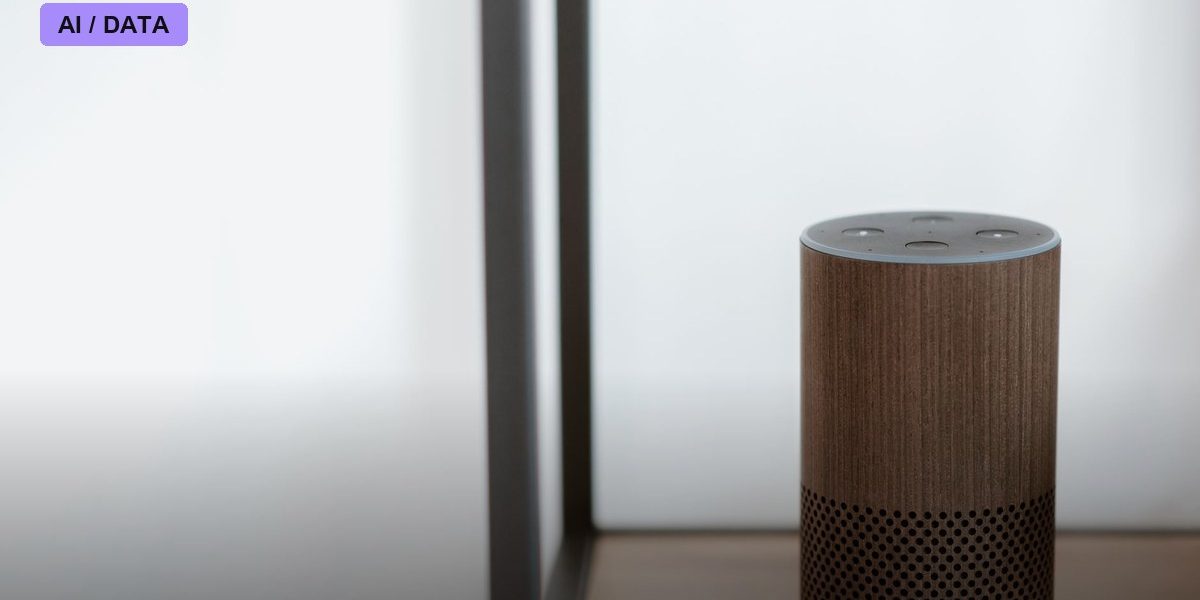
Amazon started offering Alexa+, its generative-AI upgrade to the two-decade-old voice assistant, to customers in India on September 16, 2026, marking the product’s first major push into a market of more than 1.4 billion people where English is often mixed casually with regional languages in everyday speech. The rollout began as an Early Access program, available free to eligible users on Echo speakers, Fire TV devices, smart displays and the Alexa mobile app.
Built for Hinglish, Not Just Hindi
The headline feature is linguistic: Alexa+ in India supports English, Hindi and Hinglish, the informal blend of the two languages spoken widely in Indian households, offices and markets. Amazon says users can switch languages mid-sentence without repeating the wake word or restarting a request, a technical challenge that has tripped up voice assistants for years because most speech-recognition systems are trained to expect a single language per utterance. The assistant is built on Amazon Bedrock, the company’s cloud platform that stitches together more than 70 large language models, allowing Alexa+ to hold longer, more context-aware conversations than the rules-based Alexa that preceded it.
From Voice Commands to Daily Errands
Where the original Alexa mostly set timers and read weather reports, Alexa+ is pitched as a assistant that can complete multi-step chores: planning a week of meals, building a shopping list, booking restaurant tables, checking a family calendar or negotiating an entire smart-home routine in one spoken request. Amazon has lined up integrations with services widely used in India, including the food-delivery app Swiggy, ticketing platform District by Zomato, restaurant-reservation service EazyDiner, travel sites MakeMyTrip and TripAdvisor, and home-services marketplace HomeTriangle. Music discovery draws on Amazon Music, Spotify, Apple Music and the India-specific service JioSaavn, while video requests can reach Prime Video and Netflix. Some of these partner integrations are live at launch; others, including Swiggy and District, are described by Amazon as coming soon.
Household Recognition and Smart-Home Ties
Alexa+ also carries over Voice ID and a companion Visual ID feature, which let the assistant recognize which family member is speaking or standing in front of a smart display and tailor responses, playlists or reminders accordingly — a feature aimed squarely at multi-generational Indian households where several people might share one Echo device. On the hardware side, Amazon has signed up local smart-home brands Atomberg, Qubo, Dreame and Wipro so that Alexa+ can directly control fans, security cameras, robot vacuums and lighting made by companies familiar to Indian consumers rather than relying solely on global smart-home brands.
Pricing and the Free-to-Paid Question
During Early Access, Alexa+ is free for all Indian users. Once that period ends, Amazon plans to keep it free for Amazon Prime members while charging non-Prime customers and those on Prime Lite or Prime Shopping Edition plans roughly 2,000 rupees a month, according to Amazon’s own announcement. That pricing structure mirrors the approach Amazon has taken in the U.S., where Alexa+ became free to all Prime subscribers in February 2026 after a slower initial rollout, and paid access was set at $19.99 monthly for non-Prime customers.
Why This Matters Beyond One Product Launch
India is one of the most competitive and price-sensitive smartphone and voice-assistant markets in the world, and it is also a proving ground for whether generative AI can genuinely understand code-switched speech at scale — a linguistic pattern common not just in Hindi-English bilingual households but across much of South Asia, the Philippines and parts of Africa. If Alexa+’s language-blending approach works reliably, it could become a template Amazon exports to other multilingual markets rather than a one-off localization project. Engineering teams in Bangalore, Hyderabad, Pune and Chennai contributed to the India-specific build, according to Amazon, underscoring how much of the underlying work happened locally rather than being bolted onto the U.S. product.
The Caveats Nobody Should Skip
Independent reviewers have not yet published extensive head-to-head tests of Alexa+’s Hinglish handling, and Amazon’s own materials acknowledge several partner integrations are not yet functional. Voice assistants have a long history of overpromising on regional-language support only to stumble on accents, dialects and code-switching patterns that vary from city to city within India itself — Mumbai’s Hinglish is not identical to Delhi’s or Bangalore’s. Privacy advocates have also flagged that deeper household integration, including Visual ID’s camera-based recognition, raises the same data-retention questions that dogged Alexa in the U.S. and Europe; Amazon says users retain controls over microphone, camera access and recording history through a privacy dashboard.
What Comes Next
Amazon has not given a firm date for when Early Access will end or exactly how many households have activated the assistant so far. The real test will come over the next few months as Alexa+ scales beyond early adopters into rural and semi-urban households where connectivity, dialects and smart-home device penetration all vary widely from the tech-forward metro users likely dominating the initial rollout.
Photo: Anete Lusina / PEXELS via Pexels