A new working paper is offering rare, real-world evidence that artificial intelligence can narrow rather than widen economic inequality for disabled workers. Researchers from the University of California, Santa Barbara, the University of Toronto and Zhejiang University studied deaf and hard-of-hearing couriers on a major Chinese food delivery platform and found that an AI-powered text-to-speech calling tool eliminated roughly one-third of the pre-existing hourly wage gap between deaf and hearing workers, according to findings published September 14, 2026 and covered by UC Santa Barbara’s The Current and Scientific Frontline.
A Natural Experiment in an Open-Hiring Gig Platform
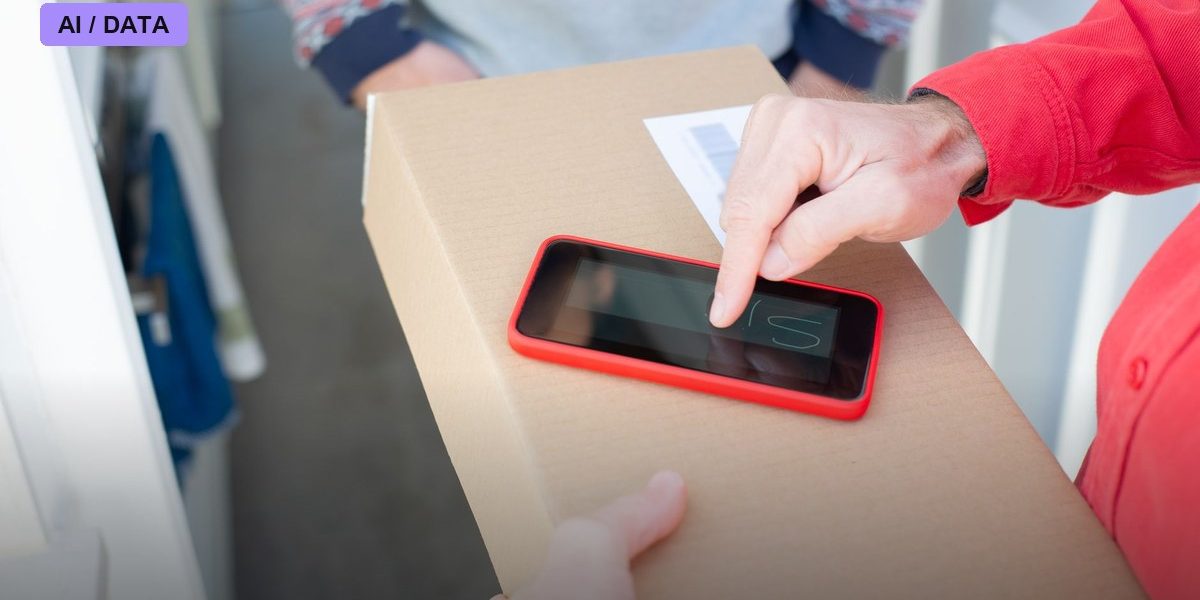
The food delivery platform studied has an open hiring policy: anyone who meets basic requirements can sign up to deliver, and pay is determined by completed deliveries and customer satisfaction ratings rather than a fixed wage. That structure let researchers compare deaf and hard-of-hearing workers directly against their hearing peers under identical pay rules, before and after the platform introduced an AI tool that converts text into synthesized speech, allowing DHH couriers to “call” customers through the app to resolve delivery issues like locked gates or unclear addresses without needing to hear a response.
The Size of the Gap, Before and After
Before the AI tool was introduced, deaf and hard-of-hearing workers experienced 9 percent more late deliveries and 31 percent more negative customer ratings than hearing couriers, translating into hourly wages roughly 10 percent lower, despite DHH workers actually completing more orders per week and generating higher profits for the platform than their hearing counterparts, according to the study. After the AI calling feature rolled out, the wage gap shrank by about a third and the gap in negative ratings narrowed by two-thirds. Profoundly deaf workers, who could not use any residual hearing to manage phone calls, benefited more than hard-of-hearing workers who had partial workarounds already.
Why This Case Is Different From Most AI-and-Disability Research
UCSB economist Mitch Hoffman, one of the study’s authors, said the finding stood out because it did not involve AI replacing a worker’s job, the usual framing in debates over automation and disability employment, but instead helping a traditionally disadvantaged type of worker close a performance gap. “We thought that this was an interesting situation where AI was being used in a different way where it wasn’t replacing someone’s job but helping a type of worker who was traditionally disadvantaged, benefit,” Hoffman said, according to the UCSB writeup. The research, released as a National Bureau of Economic Research working paper and funded in part by Schmidt Sciences’ AI at Work program, adds empirical weight to a debate that has mostly run on theory and anecdote.
The Limits Researchers Are Careful to Flag
Hoffman and his co-authors are explicit that the finding does not generalize to all disabilities or all jobs. The mechanism that worked here, a communication barrier with a fairly narrow technical fix, does not exist in the same form for workers with mobility impairments, chronic illness, or cognitive disabilities, where AI tools have a much less established track record and, in some warehouse and retail settings, have instead been used to intensify monitoring and pace-setting in ways that disproportionately penalize disabled workers. Disability employment researchers outside the study have also cautioned that a single gig-platform case study, however well-measured, should not be read as proof that AI systematically helps disabled workers; it is better read as evidence that targeted, well-designed AI tools can help in specific circumstances where the barrier is technical rather than structural or attitudinal.
Echoes of a Broader Policy Debate
The timing is notable given how much of the AI-and-work conversation in 2026 has focused on AI’s role in driving wage suppression through opaque, algorithm-set pay and “surveillance pay” practices that labor economists have criticized as decoupling hard work from fair compensation. The UCSB-led study offers a rare counter-example precisely because the mechanism is transparent and measurable: a specific communication barrier, a specific tool, a specific before-and-after wage effect, rather than an algorithm silently reshaping pay in ways workers cannot see or contest.
What’s Next
Hoffman’s team suggests the platform-level model, of using AI to target one clearly defined barrier at a time, could be replicated for other disabilities and other gig or service-sector jobs where a narrow but consistent obstacle depresses pay and performance, from AI captioning tools for workers with speech disabilities to real-time translation for non-native speakers. The bigger open question the researchers leave unanswered is whether large employers outside gig work, in retail, warehousing and food service, will adopt similarly targeted AI accommodations voluntarily, or whether it will take regulatory pressure, such as the U.S. Department of Labor’s recent framework encouraging inclusive AI-powered hiring and workplace tools, to make it standard practice.
Photo: Kampus Production / PEXELS via Pexels