AbbVie has signed a multi-year artificial intelligence drug discovery agreement with Iambic Therapeutics, according to a November 6 market roundup, joining a crowded field of pharmaceutical companies racing to bolt AI modeling onto their early-stage research pipelines. Financial terms of the deal were not disclosed, and neither company detailed the specific disease areas or number of programs covered, but the partnership follows a pattern set by Iambic’s earlier work: using physics-informed machine learning models to predict how candidate drug molecules will behave before they are ever synthesized in a lab.
What Iambic Brings to the Deal
Iambic Therapeutics, a Bay Area-based AI drug discovery startup, has built its reputation on combining generative chemistry models with physical simulation, aiming to predict properties like binding affinity, toxicity and metabolic stability earlier in the design process than traditional computational chemistry allows. The company has previously partnered with other pharmaceutical players on small-molecule programs, and its pitch to partners like AbbVie centers on compressing the time between identifying a biological target and producing a viable drug candidate — a phase of drug development that traditionally takes years and consumes a large share of R&D budgets before a single human trial begins.
AbbVie’s Broader AI Strategy
The Iambic agreement extends AbbVie’s existing push into AI-assisted research, which has included prior collaborations exploring machine learning across immunology and oncology pipelines. AbbVie, one of the world’s largest pharmaceutical companies by revenue, has faced pressure to refill its drug pipeline following the loss of patent exclusivity on Humira, its longtime blockbuster arthritis drug, and has increasingly looked to partnerships — both with other biotech companies and with AI-focused startups — to diversify its research bets without building every capability in-house. Multi-year AI collaborations like this one typically structure payments around milestones: upfront fees, payments tied to candidates advancing through preclinical stages, and larger payouts if a jointly discovered molecule reaches clinical trials or approval.
Part of a Pharma-Wide AI Buildout
The AbbVie-Iambic deal lands amid a dense cluster of similar announcements in 2026. Pierre Fabre partnered with XtalPi on November 9 to design small-molecule cancer drugs computationally. Chai Discovery, which has signed deals with GSK and Eli Lilly this year, announced a collaboration with Roche on November 5 to apply its AI models across multiple Roche drug programs. Insilico Medicine has struck partnerships with Bora Pharmaceuticals, SK Biopharmaceuticals and Menarini, while Novo Nordisk has worked with Anthropic to apply Claude models to drug discovery workflows. The sheer volume of these deals — at least half a dozen major pharma-AI partnerships announced in the first two weeks of November alone — suggests the industry has moved past pilot-stage experimentation into treating AI drug discovery partnerships as a standard part of portfolio strategy.
The Skeptical Read
Despite the deal volume, the pharmaceutical industry has little public evidence yet that AI-discovered molecules reach approval meaningfully faster or more often than traditionally discovered ones — most of these partnerships remain in early preclinical stages, and drug development still requires years of safety and efficacy testing in humans regardless of how a candidate molecule was originally identified. Industry observers, including a recent Nature Biotechnology feature questioning whether AI companies are effectively taking over parts of drug discovery, have noted that AI’s clearest proven value so far is narrowing the number of candidate molecules synthesized and tested in a lab, not guaranteeing that any of them will ultimately succeed in clinical trials. Skeptics also point out that financial terms in deals like AbbVie’s are rarely disclosed, making it difficult for outside analysts to judge how much partners are actually betting on the technology versus hedging with a low-cost option.
What to Watch Next
The real test of the AbbVie-Iambic partnership, like its many 2026 counterparts, will come years from now when — or if — a jointly discovered candidate molecule enters human clinical trials. In the near term, expect AbbVie and Iambic to disclose more specifics about target disease areas as the collaboration progresses, and expect continued deal announcements from rival pharmaceutical companies racing to lock in AI partnerships before the most capable AI drug-discovery startups commit their modeling capacity elsewhere. Whether 2026’s wave of AI-pharma partnerships produces a meaningfully faster drug pipeline, or simply reshuffles which companies get credit for conventional drug discovery timelines, likely won’t be clear for several more years.
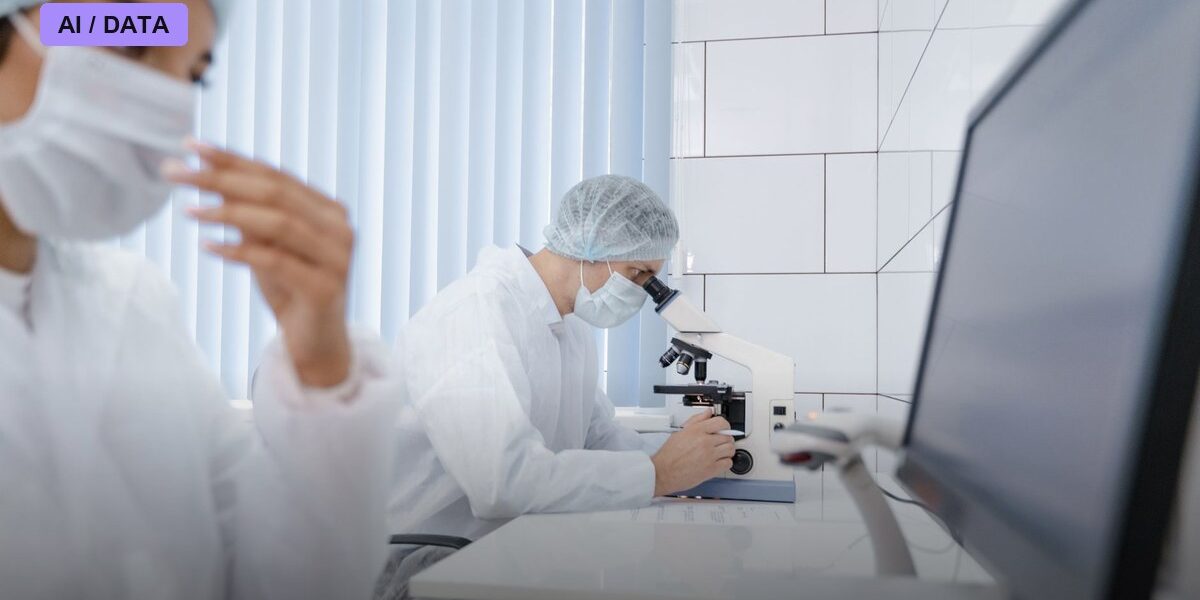
Photo: Tima Miroshnichenko / PEXELS via Pexels