AbbVie and Iambic Therapeutics announced a multi-year collaboration on September 21, 2026, to accelerate the discovery and development of small-molecule therapies using Iambic’s AI drug-design platform, targeting first-in-class and best-in-class candidates across immunology, neuroscience and oncology. The deal lands in the middle of a frantic month for pharma-AI tie-ups, coming just days after Novo Nordisk struck its own AI drug discovery partnership with Anthropic, and it underscores how quickly large pharmaceutical companies are outsourcing early-stage molecule design to AI-native startups rather than building every capability in-house.
What Iambic Actually Brings to the Table
Iambic Therapeutics runs a computational drug-design platform built around generative and predictive AI models trained to model how small molecules bind to disease targets, a process that traditionally requires years of iterative wet-lab synthesis and testing. The company’s pitch is that its models can predict binding affinity, selectivity and early toxicity signals computationally, letting chemists skip multiple rounds of physical synthesis before landing on a viable lead compound. Under the AbbVie agreement, Iambic will apply that platform against AbbVie-selected targets, with AbbVie handling later-stage development, regulatory filing and commercialization once a candidate clears the discovery phase.
Why Immunology, Neuroscience and Oncology
The three therapeutic areas named in the deal are not arbitrary. Immunology and oncology are AbbVie’s two largest revenue franchises following the patent cliff for Humira, its former blockbuster arthritis drug, and the company has spent billions on acquisitions and partnerships to refill its pipeline in both areas. Neuroscience is a newer growth bet for AbbVie, and small-molecule drug discovery in the brain is notoriously difficult because so few compounds cross the blood-brain barrier effectively. AI-assisted molecule design is being pitched across the industry as a way to search a far larger chemical space for blood-brain-barrier-permeable compounds than traditional medicinal chemistry teams can screen by hand.
Part of a Broader September Pharma-AI Wave
The AbbVie-Iambic announcement did not happen in isolation. Novo Nordisk, the Danish maker of Ozempic, announced its own AI drug discovery collaboration with Anthropic earlier the same week, aiming to use Claude models to advance its research pipeline as part of a stated ambition to become “the world’s most AI-driven healthcare company.” Novo also struck a separate $1.4 billion macrocycle drug partnership within roughly 72 hours of the Anthropic announcement. Eli Lilly has its own AI co-innovation lab with Nvidia, and Insilico Medicine closed a $2.5 billion partnership around the BIO 2026 conference. The pattern is consistent: rather than each drugmaker building proprietary AI discovery stacks from scratch, big pharma is increasingly renting AI capability from specialized vendors while keeping clinical development and manufacturing in-house.
The Bull Case for AI-Driven Drug Discovery
Supporters of this wave argue that AI-assisted discovery is finally moving past the hype-heavy proof-of-concept stage into concrete pipeline contributions, pointing to a growing number of AI-discovered molecules now in human clinical trials across the industry. The economic logic is straightforward: traditional drug discovery costs pharmaceutical companies an estimated $2 billion or more per approved drug when failures are factored in, and shaving even a year off the multi-year discovery phase, or killing bad candidates earlier before expensive clinical trials begin, could meaningfully change that math. For a company like AbbVie facing continued pressure to replace lost Humira revenue, diversifying its pipeline through several parallel AI partnerships rather than betting on one internal program spreads that risk.
The Skeptical Case
Critics of the AI drug discovery boom point out that no AI-discovered molecule has yet delivered a blockbuster approved drug, and that the hardest, most expensive part of drug development, late-stage clinical trials proving a compound is safe and effective in humans, remains untouched by these partnerships. AI models are good at narrowing a large field of candidate molecules to a promising shortlist, but they cannot yet predict how a drug will behave in the messy biology of an actual patient population, meaning failure rates in Phase 2 and Phase 3 trials may not improve much even if AI speeds up the earlier discovery stage. There’s also a concentration risk: as more pharma giants route their discovery work through the same handful of AI platform vendors, an error or bias in one company’s underlying model could ripple across multiple drugmakers’ pipelines simultaneously.
What to Watch Next
The real test of the AbbVie-Iambic deal, like its pharma-AI peers, will not be visible for years, since it will show up as either a wave of AI-originated candidates entering AbbVie’s clinical pipeline over the next several years or as another quietly shelved partnership. In the nearer term, watch whether AbbVie names specific disease targets or molecule candidates coming out of the collaboration, and whether other large pharma companies without a major AI drug discovery partner yet, are forced to strike similar deals simply to keep pace with rivals who are now running several AI-assisted discovery programs at once.
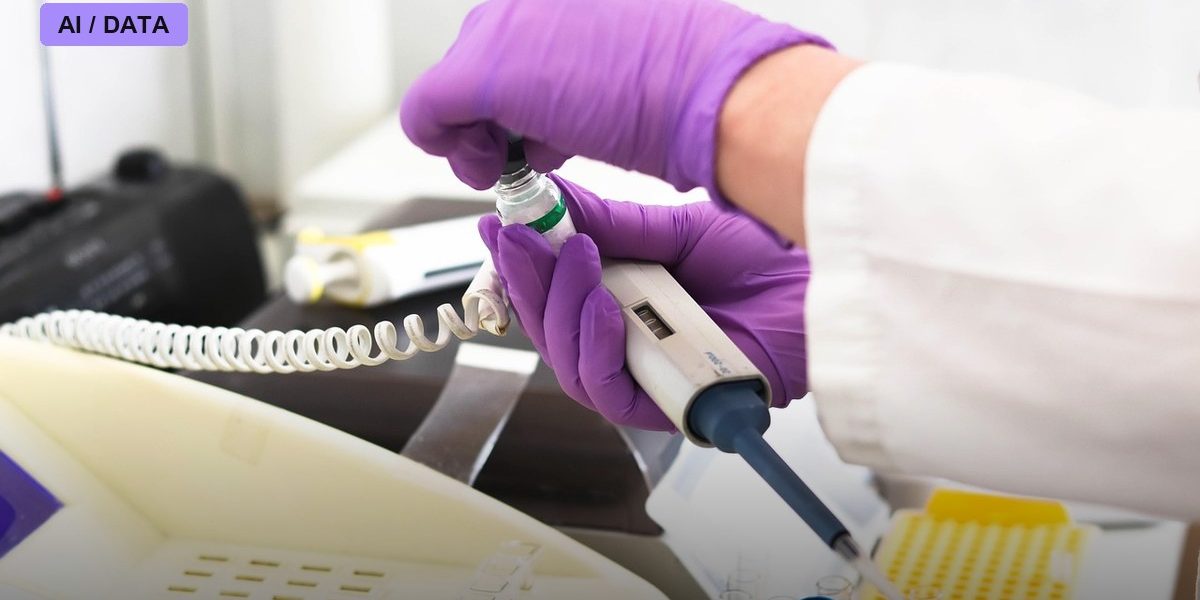
Photo: Belova59 / PIXABAY via Pixabay