A prospective economic evaluation published in PLOS Global Public Health in August 2026 found that an AI system designed to flag sepsis risk before it becomes catastrophic reduced hospital costs by as much as 31 percent per patient while also cutting intensive care admissions, hospital stays, and readmissions at a Spanish tertiary care hospital. The study, led by researcher Andres Giglio with Eric Macias-Fassio as corresponding author, tracked outcomes for more than 8,000 septic patients before and after the AI tool went live, offering one of the more rigorous real-world looks yet at whether predictive AI actually pays for itself in a working hospital.
Inside the Study: Before and After BIAlert-Sepsis
The research was conducted at Hospital Son Llàtzer, a 450-bed tertiary care facility in Palma, Spain, using a system called BIAlert-Sepsis, a machine learning model that predicts a patient’s risk of developing sepsis within a 24-hour window using data already flowing through the hospital’s electronic health records. Researchers compared 6,168 septic patients treated during a baseline period before the tool was deployed against 1,871 patients treated after it went live, using a retrospective quasi-experimental before-after design combined with generalized linear models and interrupted time series analysis to isolate the AI system’s effect from other trends in hospital care.
The Numbers: Fewer ICU Stays, Shorter Admissions, Lower Bills
The clinical results were consistent across several measures. ICU admissions among septic patients fell from 34.4 percent before the AI tool to 30.4 percent after, a meaningful drop given how expensive and resource-intensive intensive care stays are. Average ICU length of stay dropped by 0.35 days per patient, and time spent on general hospital wards fell by 0.59 days per patient. Perhaps most strikingly for a condition notorious for its high mortality and readmission risk, 30-day readmissions declined from 4.5 percent to 3.0 percent. On the financial side, mean admission costs fell from 26,517 euros to 24,630 euros per patient, a 7.1 percent raw reduction that grew substantially once researchers adjusted for other factors, reaching a 26.1 percent reduction under their direct-effect model and 31.1 percent under a broader total-effect model that accounts for downstream savings like avoided ICU time and shorter stays.
Why Sepsis Is Such an Expensive, Deadly Target
Sepsis, the body’s often-fatal overreaction to an infection, remains one of the most common and costly reasons patients end up in intensive care worldwide, and its early symptoms, fever, elevated heart rate, confusion, can be easy to miss or attribute to less dangerous causes until a patient has already deteriorated significantly. That diagnostic difficulty is precisely why the condition has become one of the most active testing grounds for predictive AI in hospitals, since even modest improvements in how quickly clinicians identify at-risk patients can translate into earlier antibiotics, more judicious ICU use, and meaningfully better survival odds. Multiple AI sepsis-prediction tools have reached the market in recent years, including an FDA-authorized AI biomarker called the Sepsis ImmunoScore, but rigorous economic evaluations quantifying real hospital cost savings, rather than just diagnostic accuracy, have been comparatively rare.
What the Long-Term Payoff Looks Like
Beyond the immediate cost reductions, the researchers built a five-year financial projection based on the per-patient savings observed during the study period, estimating roughly 1,801 euros saved per patient and a cumulative net benefit to the hospital of 3.55 million euros over five years. That translates into a five-year return on investment of 528 percent, an unusually high figure for a hospital technology deployment and one the authors arrived at only after running sensitivity analyses meant to stress-test their assumptions about how savings would hold up over time. For hospital administrators weighing whether to invest in predictive AI tools amid tight margins, a documented ROI at that scale, grounded in a real deployment rather than a vendor’s marketing projections, is a rare and valuable data point.
Reasons for Caution Before Hospitals Rush to Adopt
Health economists and clinical researchers who study hospital AI deployments have generally urged caution about generalizing single-site results like this one, noting that a 450-bed hospital in Palma, Spain operates under a specific mix of staffing, patient demographics, and reimbursement rules that may not translate directly to hospitals elsewhere, particularly in the fragmented, insurance-driven U.S. system. The study’s own retrospective before-after design, while a common and reasonable approach for evaluating tools already in clinical use, cannot fully rule out that other concurrent changes in hospital protocols or staffing contributed to the improved outcomes alongside the AI tool itself. Even with those caveats, the study adds to a small but growing body of published, peer-reviewed evidence that predictive sepsis AI can move real financial and clinical needles, rather than just producing statistically significant but practically marginal improvements in a lab setting.
What Happens Next
Hospital Son Llàtzer’s results are likely to feature prominently in pitches from AI vendors selling similar sepsis-prediction tools to health systems in Europe and beyond, and the study’s authors have signaled interest in longer-term follow-up to see whether the cost and clinical benefits persist or shift as clinicians become more or less reliant on the AI alerts over time. The bigger open question is whether other hospitals, with different patient populations, staffing models, and financial pressures, can replicate anything close to a 528 percent five-year ROI, or whether Son Llàtzer’s results reflect a particularly favorable set of local conditions. Either way, the study gives hospital administrators a concrete, peer-reviewed benchmark to point to as they weigh whether predictive AI for sepsis is worth the investment.
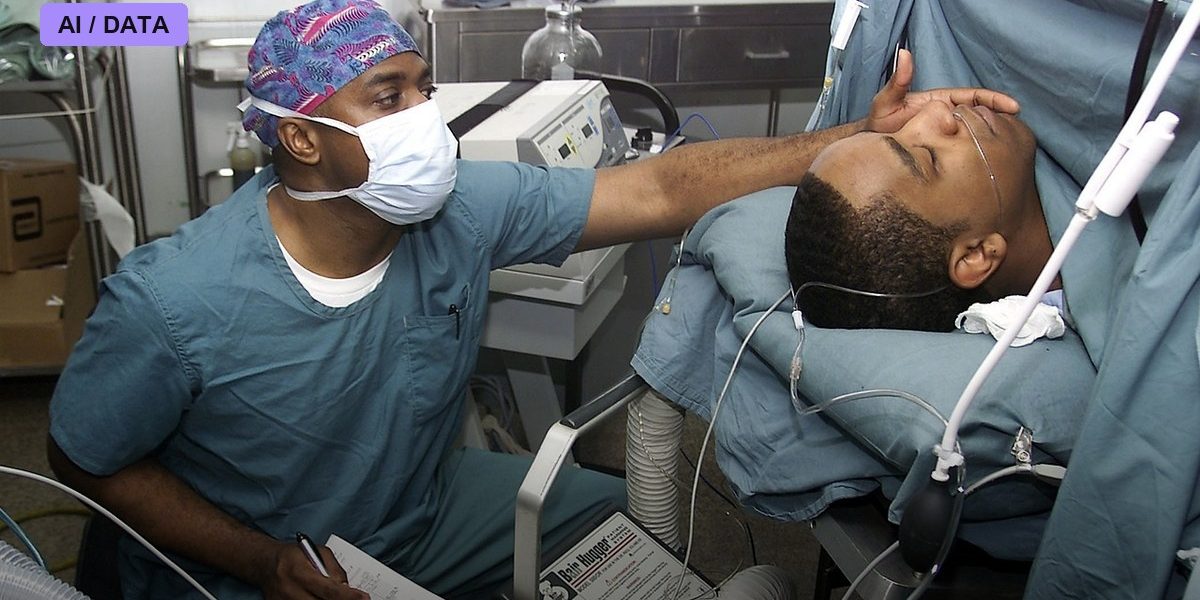
Photo: 12019 / PIXABAY via Pixabay