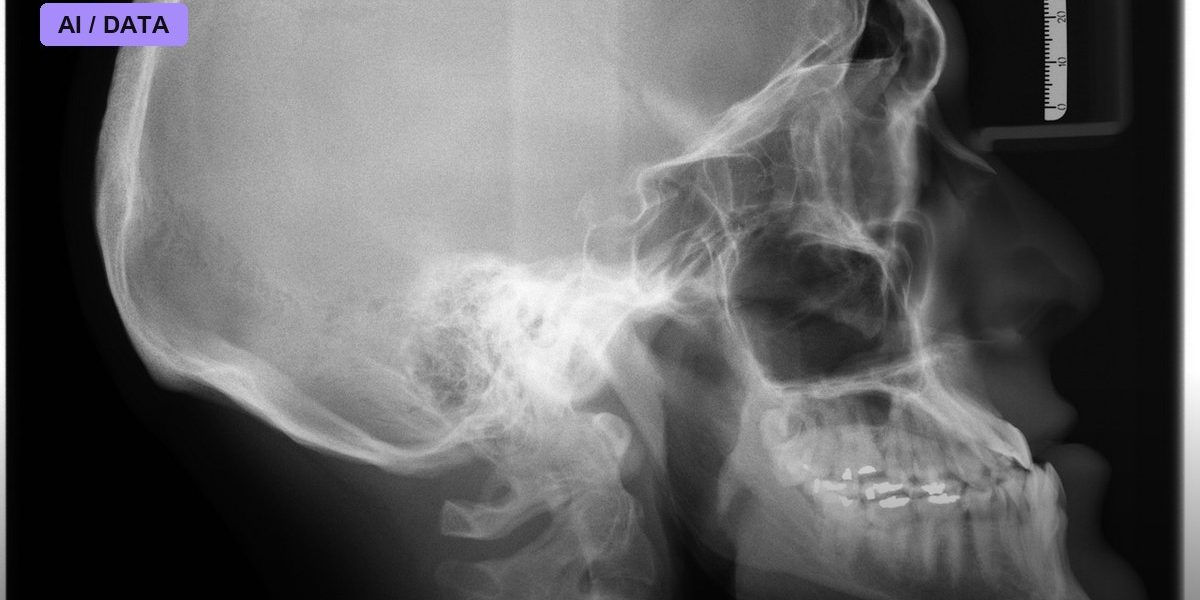
White Rock Medical Center, a community hospital in Dallas, became the first U.S. site to go live on a combined AI platform from PurpleAI and Savelife.AI, the companies announced on June 23, 2026. The deployment routes every non-contrast brain CT scan performed at the hospital through PurpleAI’s FDA-cleared AI, which flags signs of intracranial hemorrhage, a time-critical and potentially fatal type of brain bleed, and surfaces suspected cases directly in the radiology worklist.
How the Technology Gets Into the Hospital’s Existing Systems
The integration leans on Savelife.AI’s ConnectAI backend module, which connects to White Rock Medical Center’s existing picture archiving and communication system, or PACS, the software hospitals use to store and retrieve medical images. According to the companies, that integration allows DICOM-based access to the AI algorithms without disrupting the hospital’s current imaging infrastructure, meaning radiology staff didn’t need to adopt new hardware or a separate viewing platform just to receive the AI’s flags. Savelife.AI’s own RadioViewAI viewer runs alongside PurpleAI’s triage algorithm, giving clinicians what the companies describe as a unified review experience rather than two disconnected tools bolted together.
For a community hospital, that kind of low-disruption integration matters in a way it might not at a large academic medical center with a dedicated IT department for imaging informatics. Community hospitals often operate with leaner radiology and IT staffing, so a deployment that plugs into existing PACS infrastructure rather than requiring a parallel system lowers the practical barrier to adoption significantly.
Why Speed Matters for Intracranial Hemorrhage
Intracranial hemorrhage is among the most time-sensitive diagnoses in emergency radiology. Depending on its size, location, and cause, a brain bleed can expand rapidly, and the window for interventions like surgical evacuation or blood-pressure management narrows by the hour. In busy emergency departments, CT scans queue up for radiologist review in the order they’re received, which means a patient with a bleed that happens to get scanned during a high-volume period could wait longer for a read than the clinical urgency of their condition warrants. Triage AI like PurpleAI’s is designed to break that first-in-first-out queue by pushing suspected positive cases to the top of the worklist immediately after the scan is captured, regardless of when it was ordered relative to other studies.
The Performance Case Behind the Clearance
PurpleAI has pointed to independent validation data showing its ICH triage algorithm ranked first among four Korean-developed intracranial hemorrhage detection solutions across every confirmatory and calibration metric tested, posting an area under the precision-recall curve of 0.97 and a precision of 0.98 in that comparison. Those figures, drawn from a head-to-head benchmarking exercise rather than the FDA’s own clearance review, have become a common marketing data point among stroke- and hemorrhage-detection AI vendors competing for hospital contracts in an increasingly crowded field.
A Crowded, Competitive Market
PurpleAI and Savelife.AI are entering a stroke and hemorrhage detection AI market that already includes more than a dozen FDA-cleared systems deployed across upwards of 1,700 hospitals in the U.S. and Europe, with established players like Viz.ai, RapidAI, Brainomix, and Aidoc holding significant market share. That competitive density raises an obvious question for any new entrant: what differentiates one FDA-cleared triage algorithm from another when the core function, flagging a suspected bleed faster than a human queue would, is broadly similar across vendors. For PurpleAI and Savelife.AI, the answer so far has centered on integration simplicity and benchmarked accuracy rather than a fundamentally different clinical approach.
The Standing Concerns Around Triage AI
Radiologists have generally supported AI-based triage for genuinely time-critical findings like intracranial hemorrhage, since the clinical logic, surfacing the most urgent cases first, doesn’t ask the AI to replace a human reader’s judgment the way a standalone diagnostic claim would. But hospital administrators and some clinicians have raised more practical concerns about alert fatigue and the risk that over-reliance on triage flags could cause staff to deprioritize studies the algorithm doesn’t flag, even though a negative AI read is not a guarantee that a scan is truly normal. There is also a recurring worry across the AI-triage category broadly about how performance holds up once a tool leaves its validation dataset and encounters the full variability of real-world CT scanners, patient positioning, and image quality found in community hospital settings like White Rock’s.
What’s Next
White Rock Medical Center’s go-live is explicitly framed by the companies as the first U.S. clinical deployment under their partnership, suggesting additional hospital rollouts are expected to follow if the integration performs as intended in a live community hospital setting. For an AI-triage market already populated by well-funded incumbents, demonstrating smooth, low-disruption deployment at a community hospital, rather than a flagship academic center, may prove to be the more persuasive sales pitch to the hundreds of similarly sized hospitals that make up the bulk of the U.S. hospital market.
Photo: 14233669 / PIXABAY via Pixabay