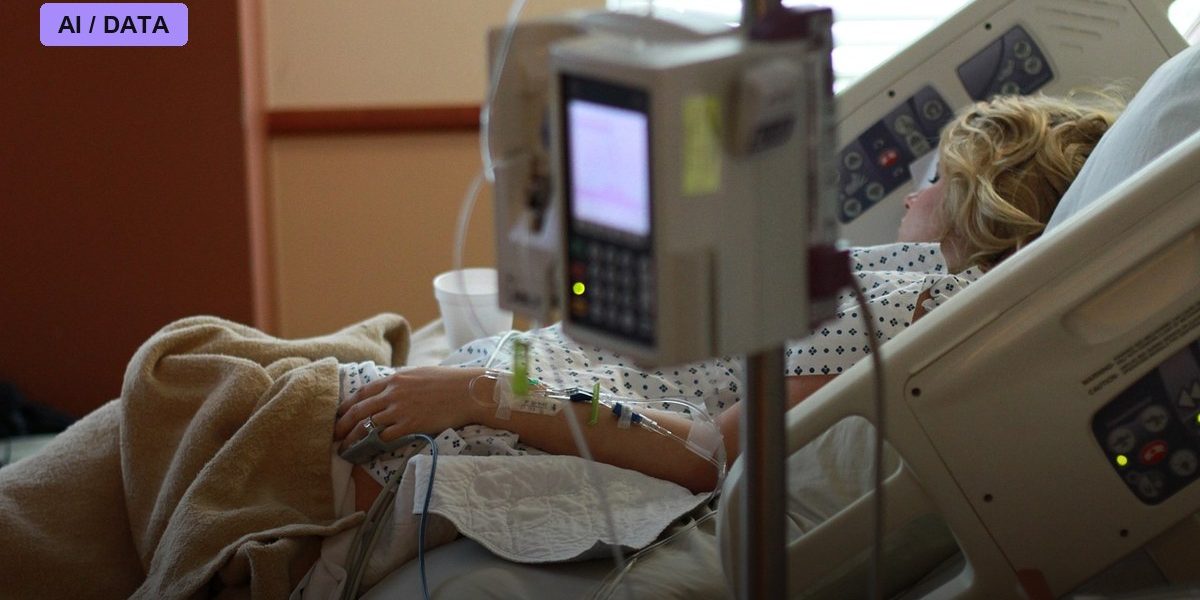
Sinai Hospital in Baltimore, part of LifeBridge Health, has begun integrating Sepsis ImmunoScore, the first FDA-authorized AI diagnostic tool for predicting sepsis risk, into its clinical workflow, giving emergency and inpatient teams a tool designed to flag deterioration up to 24 hours before it would otherwise become apparent.
Sepsis Remains Medicine’s Silent Emergency
Sepsis, the body’s often-fatal overreaction to infection, kills an estimated hundreds of thousands of people in the United States each year and is notoriously difficult to diagnose early because its initial symptoms, fever, elevated heart rate, confusion, overlap with dozens of less dangerous conditions. Clinical scoring systems like SOFA and qSOFA have long helped standardize sepsis assessment, but they rely on threshold-based scoring of vital signs that often only becomes abnormal once a patient is already deteriorating.
What Sepsis ImmunoScore Actually Measures
Developed by Chicago-based Prenosis, Sepsis ImmunoScore evaluates 22 parameters, including patient demographics, vital signs, routine lab tests and sepsis-specific immune biomarkers, to generate a composite risk score that integrates directly into a hospital’s electronic health record, functioning much like an ordinary lab test result that clinicians can order and view. In validation studies, the tool achieved an area under the curve of roughly 0.80 to 0.85 for predicting mortality and clinical deterioration, outperforming legacy scoring tools including SOFA, qSOFA, NEWS and standard biomarkers like procalcitonin and CRP across derivation and external validation cohorts.
From FDA Authorization to Bedside Use
Sepsis ImmunoScore received first-of-its-kind FDA marketing authorization in 2024 as the first AI/ML diagnostic tool cleared specifically for sepsis prediction, but translating that authorization into routine hospital use has taken time, as health systems work through EHR integration, clinician training and workflow redesign. LifeBridge Health’s deployment at Sinai Hospital represents one of the more prominent real-world rollouts to date, with clinical teams using the tool’s four-tier risk stratification, low, medium, high and very high, to help triage which patients need more aggressive monitoring or earlier antibiotic intervention.
The Case for Earlier Intervention
Sepsis treatment guidelines emphasize that mortality rises sharply for every hour that appropriate antibiotics and fluid resuscitation are delayed once sepsis takes hold, making early identification one of the few genuinely modifiable factors in patient outcomes. Validation data show mortality rates climbing steeply across ImmunoScore’s four risk tiers, from essentially zero percent in the lowest tier to more than 18 percent in the highest, giving clinicians a quantified basis for how aggressively to intervene rather than relying purely on clinical gestalt.
Clinicians Warn Against Alarm Fatigue
Emergency physicians who have piloted similar predictive tools caution that any new risk score risks worsening alarm fatigue, the phenomenon where clinicians become desensitized to frequent automated alerts and begin ignoring or overriding them, potentially undermining the tool’s value even when its underlying accuracy is strong. Hospital quality officers say the success of Sepsis ImmunoScore’s rollout will depend heavily on how it is embedded into workflow, whether it generates a small number of high-confidence alerts clinicians trust, or a flood of borderline scores that get dismissed.
What Wider Adoption Would Require
Beyond Sinai Hospital, wider adoption will likely hinge on additional real-world outcomes data showing that acting on ImmunoScore’s alerts actually changes clinical decisions and improves survival, not just that the score correlates with risk in retrospective analysis. Ongoing clinical trials evaluating the tool’s real-world performance and impact are expected to generate that evidence over the coming year, data that other health systems considering the roughly six-figure investment in licensing and integration costs are watching closely before committing.
Photo: Parentingupstream / PIXABAY via Pixabay