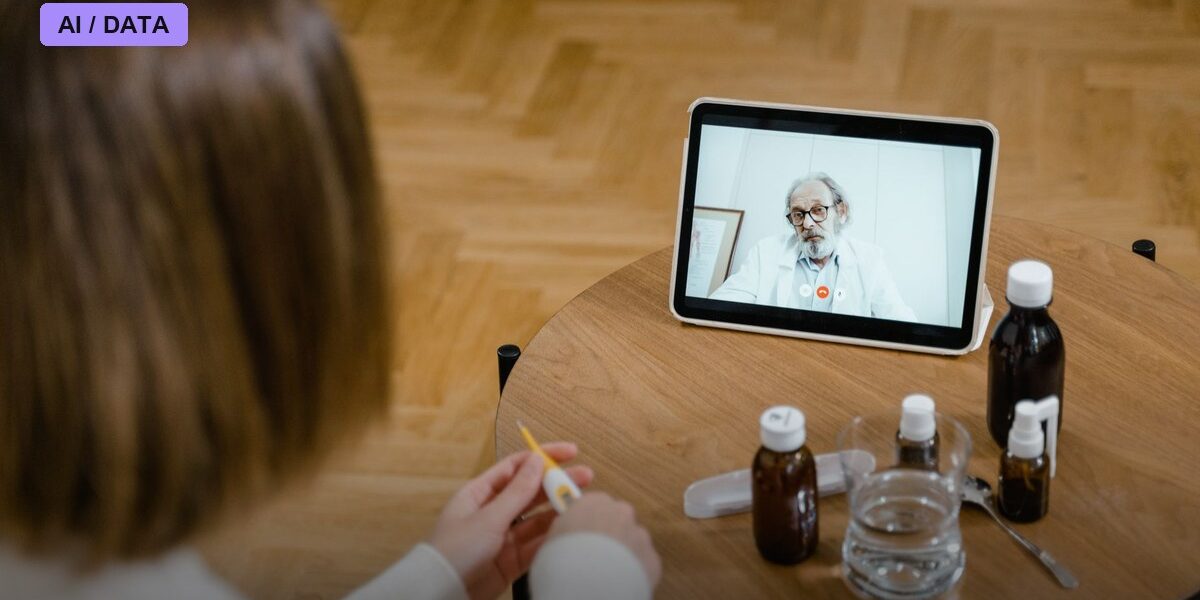
Vumedi, an Oakland-based medical education company, has raised a $140 million Series B led by Oak HC/FT to expand an AI-powered learning platform that helps physicians stay current on clinical techniques and research, according to reporting on the round this month. The financing is among the largest Series B rounds in health AI this year and signals growing investor appetite for AI tools aimed not at patients or diagnosis directly, but at the ongoing professional education physicians need throughout their careers.
The problem Vumedi is built around
Medical knowledge and surgical technique evolve continuously, but physicians have historically relied on a patchwork of conferences, peer-reviewed journals, hospital grand rounds and informal mentorship to stay current — a system that is slow, unevenly distributed across institutions, and difficult to scale to specialists in smaller or rural health systems who may not have easy access to academic medical centers. Vumedi’s platform aggregates video-based clinical content, including recorded procedures and case discussions, and uses AI to personalize what content individual physicians see based on their specialty and practice patterns, aiming to compress the time it takes new techniques to reach frontline doctors.
Why Oak HC/FT and other investors are betting on physician education
Oak HC/FT has a long track record investing in healthcare technology infrastructure rather than consumer-facing health apps, and its lead role in this round reflects a thesis that improving physician knowledge and decision-making at scale can have outsized downstream effects on patient outcomes and cost, compared with narrower point solutions targeting single diseases or workflows. The scale of the round — $140 million is a substantial Series B even by current AI-funding standards — suggests investors see physician education as a category capable of supporting a large, durable business rather than a niche tool.
How this compares to AI diagnostic tools
Vumedi’s approach sits in contrast to the wave of FDA-cleared AI diagnostic tools from companies like Tempus, Lunit and RevealDX, which assist physicians directly in reading scans or flagging abnormalities during patient care. Rather than inserting AI into the clinical decision at the point of care, Vumedi is positioned further upstream, aiming to make the physicians themselves better informed before they ever see a given patient. Proponents argue this approach sidesteps some of the regulatory complexity and liability concerns that come with AI tools making or influencing real-time clinical recommendations, since Vumedi’s product is explicitly educational rather than diagnostic.
Skepticism about measuring impact
A persistent challenge for physician-education platforms, AI-enhanced or not, is proving a direct link between usage and improved patient outcomes — a much harder causal chain to establish than for a diagnostic tool whose accuracy can be benchmarked directly against clinical ground truth. Critics of the broader category note that engagement metrics like video views or time spent on a platform are poor substitutes for evidence that physicians are actually changing practice in ways that measurably help patients, and Vumedi will likely face pressure from investors and health system customers alike to produce more rigorous outcomes data as it scales.
What’s next
With $140 million in fresh capital, Vumedi is expected to expand its content library, deepen its AI personalization capabilities, and likely pursue partnerships with hospital systems and specialty societies looking to formalize continuing medical education programs around the platform. The round adds to a broader November wave of health-AI financings, including Zus Health’s $33 million raise and Charta Health’s $55 million round, reinforcing that investor interest in health AI now spans far beyond diagnostic algorithms into the administrative and educational infrastructure surrounding patient care.
Photo: Tima Miroshnichenko / PEXELS via Pexels