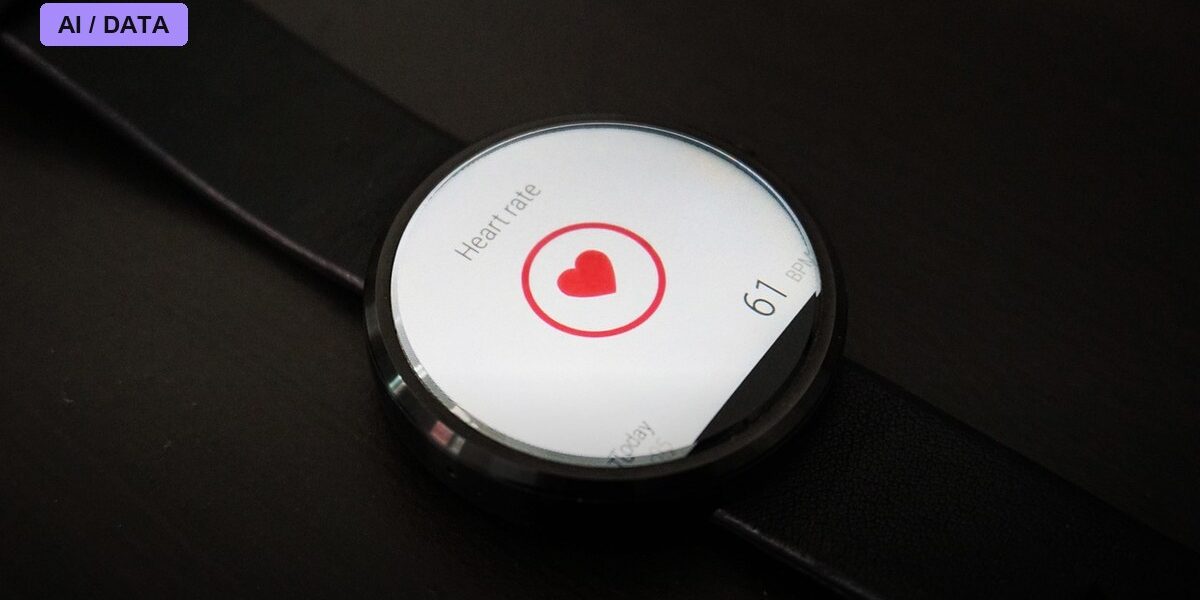
Belfast-based PulseAI announced on November 5, 2026 that it had received FDA 510(k) clearance for an AI-powered arrhythmia analysis model designed to run on consumer wearable devices, addressing one of the most persistent complaints about heart-rate wearables: a flood of inconclusive or false alerts that send healthy users to the emergency room and desensitize at-risk patients to real warnings.
The clearance and what it covers
The FDA clearance, filed under submission number K254226, covers an AI model that analyzes heart rhythm data to detect atrial fibrillation (AFib) and other arrhythmias from wearable sensor data. The regulatory filing was received by the FDA on October 26, 2026, with clearance following roughly a month later — a relatively fast turnaround for a cardiac AI submission, though PulseAI’s announcement did not specify which wearable devices will be compatible with the cleared model.
The data behind the claim
PulseAI’s clearance rests on a prospective study of 296 participants published in the journal Heart Rhythm, which found the company’s algorithm improved AFib detection sensitivity while reducing inconclusive readings by 92% compared with Apple Watch’s native rhythm-analysis algorithm. Inconclusive readings — where a wearable flags irregularity but can’t confirm AFib — are a major source of both user anxiety and unnecessary downstream clinical visits, since patients and even clinicians often cannot distinguish a genuine inconclusive signal from device noise.
Why the trial population matters
The study was conducted in a cohort of patients undergoing cardiac procedures, a population with substantially higher arrhythmia prevalence than the general public. That means the reported sensitivity and false-alert reduction, while a meaningful proof of concept, don’t necessarily predict how the algorithm will perform in the broader population of wearable users — mostly healthy people wearing devices for general fitness and wellness tracking rather than active cardiac monitoring. Regulatory clearance based on a higher-prevalence population is common in cardiac AI, but it leaves open questions about real-world performance that typically get answered only after wider deployment.
A crowded and increasingly competitive field
PulseAI’s clearance arrives alongside a wave of FDA activity around AI-enabled cardiac devices this year. Tempus AI received its fourth AI-ECG clearance in 2026, most recently for a tool spotting hidden heart valve disease, while FDA has cleared 86 AI medical devices in a single recent quarter — a pace that regulators and industry trackers describe as accelerating rather than plateauing. For wearable-focused AI specifically, PulseAI is positioning its clearance against incumbent rhythm algorithms already built into major consumer devices like Apple Watch, rather than competing directly with hospital-grade diagnostic tools. That distinction matters commercially: hospital-grade cardiac AI tools are typically sold through health-system procurement cycles that can take years, while a wearable-integrated model could reach consumers far faster if even one major device maker licenses it, giving PulseAI a potential path to scale that bypasses traditional medical-device sales channels entirely.
Two perspectives on the stakes
Cardiologists who treat AFib have broadly welcomed tools that reduce false alerts, arguing that alert fatigue is a genuine clinical problem: patients who receive repeated inconclusive readings often stop taking any alert seriously, including the rare one that reflects a real, dangerous arrhythmia. Device-safety researchers take a more cautious view, noting that a 510(k) clearance based on a single 296-person study in a high-prevalence cardiac population is a relatively narrow evidentiary base for a tool that could end up running on tens of millions of consumer wearables, and that broader post-market surveillance will be needed to confirm the reduction in false alerts holds up across more typical, lower-risk users.
What to watch next
The near-term signals worth tracking are which wearable manufacturers, if any, license PulseAI’s model for integration, and whether the company or independent researchers publish follow-up data from a broader, lower-prevalence population. More broadly, PulseAI’s clearance is another data point in a steadily growing category — AI models cleared specifically for consumer wearable hardware rather than clinical-grade monitors — that regulators, hardware makers and insurers are all still working out how to evaluate and reimburse at scale.
Photo: Apichit / PIXABAY via Pixabay