AbbVie and Iambic Therapeutics announced a multi-year collaboration on September 21, 2026 to apply Iambic’s AI drug discovery platform across small-molecule programs in immunology, neuroscience and oncology — three of AbbVie’s core therapeutic franchises. The deal adds AbbVie to a fast-growing list of major pharmaceutical companies betting that AI-driven molecule design can compress the years-long, often failure-prone process of identifying viable drug candidates.
What Iambic’s platform actually does
At the center of the partnership is Enchant v3, a multimodal AI model that Iambic has trained across more than 6,000 molecular properties alongside multiple types of biomedical data. Rather than screening existing chemical libraries, the platform is designed to generate and optimize novel small-molecule structures computationally, predicting properties like binding affinity, selectivity and toxicity before a candidate ever reaches a wet lab. The goal is to cut both the time and the failure rate of early-stage discovery, where the large majority of drug candidates are eliminated.
Why three disease areas at once
Spreading the collaboration across immunology, neuroscience and oncology — rather than a single focused program — suggests AbbVie is treating this as a platform bet rather than a one-off project. All three areas are central to AbbVie’s post-Humira growth strategy, as the company works to diversify revenue following biosimilar competition to its longtime flagship immunology drug. Applying one AI platform across structurally different disease biology also serves as a stress test of how generalizable Iambic’s modeling approach really is, beyond any single target class.
Financial structure reflects a now-familiar pattern
As with most AI-pharma deals struck in 2026, the companies disclosed a structure — an upfront payment, success-based development and commercial milestones, and tiered royalties on eventual net sales — without disclosing the actual dollar figures. That opacity has become standard across the sector; comparable 2026 deals, including Eli Lilly’s partnerships with Insilico Medicine and Stipple Bio, and Roche’s deal with Chai Discovery, have followed a similar template of large potential milestone value with few guaranteed dollars upfront, reflecting how much of the payoff remains contingent on whether AI-designed candidates actually clear clinical trials.
Iambic’s own momentum
The AbbVie deal lands as Iambic has been building toward going public, having filed for an IPO on the Nasdaq. The company’s most advanced in-house candidate, IAM1363, a HER2 inhibitor, is currently in Phase 1 testing — giving Iambic a proof point that its platform can take a program from AI-driven design into human trials, a milestone still rare among AI-native drug discovery startups. Landing AbbVie as a partner ahead of a public offering also signals to prospective investors that a major pharmaceutical company is willing to bet directly on the platform’s output, a validation point that smaller AI-native biotechs without a marquee pharma partner often struggle to secure before going public.
Two views on whether AI drug discovery is delivering
Proponents point to the sheer volume and size of 2026’s AI-pharma deals — Lilly’s up to $2.75 billion Insilico collaboration, its up to $5.9 billion Stipple Bio deal, and now AbbVie’s Iambic partnership — as evidence that large pharma increasingly views AI-native platforms as essential infrastructure rather than experimental tooling. Skeptics counter that headline deal values are almost entirely milestone-dependent and that the field still lacks a confirmed case of an AI-discovered small molecule reaching FDA approval through the full pipeline, meaning the technology’s real payoff remains unproven even as capital keeps flowing in.
What comes next
The practical test for the AbbVie-Iambic partnership will be whether Enchant v3-designed candidates begin entering AbbVie’s preclinical pipeline within the next one to two years, and whether early results differ meaningfully across the three disease areas. More broadly, with multiple large AI-drug-discovery deals now signed in immunology, oncology and neuroscience within a matter of months, 2027 is likely to be the year several of these AI-originated candidates reach their first real clinical milestones — the point at which the field’s promises get tested against actual patient data rather than computational predictions.
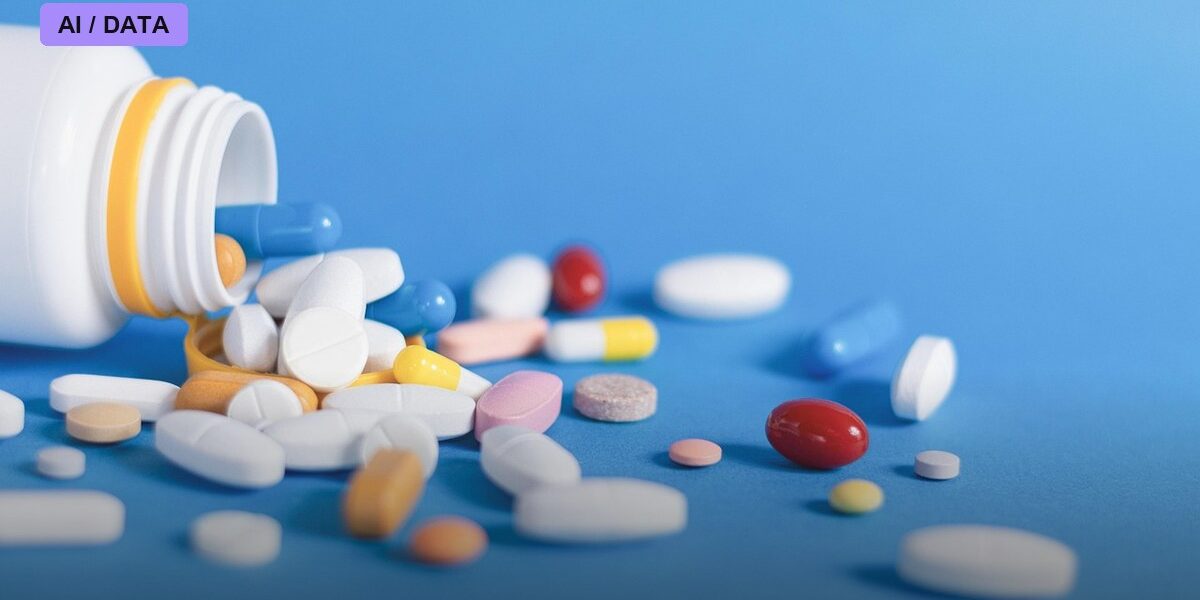
Photo: kravaivan11 / PIXABAY via Pixabay