Knit Health announced a $35 million Series A on November 16, led by New Enterprise Associates with participation from Town Hall Ventures and SignalFire, to accelerate deployment of Med-BEAM, a model the company describes as a healthcare world model trained to predict what care a patient is likely to need next. The round brings Knit Health’s total funding to $46.6 million since the UC Berkeley spinout launched with an $11.6 million seed round in May.
What a ‘World Model’ Means in a Hospital Setting
Outside healthcare, world models are AI systems trained to simulate how an environment behaves so an agent can predict outcomes before acting, a concept popularized in robotics and game-playing AI. Knit Health is applying that framing to clinical decision-making: rather than answering a single question about a patient, Med-BEAM is built to model how a patient’s condition is likely to evolve given their history, current vitals, and care trajectory, producing a forward-looking prediction rather than a retrospective summary. The company says Med-BEAM was trained on billions of healthcare decisions drawn from hundreds of millions of patient records.
The Pitch: Anticipating Deterioration Before It Shows Up on a Chart
Knit Health’s core argument is that most clinical AI tools today are reactive, flagging an abnormal lab value or vital sign after it occurs, rather than anticipating the trajectory that leads there. Med-BEAM is positioned to give care teams a probability-weighted forecast of what a patient will need, whether that’s escalation to a higher level of care, a specific intervention, or a likely readmission risk, early enough that a clinician can act on it rather than simply react to it. That framing echoes a broader shift in health-system software toward predictive and prescriptive analytics, following years of tools built mainly around retrospective reporting.
How the Company Tested Its Claims
In an internal comparison described by Knit Health, Med-BEAM was tested against three Claude models on a set of 200 emergency-admitted patients, reporting an average precision of 0.565 in predicting subsequent care needs. The company has not published this as a peer-reviewed study, and at least one outlet covering the release noted that the test does not establish whether Med-BEAM’s predictions translate into better patient outcomes, only that its predictions matched retrospective records more often than the comparison models in this specific sample. Precision figures in the mid-0.5 range leave meaningful room for both false positives and missed predictions, a caveat health systems evaluating the tool will need to weigh against the marketing framing.
Where the Money Is Going
Knit Health says the Series A will fund commercial deployment of Med-BEAM across additional health systems and healthcare organizations, building on pilots that began after the company’s May seed round. Founder and CEO statements accompanying the raise framed the funding as a shift from research validation to operational rollout, the stage at which most clinical AI startups either prove their model holds up against messy, non-curated hospital data or stall out when real-world performance falls short of pilot results. Knit Health is entering a segment that already includes established players in deterioration-prediction and early-warning scoring, as well as a wave of newer startups applying large-model techniques to clinical forecasting. Investors backing this round are betting that a model trained at world-model scale, on a much larger slice of historical patient data than narrower point-solution tools, will generalize better across hospitals with different patient populations and documentation habits, a persistent failure mode for clinical AI tools validated at a single institution and then deployed elsewhere.
Skepticism From Health System Buyers
Health system IT and informatics leaders who have evaluated similar predictive tools in the past note that benchmark comparisons against general-purpose language models, rather than against existing clinical early-warning systems already in use, make it hard to judge whether Med-BEAM represents a genuine improvement over current practice. They also point out that a 200-patient test set is small relative to the scale at which the company says Med-BEAM was trained, and that hospitals will want to see performance data from their own patient populations before trusting predictions tied to staffing and escalation decisions.
What Comes Next for Knit Health
With fresh funding in hand, Knit Health’s near-term test will be whether health systems piloting Med-BEAM see predictions that hold up against what actually happens to patients after discharge or escalation, not just against a backtested dataset. The company has not disclosed specific new health-system partnerships tied to this round, and the broader question for the predictive-AI sector remains the same one that has dogged earlier clinical algorithms: whether a tool that performs well on paper changes what a nurse or physician actually does at the bedside.
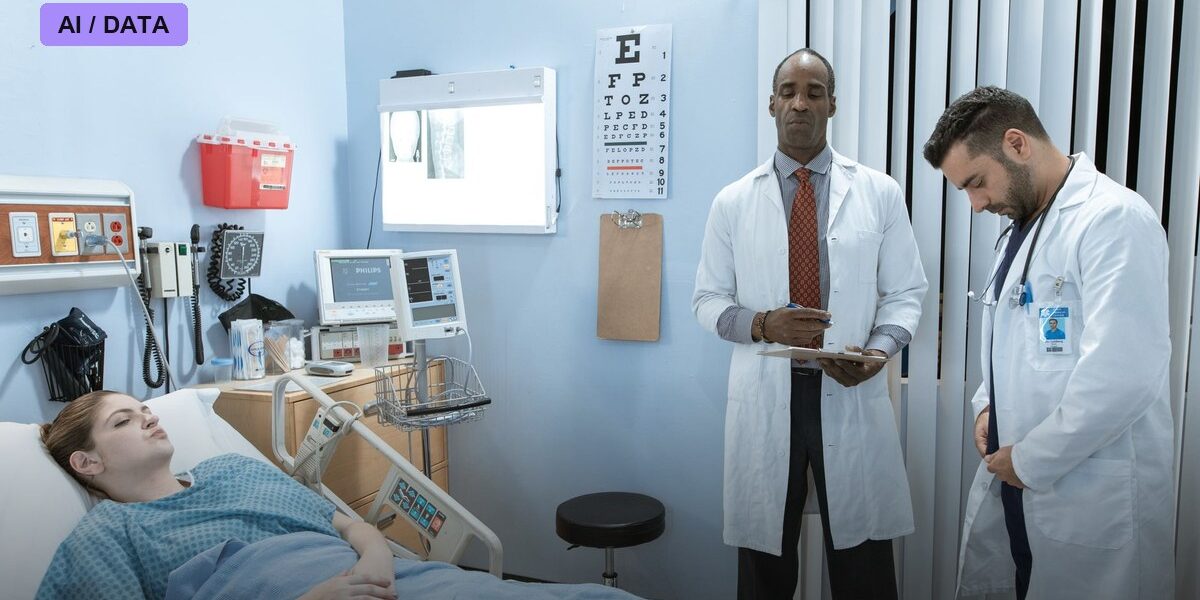
Photo: RDNE Stock project / PEXELS via Pexels