Google is putting its investment-grade credit behind one of the biggest AI infrastructure bets of the year, agreeing to serve as a backstop on project debt for a sprawling data center campus that Anthropic will lease in rural Kentucky. The arrangement, disclosed in early November, is designed to let TeraWulf, the bitcoin-miner-turned-AI-infrastructure developer building the site, borrow billions of dollars more cheaply than it could on its own.
A 20-Year Lease Worth $19 Billion
The campus, known as the Justified Data Campus, sits on roughly 482 megawatts of available transmission capacity in Hawesville, Kentucky, on the site of a former Century Aluminum smelter in Hancock County. Anthropic signed a 20-year lease for capacity there that TeraWulf has valued at approximately $19 billion over the life of the contract. TeraWulf owns and operates the campus and is responsible for building it out, while Anthropic will use the compute to train and run its Claude models.
Why Google’s Backstop Matters
Big data center leases are only as valuable to lenders as the credit behind them, and TeraWulf itself does not carry the kind of balance sheet that typically underwrites multibillion-dollar construction loans. By agreeing to assume responsibility for the project debt if TeraWulf defaults, Google effectively lends its own credit rating to the deal. Alphabet’s senior unsecured debt is rated AA+ by S&P Global Ratings and Aa2 by Moody’s, among the highest ratings of any U.S. corporate borrower. Neither Google nor TeraWulf has disclosed the dollar size of the backstop.
TeraWulf had been seeking roughly $3.5 billion in financing for the project as of this past summer, with Morgan Stanley reported to be arranging a mix of leveraged loans and high-yield bonds — TeraWulf’s first entry into that market. Analysts estimate site development and the first data halls alone could cost $4 billion to $4.5 billion, or roughly $10 million to $12 million per megawatt of critical IT load, a figure that has become a rough industry benchmark as hyperscalers race to lock up power and shells for AI compute.
Construction Is Already Underway
The financing news followed a concrete construction milestone: Fluor Enterprises signed a definitive engineering, procurement and construction contract on November 4 covering three buildings at the site. Fluor is expected to recognize the award once pricing is finalized for the first two structures. TeraWulf is targeting a phased ready-for-service schedule running from late 2027 into the second quarter of 2028, with an initial building, designated CB-1 and sized at 180 megawatts, targeted for the third quarter of 2027. Kentucky utility regulators approved a retail electric service agreement for up to 482 megawatts at the site in August, with power supplied through Big Rivers Electric Corporation and Kenergy Corp.
Executives Frame It as a Financing Playbook
TeraWulf’s leadership has been explicit that the Anthropic leases were structured from the start with financing costs in mind. “Cost of capital is fundamental to infrastructure development,” said Patrick Fleury, TeraWulf’s chief financial officer, arguing that the credit support meaningfully improves the project’s overall financing profile. Paul Prager, the company’s chairman and chief executive, said the leases were designed from the outset “to address counterparty credit,” a reference to the fact that long-term AI compute leases are only bankable if lenders trust both the tenant and the structure standing behind it.
Part of a Broader Kentucky Buildout — and a Bigger Pattern
The Hawesville project is one of several large AI data center developments converging on Kentucky, including a roughly 400-megawatt Meta campus that secured a 40-year local tax arrangement. Data-tracking firm Baxtel counts about 50 data centers already operating or planned in the state across 25 providers, with Core Scientific’s 150-megawatt Calvert City facility previously the largest. The Google-TeraWulf-Anthropic structure also reflects a wider trend: as AI labs without their own balance sheets sign enormous compute leases, hyperscalers and cloud providers are increasingly stepping in as credit guarantors rather than direct builders, letting infrastructure developers like TeraWulf take on the construction risk while tech giants backstop the financing.
Skeptics of the broader AI infrastructure buildout have questioned whether speculative, debt-financed campuses like Hawesville could leave lenders and backstop providers exposed if AI compute demand cools before 20-year leases run their course. For now, though, the deal gives TeraWulf a path to cheaper capital, gives Anthropic a dedicated campus to grow into, and gives Google a stake — financial if not operational — in ensuring the project gets built on schedule. Ready-for-service milestones over the next two years will be the first real test of whether the credit-backstop model holds up.
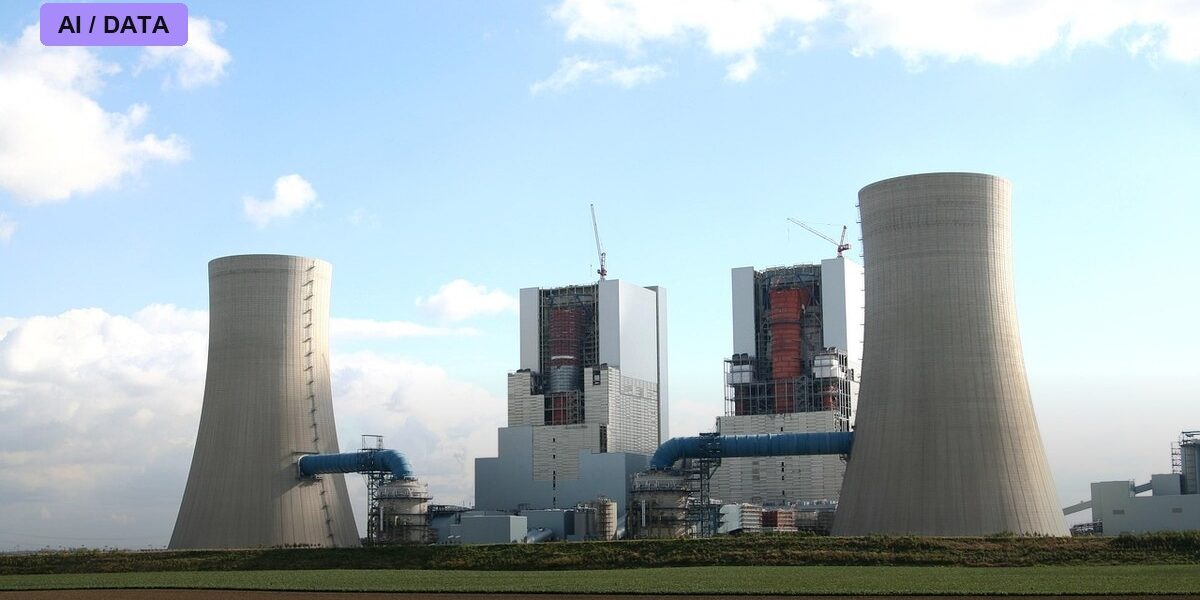
Photo: nedu503 / PIXABAY via Pixabay