Isomorphic Labs, the AI drug discovery company spun out of Google DeepMind, has raised $2.1 billion in what is described as the second-largest biotech funding round of all time, while also signing Johnson & Johnson as its third major pharmaceutical partner following earlier collaborations with Eli Lilly and Novartis.
Isomorphic’s Pedigree and Technology Base
Isomorphic Labs builds directly on DeepMind’s AlphaFold breakthrough in protein structure prediction, which won its creators the Nobel Prize in Chemistry, extending that foundational technology toward the applied problem of designing novel drug molecules rather than simply predicting how existing proteins fold. The company’s close ties to DeepMind and Google give it access to substantial computational resources and machine learning talent that most AI drug discovery startups cannot match.
The Significance of the J&J Partnership
Securing Johnson & Johnson as a third major pharma partner, after Lilly and Novartis, demonstrates Isomorphic’s ability to diversify its revenue and validation base across multiple large pharmaceutical companies rather than depending on a single relationship, reducing the company’s exposure to any one partner’s strategic shifts or program cancellations. The specific therapeutic areas targeted under the J&J deal have not been disclosed.
Why the Funding Round Is Historically Significant
At $2.1 billion, the round ranks as the second-largest biotech funding round ever recorded, reflecting investors’ willingness to value AI-native drug discovery platforms at levels historically reserved for clinical-stage biotechs with actual drug candidates in human trials. The scale of the raise also reflects the broader 2026 AI drug discovery funding surge, which reached $11.4 billion industry-wide in 2025, roughly doubling the prior year.
How Isomorphic Compares to Rivals
Isomorphic competes with a growing field of AI drug discovery companies including Chai Discovery, which recently partnered with Roche, and Insilico Medicine, which has expanded its own Lilly partnership to up to $2.75 billion, all racing to prove that AI-designed molecules can achieve higher clinical success rates or faster development timelines than traditional drug discovery methods. No company in this competitive set, including Isomorphic, has yet achieved a full FDA approval for an AI-discovered drug.
Investor Skepticism About Valuations
Some biotech investors have questioned whether AI drug discovery platform valuations, including Isomorphic’s new funding round, have run ahead of demonstrated clinical success, given the industry-wide absence of a first approved AI-discovered drug despite years of substantial investment. Isomorphic’s backers counter that the platform’s deep technical foundation in AlphaFold-derived modeling and its multiple pharma partnerships justify premium valuations even before clinical proof points fully materialize.
What’s Next
Watch for Isomorphic to disclose how the new $2.1 billion will be deployed, including whether it funds expanded internal drug programs alongside its partnership work with Lilly, Novartis and now J&J. The company’s progress will also be closely watched as a bellwether for whether DeepMind-lineage AI technology can translate protein structure prediction breakthroughs into a first approved therapeutic faster than competing AI drug discovery approaches.
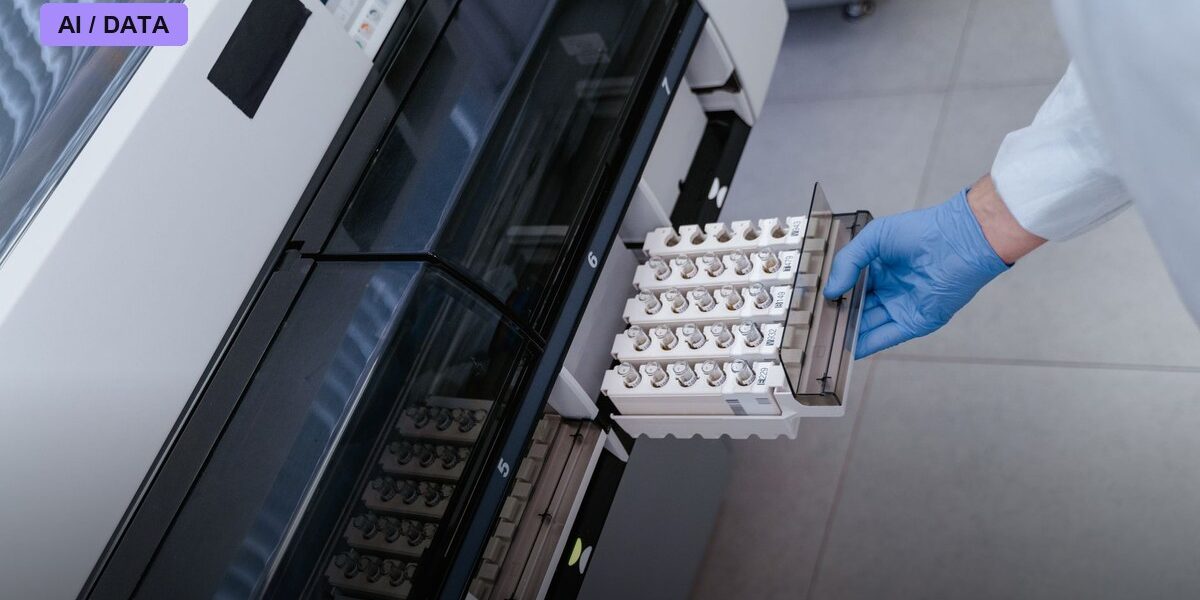
Photo: Tima Miroshnichenko / PEXELS via Pexels