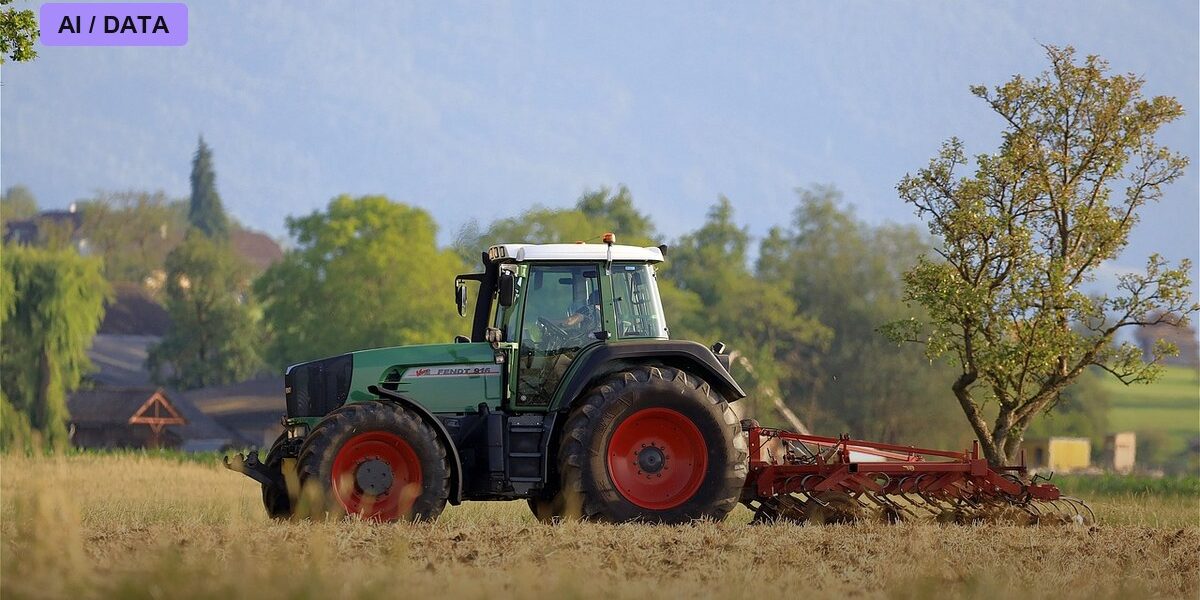
At the KIEMSTA 2026 trade show in Daegu, South Korea, farm machinery makers Daedong, TYM, and LS Mtron showcased a new generation of AI-equipped, self-driving tractors on November 7, part of a global wave of efforts to bring artificial intelligence out of labs and offices and into the physically demanding, labor-strapped world of agriculture. Daedong’s booth centered on an AI tractor paired with a farming robot and a voice assistant called AI Daedongi, which lets farmers manage their farm logs through a simple phone call rather than typing data into an app.
From App Dashboards to Phone Calls
AI Daedongi’s design choice is telling: rather than requiring farmers, many of whom are older and less comfortable with smartphone apps, to manually log planting dates, fertilizer use, or equipment maintenance, the assistant captures that information through ordinary phone conversations. Daedong has said it plans to use the farm data accumulated through AI Daedongi to build out a broader agricultural AI agent business, turning what starts as a convenience feature into a long-term data asset covering planting cycles, yields, and equipment usage across its customer base.
A Global Pattern: John Deere’s Operations Center
Korea’s push mirrors moves already underway at John Deere, whose AI assistant, built into its Operations Center software, lets farmers hold a conversation with the vast amount of machine and operational data their equipment generates rather than digging through spreadsheets and dashboards. The convergence suggests the agricultural equipment industry globally sees conversational AI, not just automation of physical tasks, as the next major product category — a shift from selling hardware to selling an AI layer that makes existing hardware more useful.
Precision Spraying Cuts Herbicide Use by 70%
Beyond tractors and assistants, AI is reshaping how chemicals are applied in the field. Researchers in Florida have developed AI systems that distinguish weeds from crops like tomatoes in real time, enabling targeted spraying that can cut herbicide use by roughly 70% while lowering costs for growers. Commercial spraying firm AgZen has reported similar results using AI models from agtech company Sentera, suggesting the technology is moving from research prototypes toward deployable products faster than in some other AI application areas. For growers operating on thin margins, a 70% cut in herbicide use is not just an environmental benefit but a direct cost reduction, since herbicide and pesticide spending represents one of the largest variable input costs in row-crop farming, making precision spraying one of the more immediately monetizable AI applications in the sector.
Policy and Investment Are Catching Up
US lawmakers have introduced the bipartisan FARM AI Act to expand farmer access to AI technology, reflecting a recognition that the benefits of this wave of automation could otherwise concentrate among larger operations with capital to invest. On the funding side, agricultural robotics startup Agtonomy closed an oversubscribed $18 million Series B round, and data firm Reservoir struck a three-year, $10 million R&D partnership with John Deere aimed at accelerating rugged AI systems for high-value crop farming — evidence that venture capital sees a genuine market opening, not just a niche experiment.
Not Everyone Is Convinced Adoption Will Be Even
Industry voices at the 2026 USDA Ag Outlook Forum described the moment as a “fourth agricultural revolution,” but adoption skeptics caution that AI tools built for large-scale commercial farms in Korea, the US, and Europe may not translate easily to smallholder agriculture in other parts of the world, where capital, connectivity, and technical support remain limited. One widely cited industry estimate puts the global AI-in-agriculture market at $3.37 billion in 2026, growing around 24.5% annually, though figures like that should be treated as rough, vendor-sourced projections rather than verified totals.
What’s Next
Watch for Daedong and its Korean rivals to disclose more about how the agricultural data they’re collecting through AI assistants will be monetized or shared, a question with real implications for farmer data ownership. Also worth tracking: whether the FARM AI Act advances through Congress, and whether precision-spraying systems like those used by AgZen and Sentera see wider commercial rollout beyond the pilot projects reported so far, including whether smaller, independent farm operations can access financing to adopt AI-equipped equipment at a price point comparable to what larger commercial operations are already paying.
Photo: WFranz / PIXABAY via Pixabay