Eli Lilly and Insilico Medicine announced on March 29 an expanded AI drug discovery collaboration worth up to $2.75 billion, with Lilly paying $115 million upfront, the only portion of the deal guaranteed regardless of outcome, against roughly $2.63 billion in potential milestone payments tied to development, regulatory approval and sales thresholds, plus tiered royalties on any resulting products. The agreement grants Lilly an exclusive worldwide license to develop, manufacture and commercialize a set of preclinical oral treatments identified using Insilico’s AI engine, while the two companies also launch joint research and development work spanning multiple additional programs built around disease targets Lilly selects.
A Relationship That Predates This Deal
The expanded collaboration builds on a narrower software licensing agreement the two companies first signed in 2023, under which Lilly gained access to pieces of Insilico’s computational drug-design tools without the broader program-sharing structure now in place. That earlier arrangement effectively served as a multi-year trial run, giving Lilly direct visibility into how Insilico’s AI platform performs at identifying viable drug candidates before committing to a deal an order of magnitude larger in potential value.
What Insilico and Lilly Each Bring
Insilico contributes its Pharma.AI platform, a suite of generative AI models the Hong Kong- and New York-listed company has built specifically for identifying novel drug targets and designing candidate molecules computationally, along with automation capability for running much of the early discovery process without the extensive laboratory screening that traditional drug discovery requires. Lilly, in turn, brings clinical development expertise, regulatory experience and disease-area knowledge that Insilico, a comparatively young company, does not have in-house at the scale needed to shepherd a molecule from computational design through to an approved medicine.
Everything Licensed Is Still Preclinical
All of the programs covered by the deal remain at the preclinical stage, meaning none has yet entered human clinical trials, a detail that underscores how much of the deal’s headline $2.75 billion figure depends on years of development work that has not yet begun and that carries the same high attrition risk facing any early-stage drug program, AI-designed or not. Analysts covering the announcement have been careful to note that the gap between a preclinical candidate and an approved drug is typically measured in most cases, and most programs that start at this stage never reach the market regardless of how they were discovered.
Disclosed and Undisclosed Details
Lilly and Insilico have not disclosed which specific diseases the newly licensed preclinical programs target, though some secondary reporting has pointed to fibrosis, oncology, immunology and metabolic disorders as likely areas of focus, a claim that has not been confirmed against either company’s official announcement. That gap between what has been officially disclosed and what outside analysts have inferred is a recurring feature of these large pharma-AI partnerships, where companies often keep specific target details confidential for competitive reasons even while publicizing the overall deal structure and dollar figures.
How Markets and Rivals Are Reading It
Insilico’s Hong Kong-listed shares jumped as much as 15% on the day of the announcement, a reaction that reflects investor enthusiasm for the credibility a deal of this size with a major pharmaceutical partner lends to Insilico’s AI platform, even though the bulk of the payment remains contingent on milestones years away. The deal also arrives as Lilly has pursued AI drug-discovery partnerships on multiple fronts simultaneously in 2026, a pattern consistent with how large pharmaceutical companies have approached the space more broadly this year, spreading bets across several AI-native partners rather than relying on a single platform or vendor.
What’s Next
The next concrete milestones to watch will be whether any of the licensed preclinical programs advance into human trials, the point at which the deal’s actual value will start to become clearer rather than remaining a theoretical ceiling tied to payments that may never be triggered. Insilico, for its part, is likely to use the Lilly deal as validation in pursuing similar partnerships with other large pharmaceutical companies, a strategy that has already shaped its separate collaboration with SK Biopharmaceuticals earlier in 2026, while industry watchers continue assessing whether AI-designed drug candidates can clear clinical trials at rates that justify the billions now flowing into this category of deal.
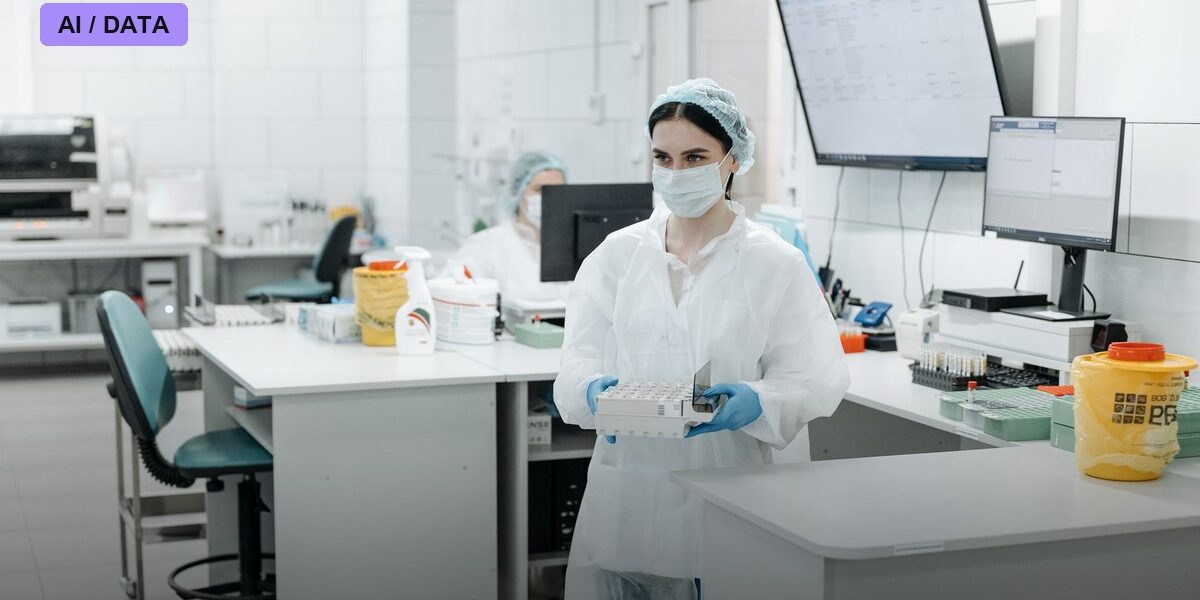
Photo: Pavel Danilyuk / PEXELS via Pexels