Aidoc, an Israeli clinical AI company that helps hospitals flag urgent findings on medical scans, has raised $150 million in a Series E funding round led by Goldman Sachs Alternatives, with participation from Nvidia’s NVentures, General Catalyst, and SoftBank Investment Advisors. The round, announced April 29, 2026, pushes Aidoc’s total outside funding above $500 million and values the company among the most heavily capitalized players in clinical AI.
What Aidoc’s Platform Does
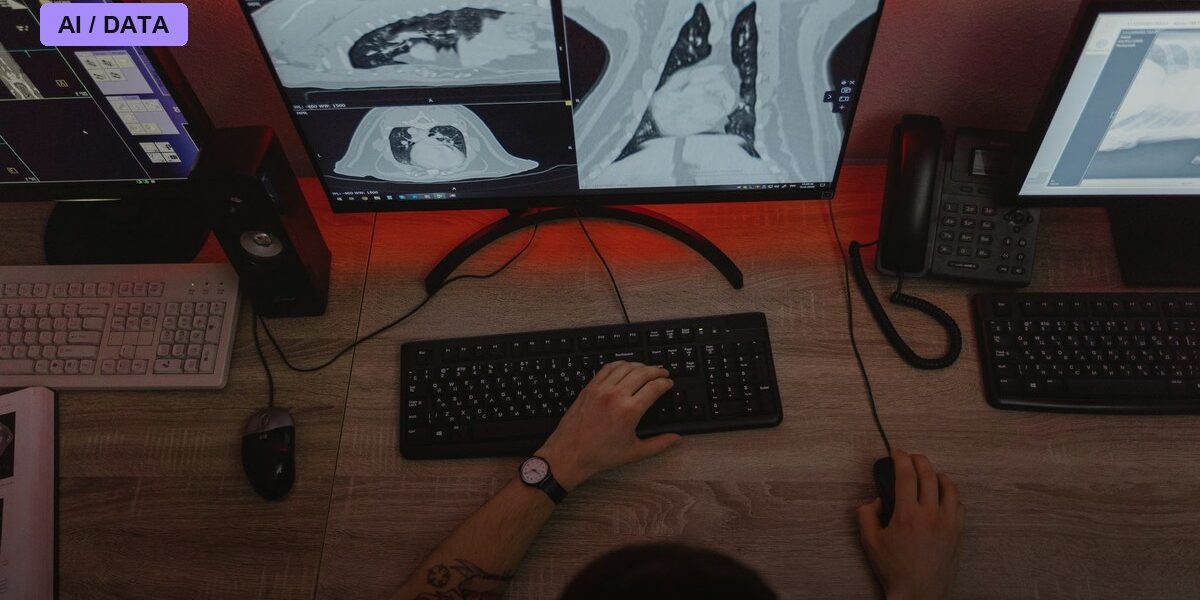
Aidoc sells what it calls an operating system for hospital imaging, branded aiOS, which runs AI algorithms across incoming CT, MRI, and X-ray studies to flag time-sensitive findings such as internal bleeding, blood clots, or fractures before a radiologist has formally reviewed the images. The company says its software has now analyzed more than 110 million patient cases and is deployed across nearly 2,000 hospitals worldwide, supporting clinical decisions for roughly 60 million patients a year, figures that would make it one of the most widely deployed AI triage platforms in radiology globally.
CARE, the Foundation Model at the Center of the Round
Much of the new funding is earmarked for expanding CARE, Aidoc’s foundation model for acute care triage, which received FDA clearance in January 2026 to flag 11 separate acute indications from a single model, including spleen, liver, and kidney injury, pelvic fracture, and intestinal ischemia. Industry observers have described it as the first FDA clearance covering a double-digit set of acute conditions from one foundation model, a departure from the traditional approach of seeking a separate, narrow clearance for each individual finding a tool is meant to detect.
Where the Money Is Going
Aidoc says the new capital will fund three priorities: broadening international adoption of its aiOS platform outside the U.S. and Israel, expanding CARE to recognize additional disease indications beyond the 11 already cleared, and building a feature that would let the system draft preliminary clinical reports directly from imaging findings. That last ambition pushes Aidoc further into territory also being pursued by rivals, since AI-drafted radiology reports are widely seen as the next major battleground in imaging AI, with the potential to meaningfully cut the time radiologists spend on routine dictation.
A Crowded, Well-Funded Imaging AI Market
Aidoc’s raise is one of several large funding rounds in medical imaging AI in 2026, a sign that investors are still willing to write large checks into the sector even as some hospitals express fatigue over managing dozens of point-solution AI tools from different vendors. Competing platforms are pitching vendor-neutral marketplaces as a way to simplify that sprawl, while Aidoc is betting that owning the full triage workflow through a single foundation model, rather than selling narrow single-purpose algorithms, gives it an edge in both the clinical and commercial relationship with hospital systems. Other well-funded rivals in adjacent corners of imaging AI, from vendor-neutral platforms to AI-native radiology practices, have each raised tens of millions of dollars over the past year, underscoring how much capital is still chasing the idea that hospital imaging workflows are ripe for an AI-driven overhaul rather than a space that has already consolidated around a handful of winners.
The Skeptical Read
Critics of the triage-AI category note that detecting a finding on a scan is only valuable if it measurably changes clinical outcomes, and that most of Aidoc’s publicly cited usage statistics, including the 60 million patients figure, come from the company’s own disclosures rather than independent peer-reviewed studies. The real test for a tool covering 11 or more acute indications from one model is whether sensitivity and specificity hold up consistently across that broader range of conditions, rather than degrading as the model is asked to do more with the same underlying architecture.
What’s Next
With fresh capital in hand, Aidoc’s next disclosures will likely center on how many additional disease indications CARE can add to its FDA clearance and whether its drafted-report feature reaches commercial pilots with hospital systems. Investors in the Series E, including strategic backers like Nvidia and SoftBank, will also be watching whether international expansion beyond Aidoc’s existing hospital base translates into meaningful new revenue, a signal that would test whether the imaging AI market still has room to grow or is approaching saturation among large health systems that have already adopted a triage platform.
Photo: Tima Miroshnichenko / PEXELS via Pexels