Bayer has struck a drug discovery partnership with Iambic Therapeutics, a clinical-stage AI drug design company, aimed at identifying novel small-molecule medicines against disease targets that have proven difficult to drug with conventional chemistry. The deal, announced in the summer of 2026, gives Bayer access to Iambic’s proprietary machine learning models to search for early-stage drug candidates across an undisclosed set of therapeutic targets.
What Iambic’s Technology Actually Does
Iambic’s platform centers on two flagship AI models, Enchant and NeuralPLexer, which the company uses to predict how small molecules will bind to protein targets and to generate new chemical structures optimized for that binding. The approach is designed to shrink the number of physical lab iterations needed to find a viable drug candidate, a process that traditionally consumes years and tens of millions of dollars before a single molecule reaches preclinical testing. Iambic describes itself as a clinical-stage life sciences and technology company, meaning it is simultaneously advancing its own internal drug pipeline while licensing its discovery engine to larger pharmaceutical partners like Bayer.
The Deal Terms
Under the agreement, Iambic will receive an upfront payment from Bayer along with eligibility for future milestone payments and royalties tied to the clinical and commercial progress of any resulting drug candidates. Neither company has disclosed the dollar value of the upfront payment or the potential size of the milestone payments, a common practice in early-stage pharma-AI collaborations where most of the value is contingent on drugs that are years away from approval. Bayer has said the collaboration is meant to strengthen its early-stage research portfolio specifically around molecules it has struggled to design using traditional methods.
Part of a Broader Scramble Among Pharma Giants
The Bayer-Iambic tie-up lands in the middle of a wave of similar announcements from rival drugmakers. AstraZeneca recently signed a $1.86 billion partnership with AI drug discovery startup Insitro, while Eli Lilly expanded its own agreement with Insilico Medicine in a deal worth up to $2.75 billion, and Novo Nordisk has struck three separate AI partnerships in 2026 alone, including one with Anthropic to apply Claude to its scientists’ drug-discovery workflows. Bayer’s fiscal 2025 research and development spending topped 5.8 billion euros, and the company has signaled that AI-native discovery tools are now a standing part of how it allocates that budget rather than a side experiment.
Why “Hard-to-Drug” Targets Matter
A significant share of disease-causing proteins in the human body are considered undruggable or hard-to-drug because they lack the deep binding pockets that small molecules typically need to attach to and block. Pharmaceutical companies have spent decades developing workarounds, and AI proponents argue that machine learning models trained on large structural datasets can identify unconventional binding sites or molecular shapes that human chemists would be unlikely to try. If Iambic’s models can reliably surface viable candidates against even a handful of these previously intractable targets, it would represent a meaningful expansion of what is chemically possible rather than just a faster version of existing discovery methods.
The Skeptical View
Industry skeptics note that nearly every major AI drug discovery partnership announced in 2026 has promised similar breakthroughs on hard-to-drug targets, yet none of them has yet produced a drug that has cleared the FDA using an AI-originated design. Critics argue that predicting binding affinity computationally is only the first of many steps, and that molecules which look promising in simulation frequently fail in the metabolic, toxicity, and manufacturing stages that AI models are not trained to anticipate. The real test of the Bayer-Iambic partnership will not be visible for several years, since any candidate generated through the collaboration still has to survive preclinical testing and multiple phases of human trials before it means anything commercially.
What Comes Next
Bayer has not disclosed a timeline for when the first candidates from the Iambic collaboration might enter preclinical development, and neither company has named the specific disease areas or targets involved. As with the rest of the AI drug discovery sector, the partnership’s ultimate significance will depend on data that is still years away, leaving Bayer’s bet, like its rivals’, as a wager on future potential rather than a proven return so far. Investors tracking the sector will likely look to Bayer’s next research and development update for any sign of which disease areas the Iambic collaboration has targeted, and whether the company plans to expand the arrangement if early computational results hold up under lab testing.
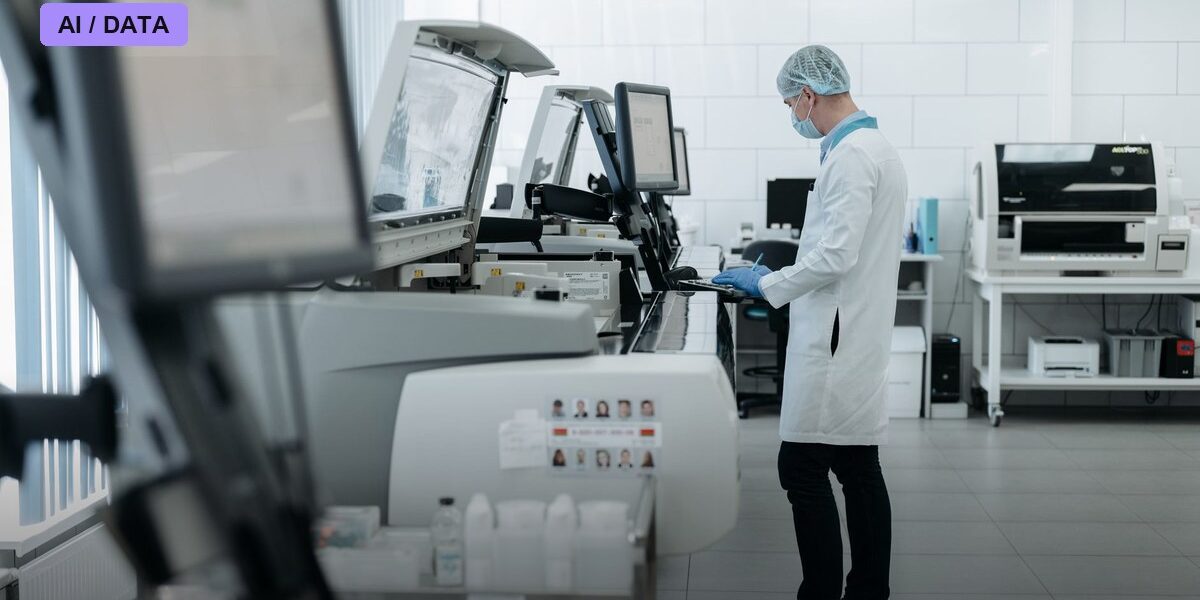
Photo: Pavel Danilyuk / PEXELS via Pexels