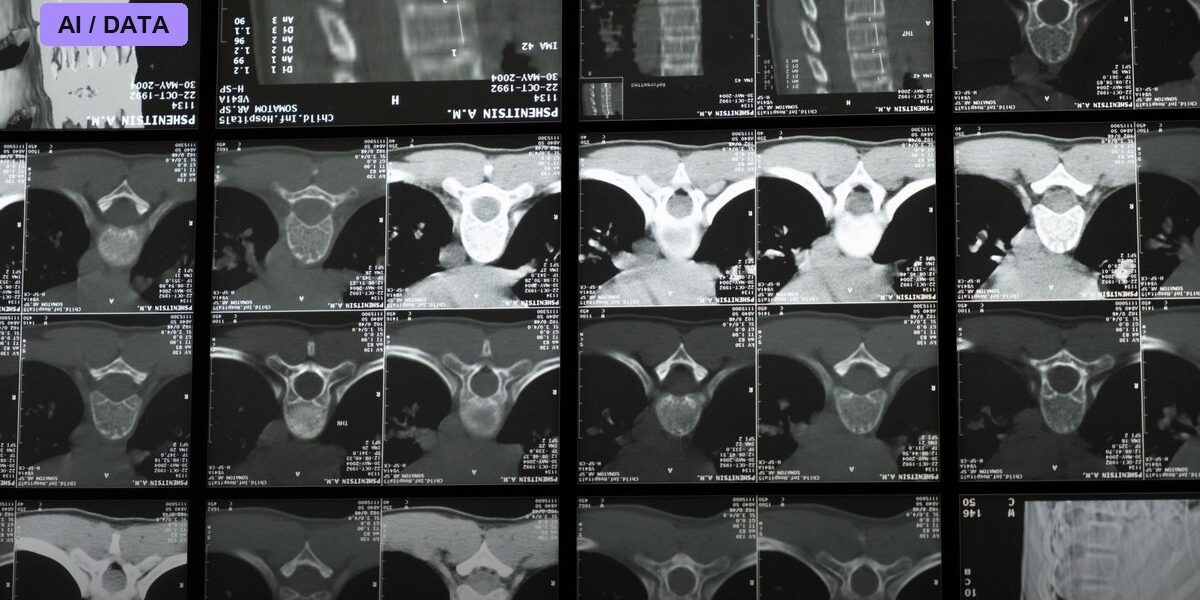
Aidoc, the Tel Aviv- and New York-based company whose software flags abnormalities in CT scans for radiologists, announced on April 29 that it raised $150 million in a Series E round led by Goldman Sachs Alternatives. Nvidia’s venture arm NVentures, General Catalyst and SoftBank Investment Advisors also participated, pushing Aidoc’s total funding past $500 million since its 2016 founding and placing it among the best-capitalized clinical AI companies in the country.
From Stroke Alerts to a Clinical Foundation Model
Aidoc built its reputation on narrow, high-stakes triage tools — software that scans CT images for signs of stroke, pulmonary embolism or intracranial hemorrhage and bumps urgent cases to the top of a radiologist’s worklist. The company says the new capital will fund a shift toward what it calls a “care foundation model,” a broader AI system trained across more imaging modalities and conditions rather than one tool per disease. More than 1,500 hospitals in the US now use at least one Aidoc product, according to the company, and executives say the next phase is consolidating those point solutions into a single platform that can flag incidental findings and coordinate follow-up care, not just emergencies.
Why Investors Wrote This Check
The presence of NVentures signals something beyond capital: Nvidia has been selectively backing clinical AI companies it believes will become reference customers for its hospital-grade computing hardware. General Catalyst, which has built a thesis around what its partners call “health assurance” — AI that intervenes before a costly medical event rather than after — has now backed Aidoc across multiple rounds. Goldman Sachs Alternatives leading the round reflects a broader shift of late-stage healthcare AI financing away from pure venture funds and toward growth-equity desks that typically demand clearer paths to profitability, a sign Aidoc is being underwritten more like an infrastructure company than a research-stage startup.
The Regulatory Backdrop
Aidoc’s expansion comes as the FDA’s AI-Enabled Medical Device List has grown past 1,600 cleared products, the overwhelming majority of them 510(k) clearances in radiology. That volume has made imaging the most crowded corner of clinical AI, with Aidoc competing against rivals including Viz.ai, which has raised comparable sums on a similar triage pitch, and a wave of smaller, single-disease startups chasing the same radiology departments. Hospital buyers increasingly say they want to consolidate vendors rather than run a dozen separate point tools, which is the competitive logic behind Aidoc’s foundation-model pivot.
What Hospitals Actually Get
For radiology departments, the pitch is fewer missed findings and faster turnaround on the studies that matter most. Aidoc’s triage tools don’t replace a radiologist’s read; they reorder the queue so a flagged bleed or embolism gets looked at before routine studies. Hospital executives who have adopted the software cite reduced time-to-treatment for stroke patients as the clearest, most measurable benefit, since door-to-treatment time is already a tracked quality metric at most stroke centers.
The Skeptical Case
Critics of the imaging-AI boom note that triage software has a narrower clinical burden of proof than diagnostic software — it reorders attention rather than rendering a diagnosis, which is part of why it has cleared the FDA faster and more often than more ambitious AI products. Some radiologists also warn that stacking multiple AI alert tools onto a single workflow risks alert fatigue, where clinicians start to tune out notifications regardless of how a vendor packages them into a unified platform. Independent studies on whether AI triage measurably improves patient outcomes, rather than just workflow metrics, remain limited.
A Market Still Consolidating
Aidoc’s raise also lands amid growing expectation that the crowded imaging-AI field will thin out over the next few years, as hospitals tire of managing contracts with a dozen single-purpose vendors and instead favor the handful of companies with the balance sheets to acquire smaller competitors or simply outlast them. A $500 million-plus war chest gives Aidoc more room than most rivals to be an acquirer in that shakeout rather than a target, a dynamic several industry analysts have flagged as the more likely outcome of this funding round than any single new product launch.
What’s Next
Aidoc says it plans to use the Series E to expand beyond radiology into additional specialties and to deepen its push into value-based care contracts, where hospitals are paid based on outcomes rather than volume of scans read. Whether the company’s foundation-model strategy differentiates it from well-funded rivals, or simply matches a pivot nearly every imaging-AI company is making simultaneously, will likely become clear over the next funding cycle, as hospitals start consolidating around fewer AI vendors rather than more.
Photo: cottonbro studio / PEXELS via Pexels