Most of the excitement around artificial intelligence and medicine has centered on the models themselves: the next diagnostic algorithm, the next drug-discovery engine. On October 7, 2026, a coalition led by the Chan Zuckerberg Biohub announced it is tackling a less glamorous but arguably more fundamental problem: the data those models are trained on. Biohub, the U.S. Department of Energy and the National Institutes of Health said they are expanding their joint Virtual Biology Initiative into a $1.8 billion effort to build an open, AI-ready map of biological systems.
What the Money Is Actually For
The figure is a combination of new and existing commitments rather than a single check. Biohub is putting in $500 million of its own money, split between roughly $400 million for lab technologies such as cryo-electron tomography, advanced microscopy and biological engineering tools, and another $100 million earmarked for external research grants. The Department of Energy is contributing more than $500 million over five years, channeled through its Genesis Mission initiative, giving researchers access to exascale supercomputers, X-ray and neutron scattering instruments, cryo-electron microscopes and autonomous laboratories spread across the national laboratory system.
Tech Companies Add Compute and Modeling Muscle
Three of the biggest names in AI are also writing checks. Google DeepMind, its drug-discovery spinoff Isomorphic Labs, and Meta are jointly investing $300 million to help build the modeling techniques and multi-modal datasets the initiative needs. That brings a very different kind of expertise to the table than a typical NIH grant: these are the same groups behind AlphaFold and other large-scale biological prediction systems, and their involvement signals that the initiative is being built from the start with machine learning pipelines in mind, not retrofitted onto older datasets later.
The NIH’s Role Is Coordination, Not New Cash
The NIH’s share of the $1.8 billion is the most unusual element of the structure. Rather than contributing new appropriated funds, the agency is coordinating access to datasets, repositories and knowledge bases built up through more than $500 million in prior federal biomedical research investment. Biohub says it will work with the NIH to standardize those existing datasets so they can be used to train AI models consistently, a step that research groups have long flagged as a bottleneck: huge amounts of biological data already exist, but in formats, resolutions and annotation styles that make them hard to combine.
Why Call It ‘Virtual Biology’
The initiative’s name points to its ultimate ambition, sometimes described by scientists as a “virtual cell”: a computational model detailed enough to simulate how a cell, tissue or organism responds to a drug, mutation or environmental change before anyone runs a physical experiment. Proponents argue that if such models can be trained on sufficiently rich and well-labeled data, they could eventually shorten the loop between hypothesis and experiment in the same way weather models compressed forecasting from folklore to physics-based prediction. Organizers are careful to describe this as a long-term infrastructure project rather than a product launch — no finished clinical model is being delivered as part of this announcement.
Skeptics Point to the Gap Between Data and Understanding
Not everyone in the field is convinced that more data automatically produces better biology. Critics of large-scale data initiatives have noted that biological systems are noisier and more context-dependent than the protein-folding problems where AI has already succeeded, and that standardizing datasets collected under different lab conditions, instruments and protocols is itself a research problem, not just an engineering one. There is also a practical concern about incentives: academic labs are typically rewarded for publishing novel findings, not for the unglamorous work of cleaning and annotating data for someone else’s model, and the initiative’s long-term success may hinge on whether it can change those incentives rather than just fund more compute.
What Happens Next
Organizers say the resulting datasets and standards are intended to be open to the broader research community rather than locked inside any single company’s model, a framing aimed at distinguishing the effort from the proprietary data advantages that pharmaceutical and tech giants usually guard closely. Over the next five years, the real test will be whether academic labs, the DOE’s national laboratories and corporate AI teams can actually agree on shared data standards, and whether the resulting models produce predictions precise enough for biologists to act on rather than just impressive enough to publish. For a field that has spent the past few years chasing flashier AI headlines, the Virtual Biology Initiative is a bet that the unglamorous plumbing work of data infrastructure may matter just as much as the next big model.
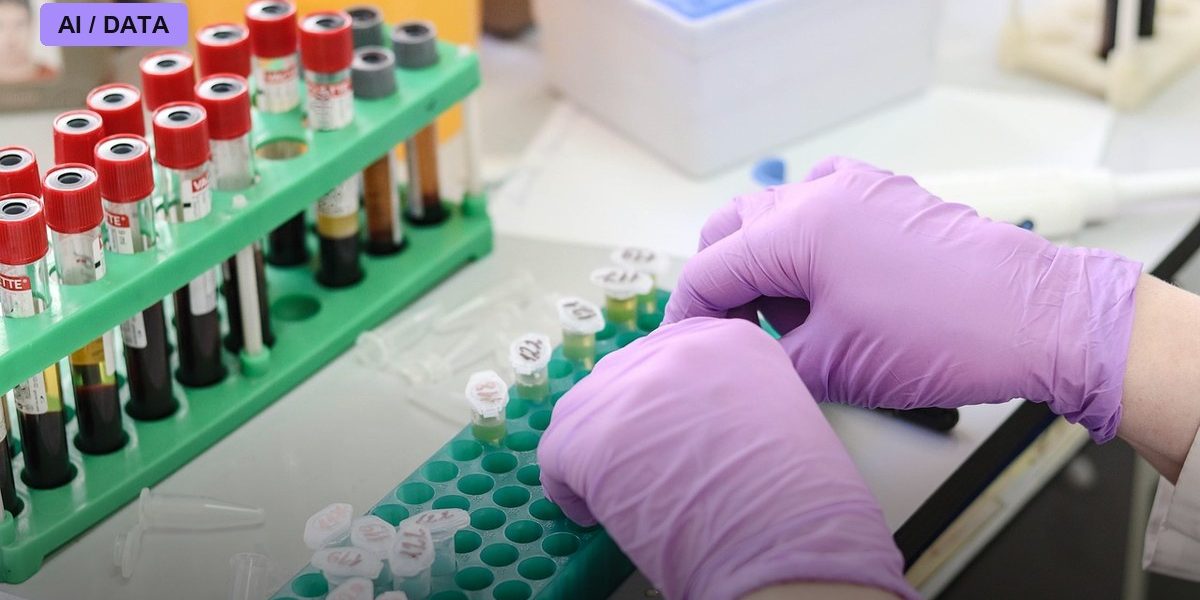
Photo: Belova59 / PIXABAY via Pixabay