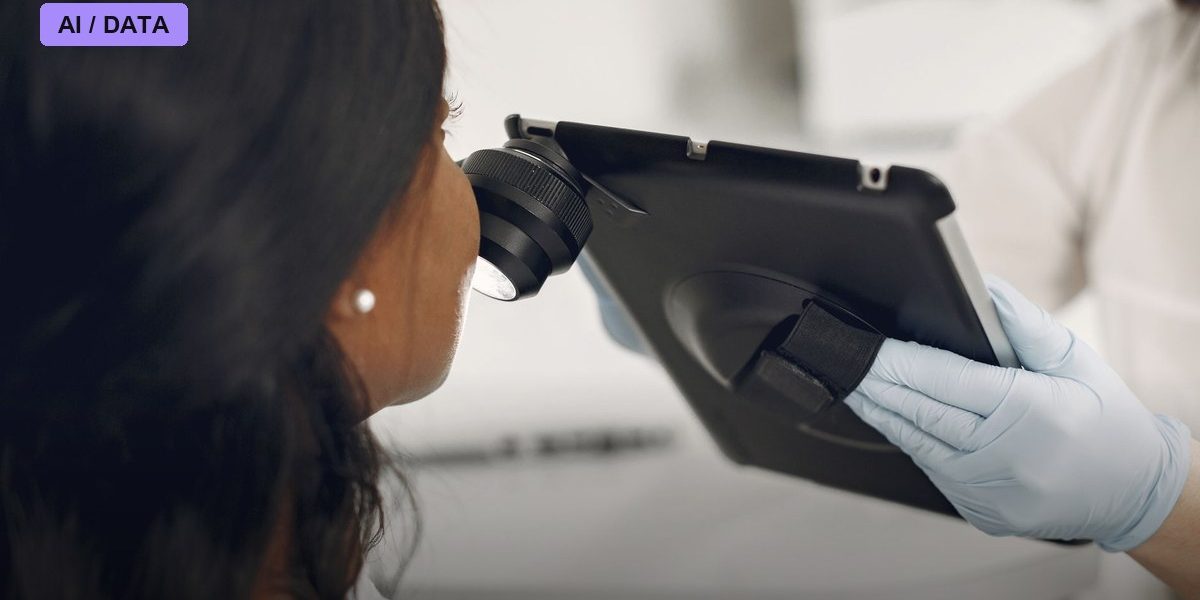
DermaSensor, a Miami-based medical device company, announced on June 10, 2026 that it has received a Class IIb CE mark allowing it to sell its handheld, AI-powered skin cancer detection device across the European Economic Area, alongside a new feasibility study with Britain’s National Health Service that will test whether general practitioners, not just dermatologists, can use the tool to catch suspicious lesions earlier.
A device built for the primary care gap
The DermaSensor device is a handheld point-of-care tool that uses spectroscopy, a technique that analyzes how light interacts with tissue, combined with an AI algorithm to assess a suspicious skin lesion in real time during an office visit. It is designed specifically for use by non-dermatologists, meaning a general practitioner or nurse practitioner can scan a lesion a patient is already worried about and get an immediate read on whether it warrants referral to a dermatologist or a biopsy, without waiting weeks for a specialist appointment. The device is cleared to evaluate lesions suggestive of melanoma, basal cell carcinoma or squamous cell carcinoma in patients aged 40 and older, and the company states it is intended to be used alongside, not instead of, a full clinical visual examination.
From US clearance to European expansion
DermaSensor was already FDA De Novo cleared in the United States, and the company describes itself as the first and only automated device authorized by the FDA for detection of all three common skin cancers, according to co-founder and chief executive Cody Simmons, who called the European CE mark a transformative milestone for the company. DermaSensor says its device is already used by hundreds of healthcare provider institutions across thousands of patient visits a month in the U.S., and the company’s evidence base includes nine published studies conducted across more than 40 clinical study sites involving hundreds of clinicians in both primary care and dermatology settings.
Why primary care matters for skin cancer
Skin cancer is typically diagnosed after a patient or a primary care doctor first notices a suspicious spot, and the path from that first notice to a dermatologist’s biopsy can involve long waits in many health systems, particularly in Europe’s public systems, where dermatology referral queues can stretch for months. A device that lets a GP triage lesions on the spot is aimed squarely at that bottleneck: ruling out clearly benign lesions without a referral, and fast-tracking ones the AI flags as concerning. That is the logic behind the new NHS feasibility study, which will specifically evaluate the device’s impact when used by general practitioners rather than specialists, with further details promised in the coming months.
A caveat built into the label
DermaSensor’s own regulatory labeling draws a sharp line around what the device is not meant to do: it should be used only on lesions a clinician has already identified as suspicious, not as a broad population screening tool, and it is not meant to serve as the sole basis for a diagnosis on its own. That restriction matters because it keeps the device positioned as a triage aid layered on top of clinical judgment rather than a standalone diagnostic, a distinction regulators have leaned on across the recent wave of AI-assisted dermatology and point-of-care diagnostic clearances, where the devices are authorized to help clinicians decide what to do next rather than to replace a pathologist’s biopsy read.
What’s still unverified
The company’s nine-study evidence base and its claims about diagnostic accuracy come from DermaSensor itself, and the press release announcing the CE mark does not include specific sensitivity or specificity figures, making it difficult for outside observers to independently judge how often the device correctly flags a true cancer versus how often it sends patients for unnecessary biopsies. The NHS feasibility study is explicitly a preliminary step, assessing real-world usability and impact rather than a confirmed national rollout, and its results are not yet available. A strategic partnership with a large European distributor, which also invested $5 million in DermaSensor’s recent Series B financing round, will support the company’s commercial push into some of Europe’s largest healthcare markets, giving the rollout a clear commercial incentive alongside the clinical one.
What’s next
DermaSensor says it is now seeking additional partnerships with health systems and physician leaders to expand adoption across Europe, building on the CE mark and the NHS collaboration. Whether primary care-based AI skin screening meaningfully shortens the path from a worried patient to a confirmed diagnosis, and whether it does so without a wave of unnecessary referrals, will likely depend on what the NHS feasibility study and any follow-on peer-reviewed research show once general practitioners start using the device outside DermaSensor’s own clinical trials.
Photo: Gustavo Fring / PEXELS via Pexels