A clinical trial running through Massachusetts General Hospital, built in partnership with digital health company Dimagi Inc., is testing whether a conversational AI agent can help people being treated for opioid use disorder stay engaged in recovery during the long stretches between clinical appointments — not by replacing their care team, but by being available in the gaps when relapse risk tends to spike.
Filling the Gap Between Appointments
Medication treatment for opioid use disorder works best alongside ongoing clinical contact — counseling, check-ins, care coordination — but primary-care and addiction teams are rarely able to stay in constant touch with every patient, particularly those juggling housing instability, inconsistent transportation, or unpredictable work schedules. Dimagi, a company that builds mobile health software, designed its chatbot specifically to sit in that gap: available around the clock, in a way a clinical team with a packed caseload structurally cannot be.
What the Chatbot Actually Does
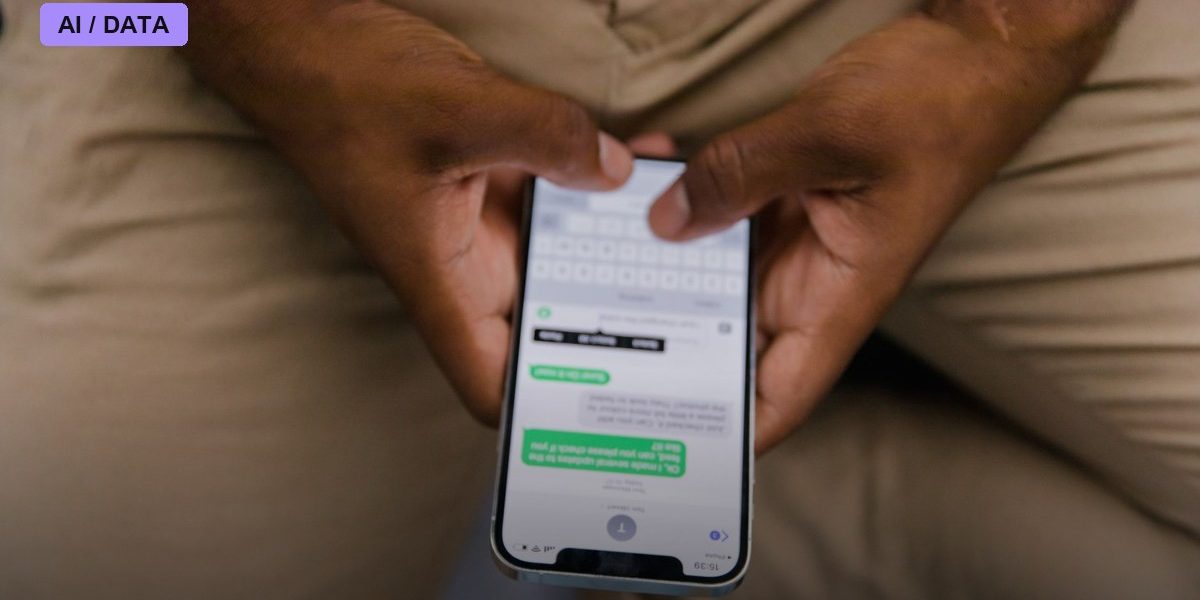
Per the trial’s registration, participants get 12 weeks of access to the conversational agent, which helps them prepare for upcoming clinical appointments, locate community resources, learn urge-surfing and other coping techniques for cravings, and manage other recovery-related tasks. Alongside using the chatbot, participants complete periodic surveys and feedback sessions that researchers are using to evaluate the tool directly — this is explicitly a study of the chatbot itself, not just a deployment of it.
Who’s Eligible, and Why It’s a Narrow Group
The trial is enrolling 55 participants: adults aged 18 to 65, of any gender, who are currently receiving medication treatment for opioid use disorder at Massachusetts General Hospital. They must be able to read and communicate in English, participate in remote interviews, have reliable WiFi or cellular access, and be willing to use a mobile device. The exclusion criteria are notably tight — the study screens out people with cognitive, visual, or auditory impairments that would complicate mobile use, as well as anyone with unstable medical conditions. The trial record shows an update as recent as July 2026, indicating the study is actively underway this year. This is a carefully bounded population typical of an early feasibility study, not a broad real-world rollout.
What Success Would Look Like
Researchers are tracking a wide set of outcomes simultaneously: whether the chatbot helps lower drug use, improves how reliably patients attend clinical appointments, builds patients’ confidence in managing their own recovery, eases the workload on primary-care teams managing these cases, and whether patients themselves find the tool safe, useful, and engaging enough to keep using it for the full 12 weeks. That breadth of goals, rather than a single locked-in primary outcome, reflects how early-stage this research still is — the study is as much about learning whether the approach is viable at all as it is about proving it works.
The Skepticism Around Chatbot-Based Recovery Support
The explicit focus on whether the chatbot is safe, not just whether it’s useful, signals the researchers’ own caution about deploying conversational AI into a population managing an active substance use disorder, often alongside co-occurring mental health conditions — a group where a poorly timed or wrong chatbot response carries real consequences. The trial’s narrow eligibility criteria, which exclude anyone with unstable medical conditions or impairments complicating mobile use, reinforce that this is being tested as a narrow adjunct for a specific, medically stabilized group of patients already in treatment, not as a general-purpose recovery tool for anyone in active addiction. That caution fits a broader pattern: federal agencies including the National Institute on Drug Abuse have funded a series of AI-assisted addiction-treatment projects in recent years, from medication-adherence platforms to relapse-prediction tools, most of which remain in research and pilot stages rather than widescale clinical use.
What’s Next
With just 55 participants and a 12-week intervention window, the study is sized to answer questions about feasibility and acceptability — whether patients will actually use the tool and find it trustworthy — not to prove at a population level that it reduces relapse. If the results are promising, the model would likely need replication at other addiction-treatment sites with larger and more demographically diverse patient populations before anyone could make broader claims about its effectiveness. For now, the trial record itself is the only verifiable evidence of the project: no interim results have been published, and the sponsors have not said when final outcomes will be available.
Photo: RDNE Stock project / PEXELS via Pexels