Tuberculosis remains one of the world’s leading infectious-disease killers, and Ethiopia is one of 30 countries the World Health Organization classifies as high-burden, with a case detection rate that has historically stayed below 80% — meaning a substantial share of infectious TB cases simply go undiagnosed in the community. A technical brief published in July 2026 by the Eliminate TB Project, led by Management Sciences for Health (MSH), lays out fifteen months of real field data on an attempt to close that gap with AI-powered chest X-ray screening, and the numbers show both where the approach is working and where it isn’t catching everyone.
Why Symptom Screening Alone Wasn’t Enough
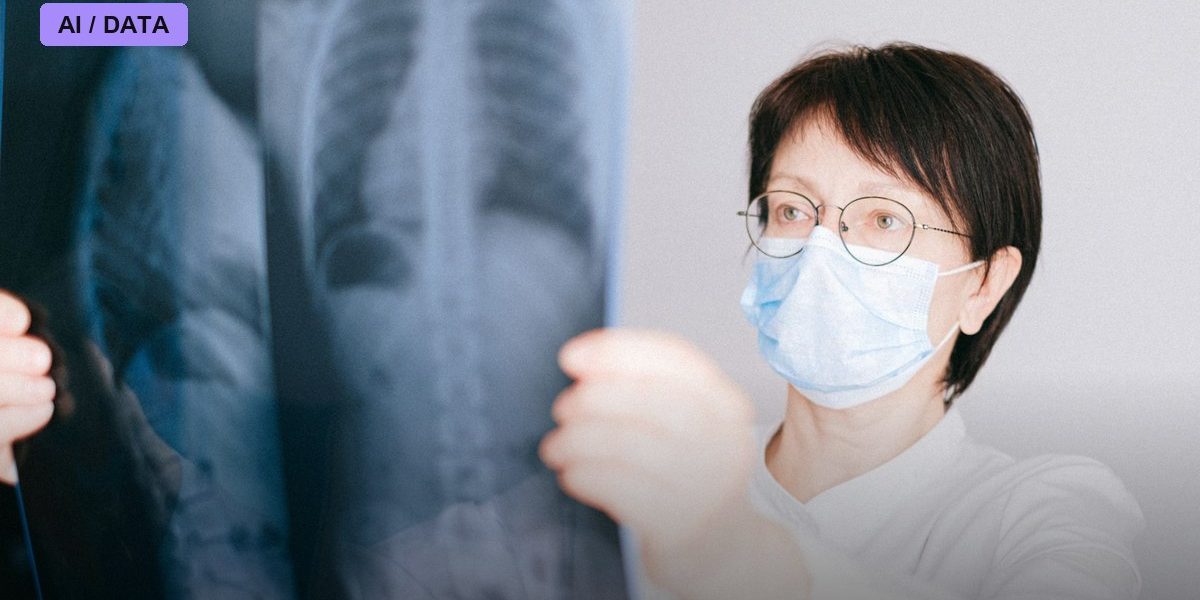
Ethiopia has long relied on symptom-based TB screening — asking people about cough, fever, night sweats — which the brief notes systematically misses asymptomatic carriers and anyone who doesn’t recognize or report their own symptoms. Chest X-ray has always been a logical backstop, but scaling it up has been constrained by a shortage of trained radiologists and quality-controlled reading infrastructure, especially in rural facilities. AI chest X-ray (AI CXR) platforms — the brief names Qure.ai and CAD4TB as the tools in use — were deployed to generate an automated probability score for TB-suggestive abnormalities without requiring a radiologist to read every image, directing flagged patients toward confirmatory GeneXpert molecular testing.
From Four Machines to 225
Ethiopia’s national TB program, through the National TB and Leprosy/Lung Disease Directorate (NTBLLD), began with just four AI CXR machines before 2023 — three procured by REACH Ethiopia and one by MSH. An initial pilot across 10 hospitals, presented at the TB Research Advisory Council conference in Gondar in 2023, screened 1,494 asymptomatic high-risk individuals and found 205 (14%) with abnormal scans, of whom 194 (13.3% of those screened) were diagnosed with TB — 82% of them clinically diagnosed pulmonary cases. That evidence was enough to push NTBLLD to expand AI CXR to 225 health facilities spanning 91 zones and 201 woredas, and to formally fold AI CXR into Ethiopia’s national TB and TB/HIV screening guidelines.
What the National Numbers Show
Between 2023 and 2025, 138,157 people were screened nationally using AI CXR; 22,752 (16.4%) were flagged as presumptive TB cases, and 3,550 (3% of everyone screened) were ultimately diagnosed. The seven regions directly supported by the Eliminate TB Project — Sidama, Amhara, Oromia, South Ethiopia, Central Ethiopia, Tigray, and Southwest Ethiopia — accounted for 93,628 of those screened (68% of the national total), but a disproportionate 2,974 of the TB cases found, or 84% of all cases detected nationally. In other words, the project-supported regions, representing a bit over two-thirds of the screening volume, found well over four-fifths of the actual TB cases.
Who the AI Actually Flagged
Looking specifically at January 2025 through March 2026 in project-supported regions, 22.6% of screened individuals (7,100 people) were flagged as presumptive TB, and 73.2% of those (5,189) went on to GeneXpert testing, yielding 1,660 confirmed TB cases — 54.9% bacteriologically confirmed and 45.1% clinically diagnosed. The hit rate varied sharply by population: among internally displaced persons, 67.6% of those screened were flagged as presumptive TB, the highest of any group, followed by community-based screening sites at 25.6% and people with diabetes or other noncommunicable diseases at 22.9%. Health care workers, by contrast, were flagged at only 7.7%, and people living with HIV at 10.5% — a reminder that AI CXR’s yield depends heavily on which population is standing in front of the machine.
Where the Approach Still Has Limits
The brief is candid that despite the rapid scale-up to 225 machines, Ethiopia hadn’t previously had systematic field-level data on how AI CXR was actually performing — this report is, by the project’s own account, the first attempt to fill that gap. Prior research cited in the brief, including a 2024 study by Kazemzadeh and colleagues, found AI CXR non-inferior to radiologists for active TB triage in high-burden settings, but a 2025 review by Han and colleagues cautioned that evidence on real-world performance remains mixed, and separate research has found the tools can misclassify other lung conditions as TB, which risks unnecessary follow-up testing. The CAD score threshold used to decide who gets referred for GeneXpert testing — set above 0.6 in Ethiopia’s protocol — represents a tradeoff between catching more true cases and generating more false alarms that strain an already stretched testing system.
The Road From 225 Facilities to National Coverage
Ethiopia’s 225 AI CXR sites still cover a fraction of the country’s health facilities, and the project notes that more than 70% of zones and 80% of woredas within its reach are concentrated in Eliminate TB Project-supported areas rather than spread evenly nationwide. The brief frames the current data as justification for further expansion, but scaling beyond the current footprint will depend on sustained funding, reliable electricity and connectivity for the machines, and enough GeneXpert testing capacity to handle the volume of presumptive cases the AI flags — without that capacity, a screening tool that finds more suspected cases than the system can confirm risks becoming a bottleneck rather than a solution.
Photo: Anna Shvets / PEXELS via Pexels