For as long as software has been cleared to help manage diabetes, a clinician has stood between the algorithm’s suggestion and the needle. That barrier just moved. On June 25, 2026, UpDoc announced that the FDA had cleared UpDoc V1.0, a prescription-only conversational AI tool that gives adults with type 2 diabetes insulin-titration guidance through voice or text, with no requirement that a physician review each recommendation before the patient acts on it. Commentators have called it the first large language model cleared as a patient-facing Software as a Medical Device, and the clearance itself appears to have been quietly posted by the FDA six months earlier, on December 23, 2025, under submission number K253281, before UpDoc chose to publicize it.
What exactly the FDA cleared
The clearance is narrower than the “first patient-facing LLM” headlines suggest. UpDoc V1.0 was authorized against a drug-dose-calculator predicate, not as a general-purpose medical chatbot, and its labeled use is specific: helping adults with type 2 diabetes adjust insulin doses within parameters set in advance by a physician. According to the underlying FDA decision summary, a “Conversation Service” inside the product logs blood glucose readings, meals, symptoms and medication adherence through natural back-and-forth dialogue, then executes dosing instructions that a physician has already defined — the model is not freelancing a dosage from scratch each time a patient checks in.
How the tool is meant to work day to day
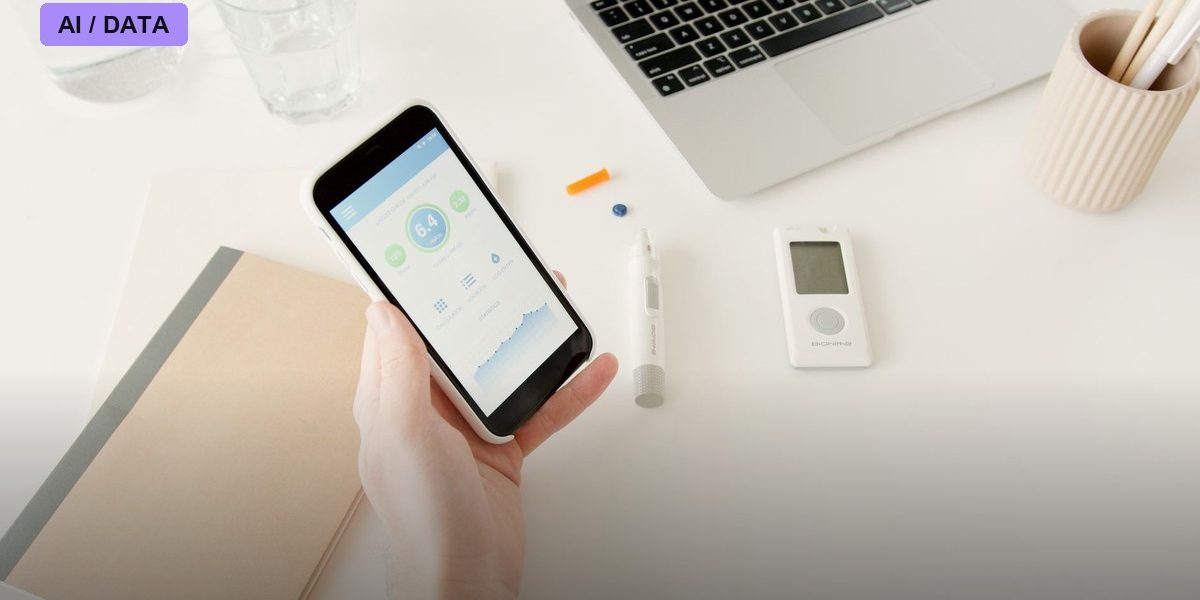
In practice, a patient talks or types to UpDoc the way they might describe their day to a nurse line: what they ate, how they’re feeling, what their glucose monitor read. The software translates that into an insulin-dose recommendation using the physician-set rules, then logs the exchange for the care team. UpDoc has described the broader platform as “physician-grade agentic AI that supports rather than replaces clinical judgment,” and the company says the product is built to integrate with electronic health record systems so the running conversation becomes part of a patient’s chart rather than a side channel invisible to their doctor.
The data and the money behind the launch
UpDoc has pointed to a Stanford-run insulin titration trial as the clinical basis supporting the clearance. Alongside the regulatory news, the company disclosed an oversubscribed $18 million seed round, with backers including the American Diabetes Association, Eli Lilly and Company, and Mayo Clinic — a notably clinical and pharmaceutical set of investors for an early-stage AI company, rather than purely financial backers. UpDoc says the tool is already in pilot use at several U.S. health systems, including Cleveland Clinic, Allegheny Health Network and UCSF Health, with some accounts describing deployments at four systems in total, a discrepancy that hasn’t yet been resolved in public reporting.
Why the no-mandatory-review design is the real story
Diabetes specialists broadly agree that more frequent, responsive insulin adjustment is clinically valuable — large swings in glucose control between office visits are a known driver of complications. But the governance question has turned out to be sharper than the technology question. Analysts reviewing the clearance point out that the FDA has authorized more than a thousand AI-enabled medical devices to date, and the overwhelming majority of them are advisory: a radiologist or physician still reviews the AI’s output before it reaches a patient. UpDoc’s insulin tool breaks that pattern by letting a patient act on the model’s guidance directly, with the physician’s role moved upstream into defining the original dosing rules rather than reviewing each day-to-day adjustment.
An unresolved question about how it gets paid for
There’s also a quieter, more bureaucratic uncertainty hanging over the clearance: whether insurers and CMS will create billing recognition for an FDA-cleared conversational tool at all. Many health systems already run AI-driven patient-communication tools — scheduling bots, symptom triage lines, medication reminders — that operate under ordinary administrative billing codes without ever seeking FDA clearance in the first place. If payers don’t distinguish between cleared and uncleared tools when it comes to reimbursement, some health-policy observers argue the clearance could end up functioning mainly as a marketing credential for UpDoc rather than a change in how insulin management actually gets paid for. The clearance also lands the same week ARPA-H’s ADVOCATE program moved toward FDA-authorized autonomous cardiovascular care, suggesting regulators are being asked to make several of these human-in-the-loop judgment calls in rapid succession this year.
What’s next
UpDoc’s near-term test is less regulatory than operational: whether its pilot hospitals see the promised reduction in the glucose swings and emergency visits that come from infrequent dose adjustment, and whether patients trust a chatbot with a decision they’re used to making with a nurse on the phone. Diabetes clinicians say the more consequential precedent may not be insulin dosing at all, but what UpDoc’s clearance tells device makers in adjacent fields — cardiology, oncology follow-up, mental health medication management — about how far the FDA is now willing to let conversational AI reach toward patients without a clinician standing in between.
Photo: Artem Podrez / PEXELS via Pexels